
Updated at: 08.10.26

Contemporary vs Classical Villa Design: Which Fits Your Plot?
Antonovich Group's Guide to Matching Villa Architecture with Your Site's Potential
One of the first and most consequential decisions in any residential project is architectural style. Long before material selections or interior finishes come into play, homeowners face a fundamental question: contemporary vs classical villa design — and which one actually suits the plot, the setting, and the way the home will be lived in. This decision shapes everything that follows, from massing and facade treatment to landscape planning and interior flow.
At Antonovich Group, we guide clients through this decision on nearly every villa project we take on. This guide breaks down the real differences between contemporary and classical villa design, and — more importantly — how to evaluate which approach genuinely fits your specific plot, rather than simply which style is currently more popular.
Understanding the Core Differences
Before comparing suitability, it's worth clarifying what actually distinguishes these two design languages, since the terms are often used loosely.
Classical villa design draws on historical architectural traditions — symmetrical facades, columns, pediments, arched windows, and richly detailed ornamentation. It favors formality, grandeur, and a sense of established permanence, often referencing European Renaissance, Neoclassical, or Mediterranean architectural precedent.
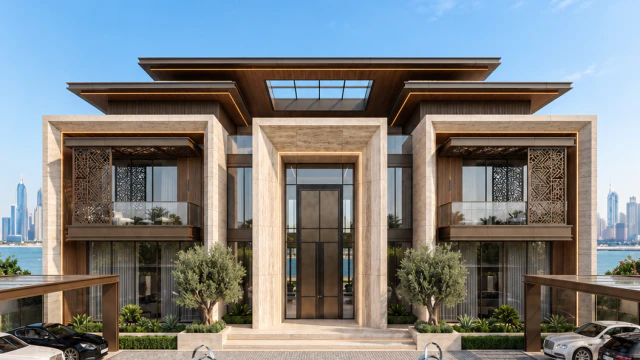
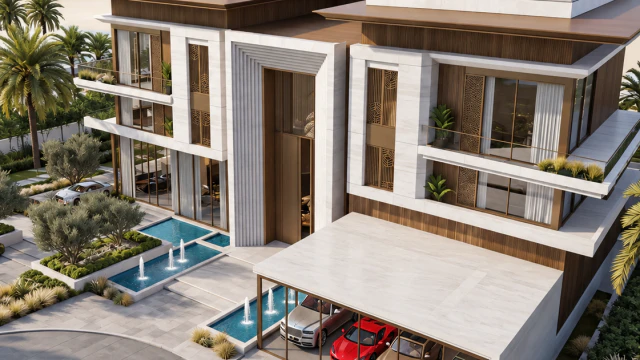
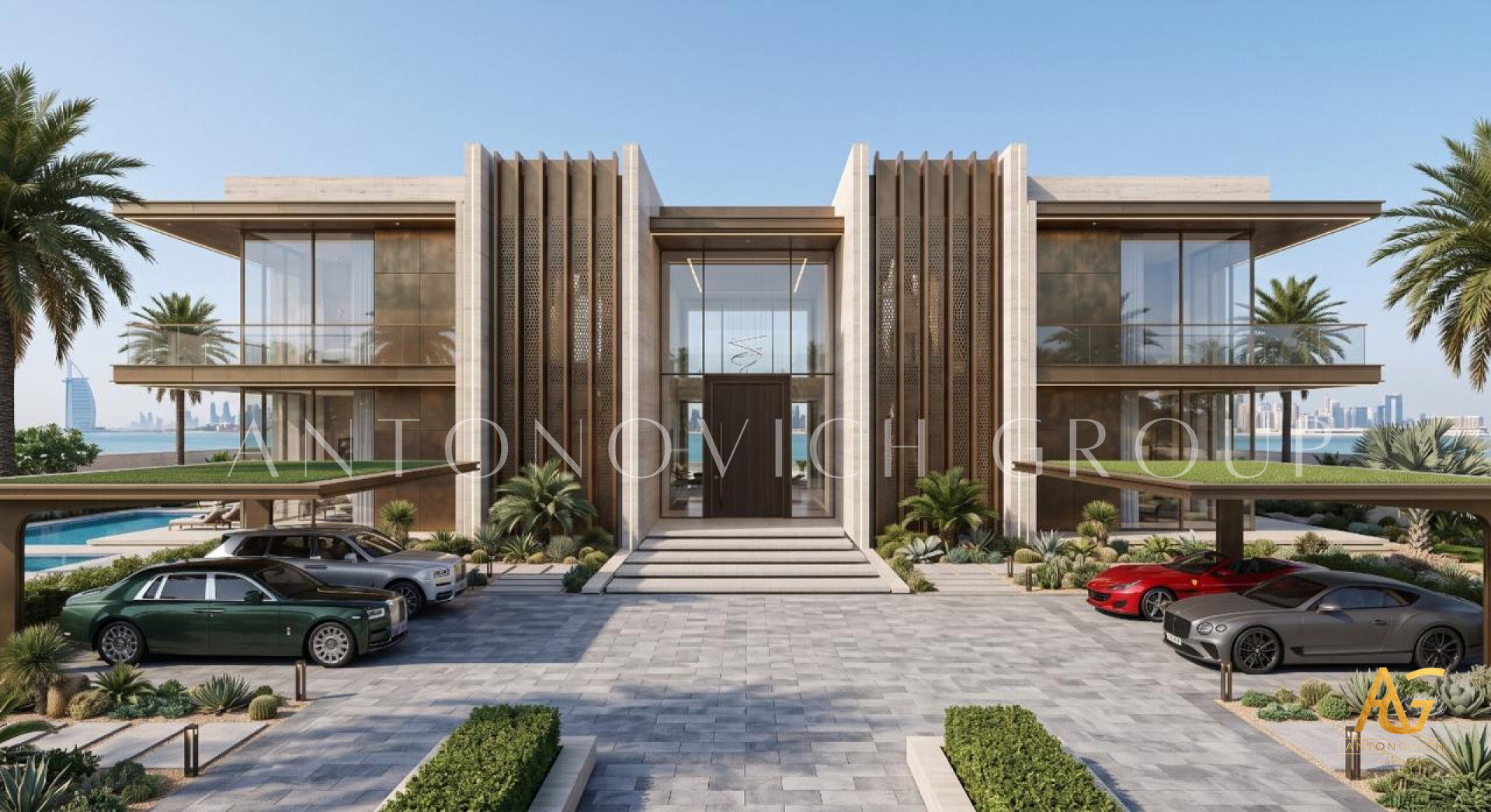
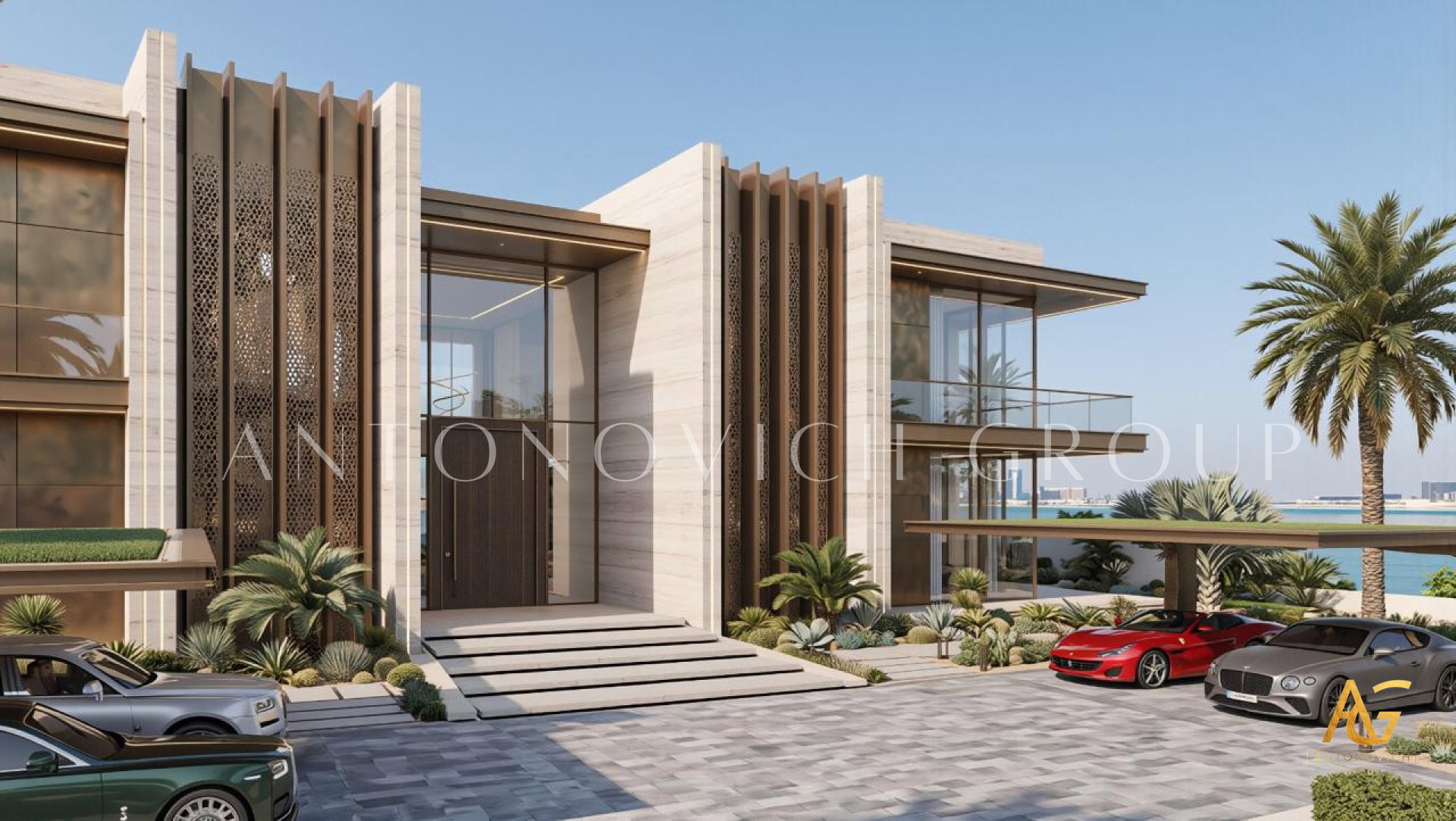
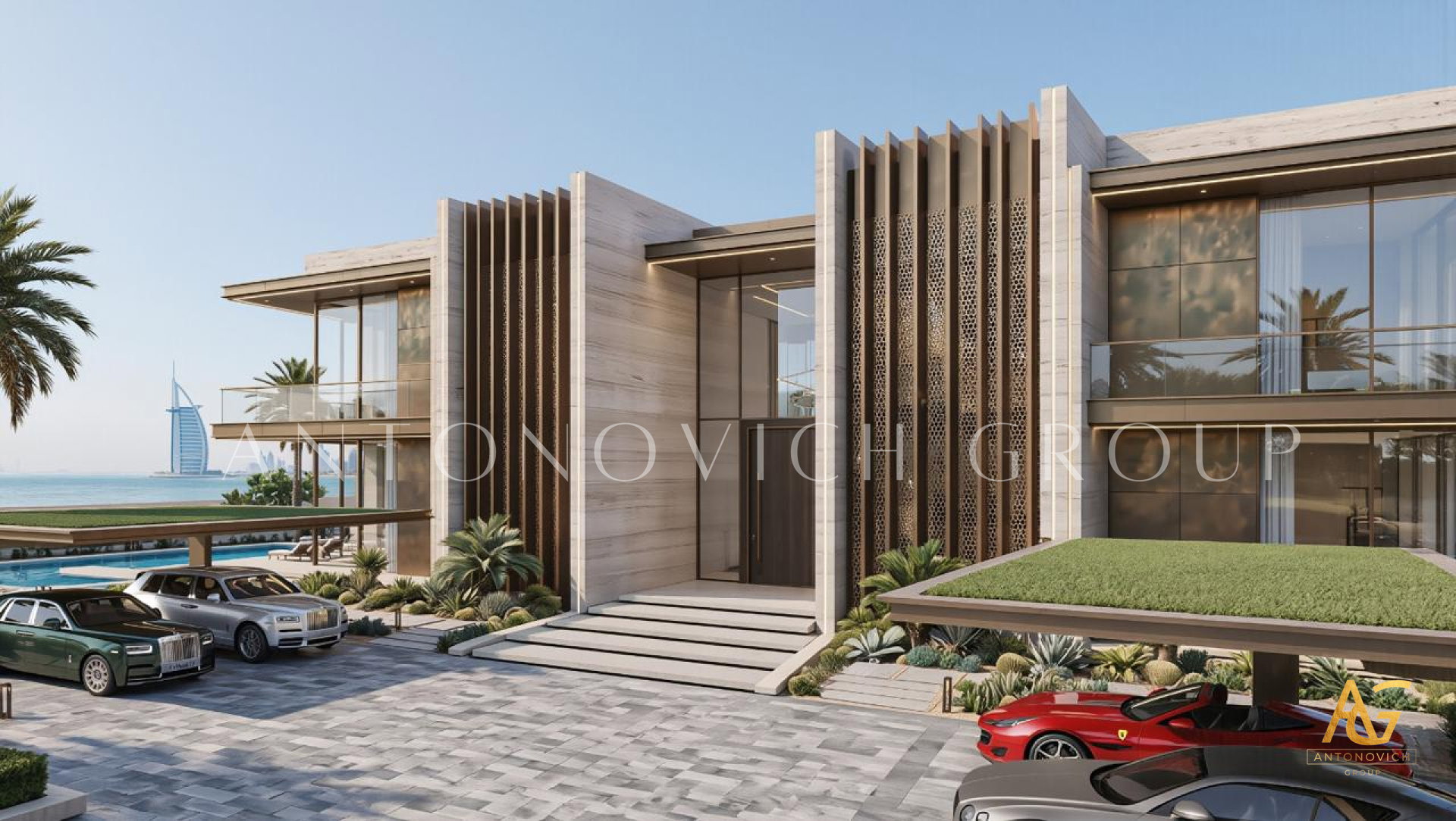
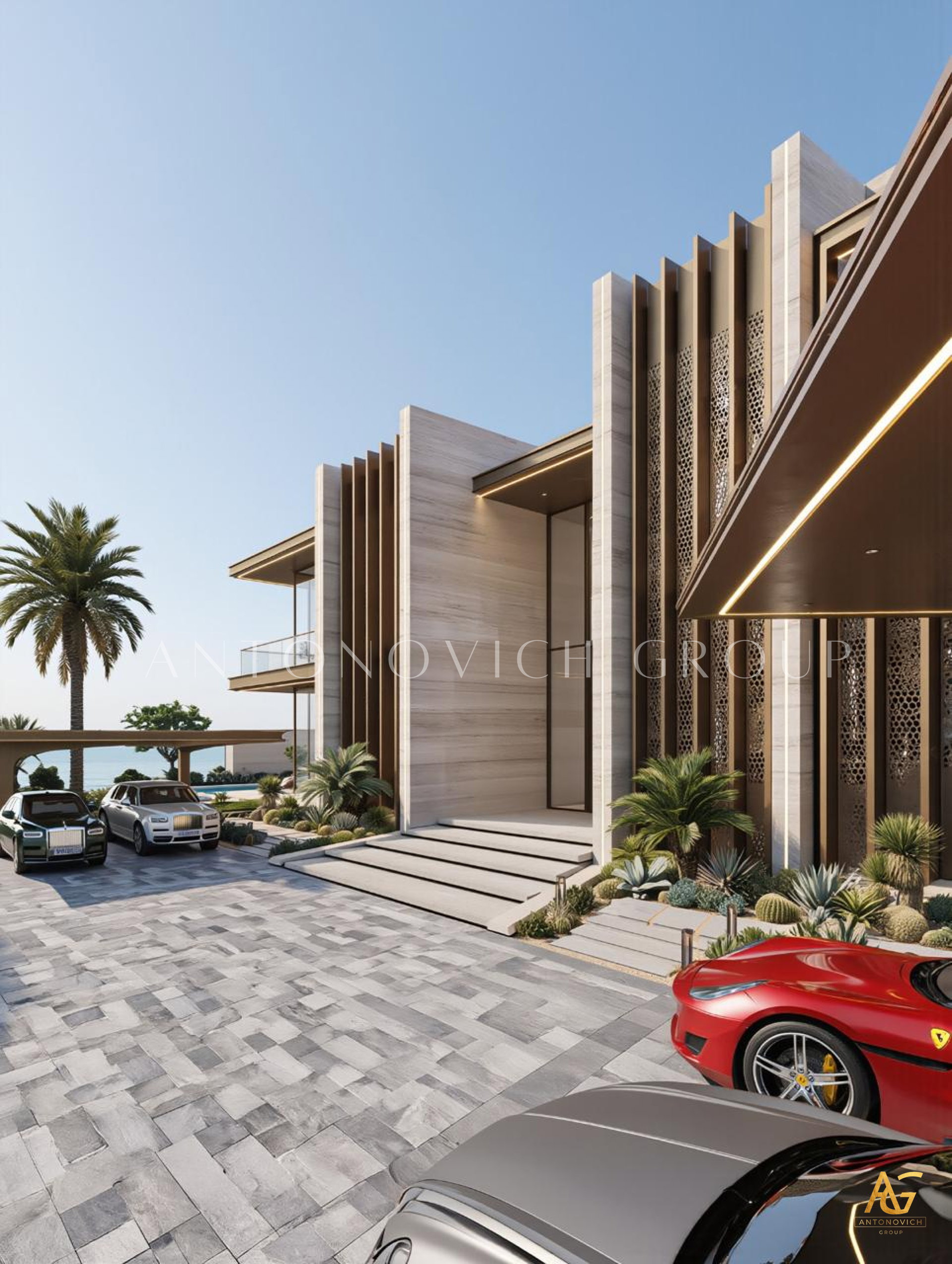
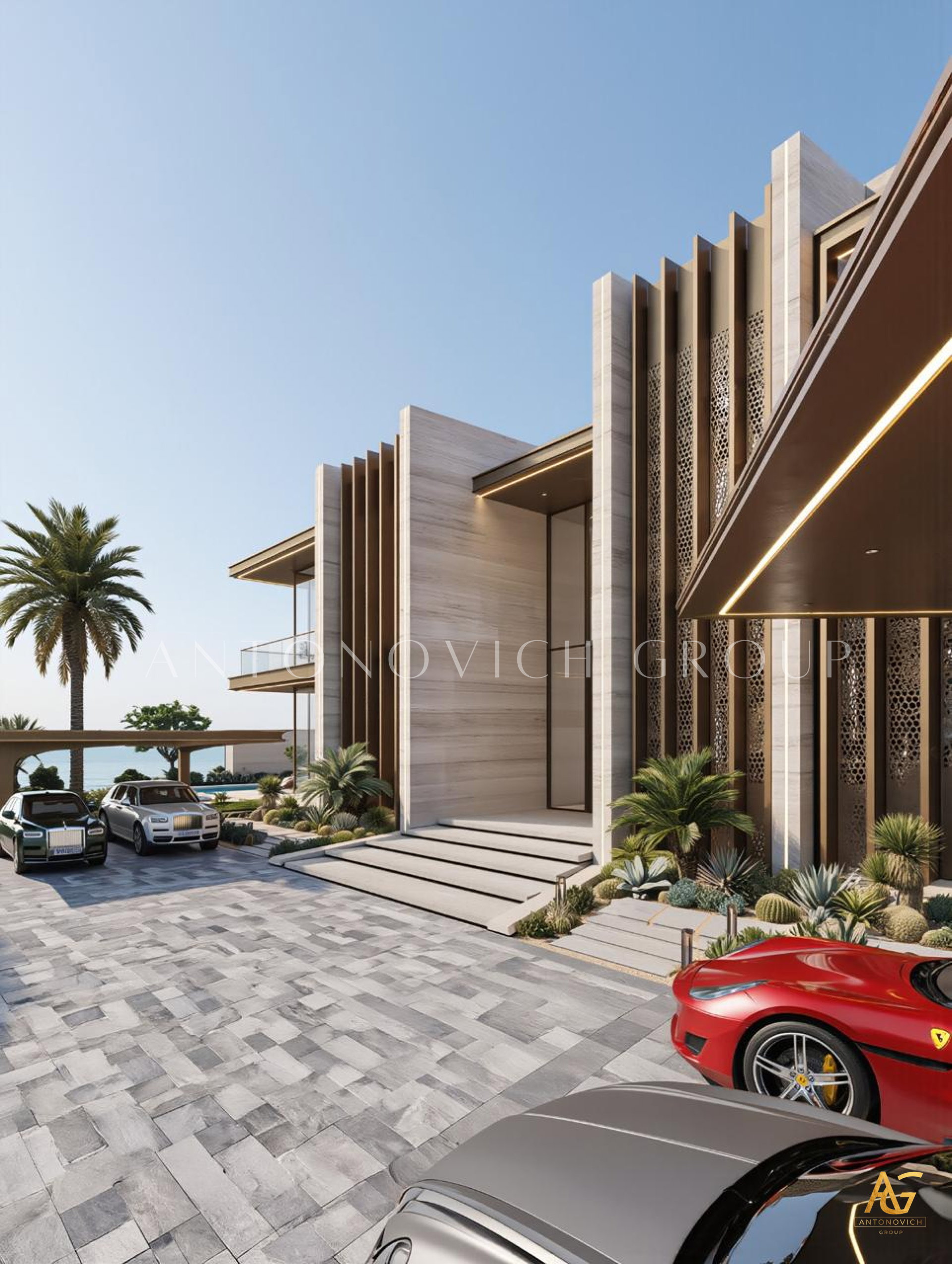
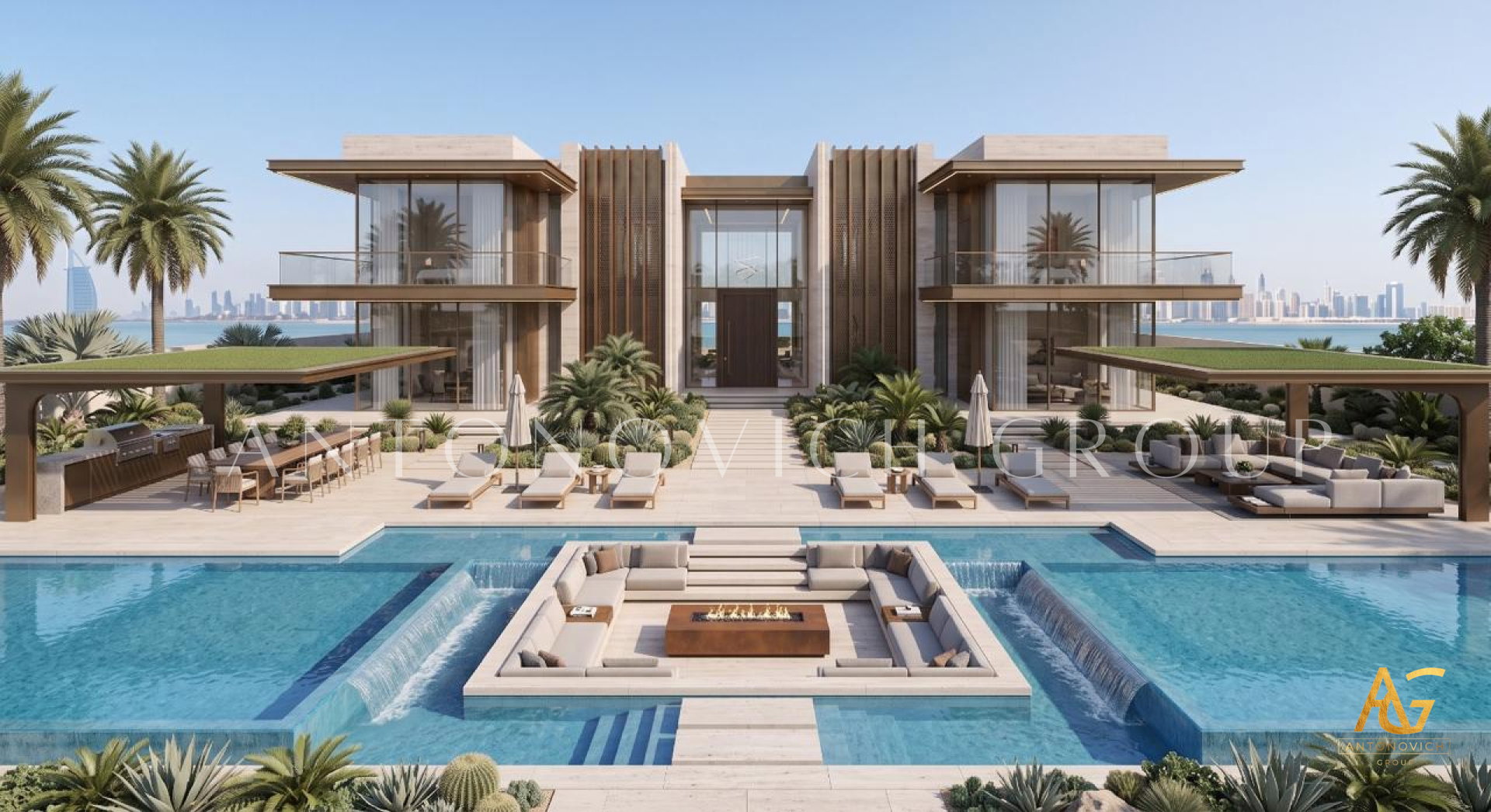
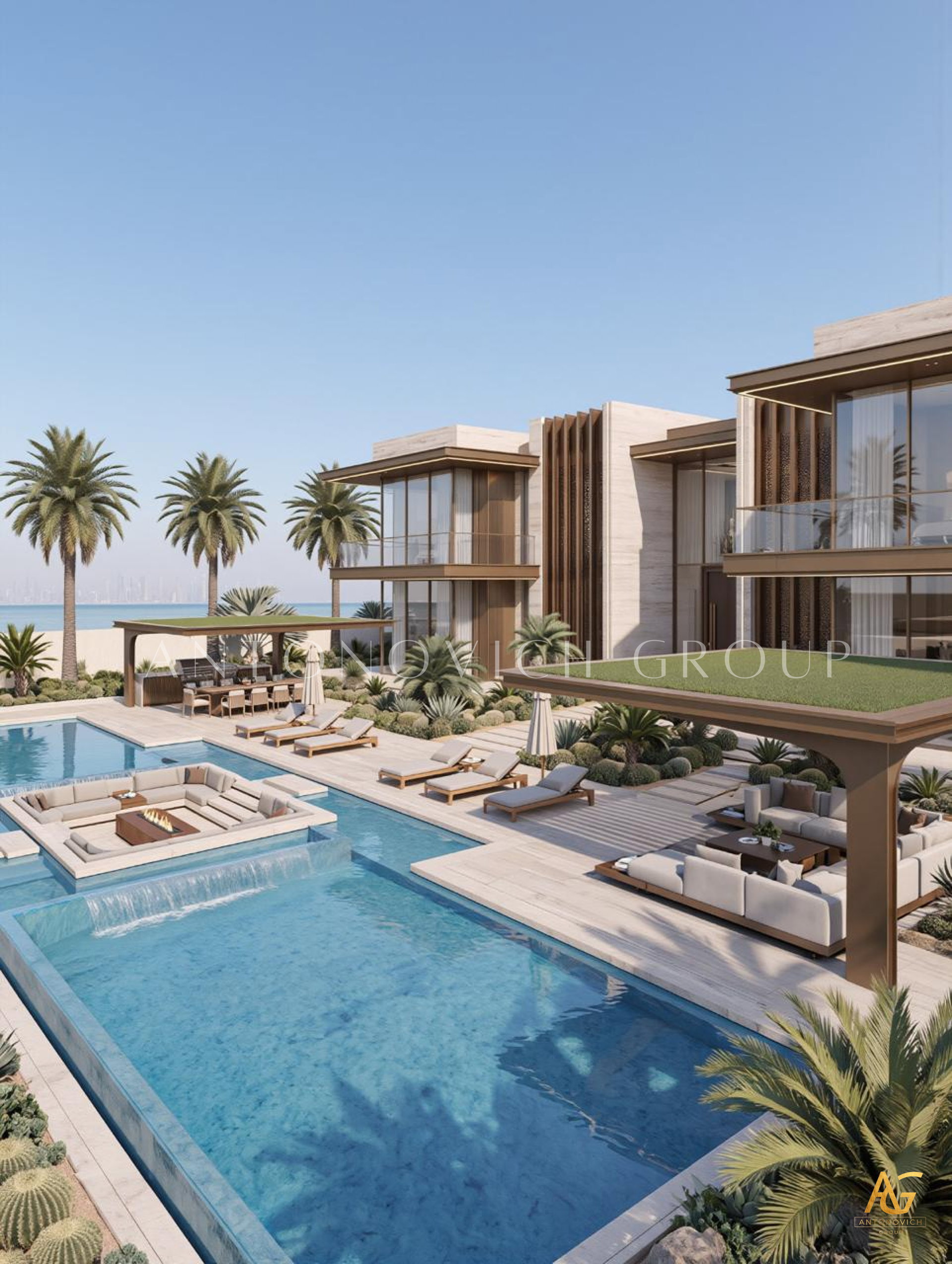
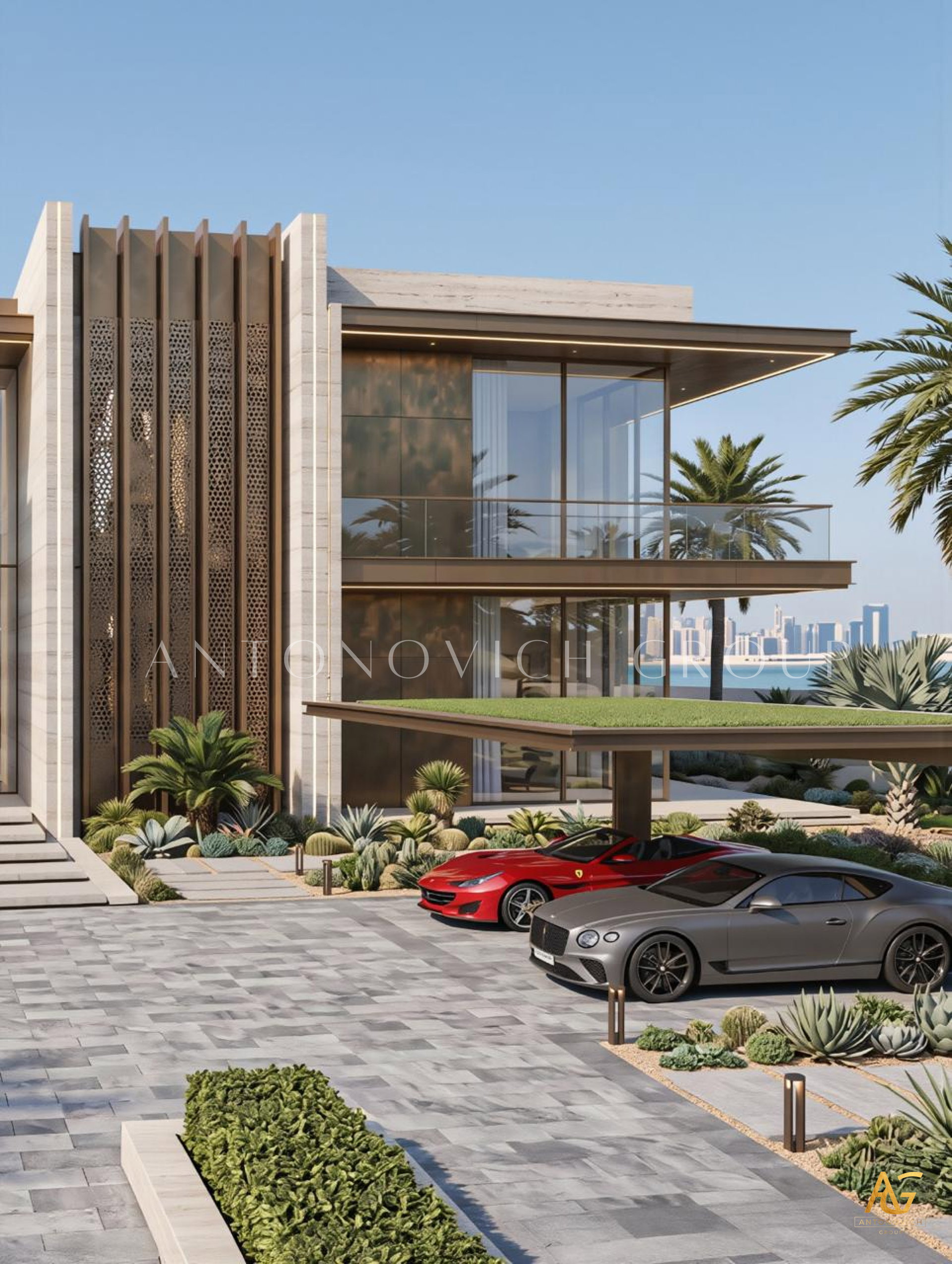
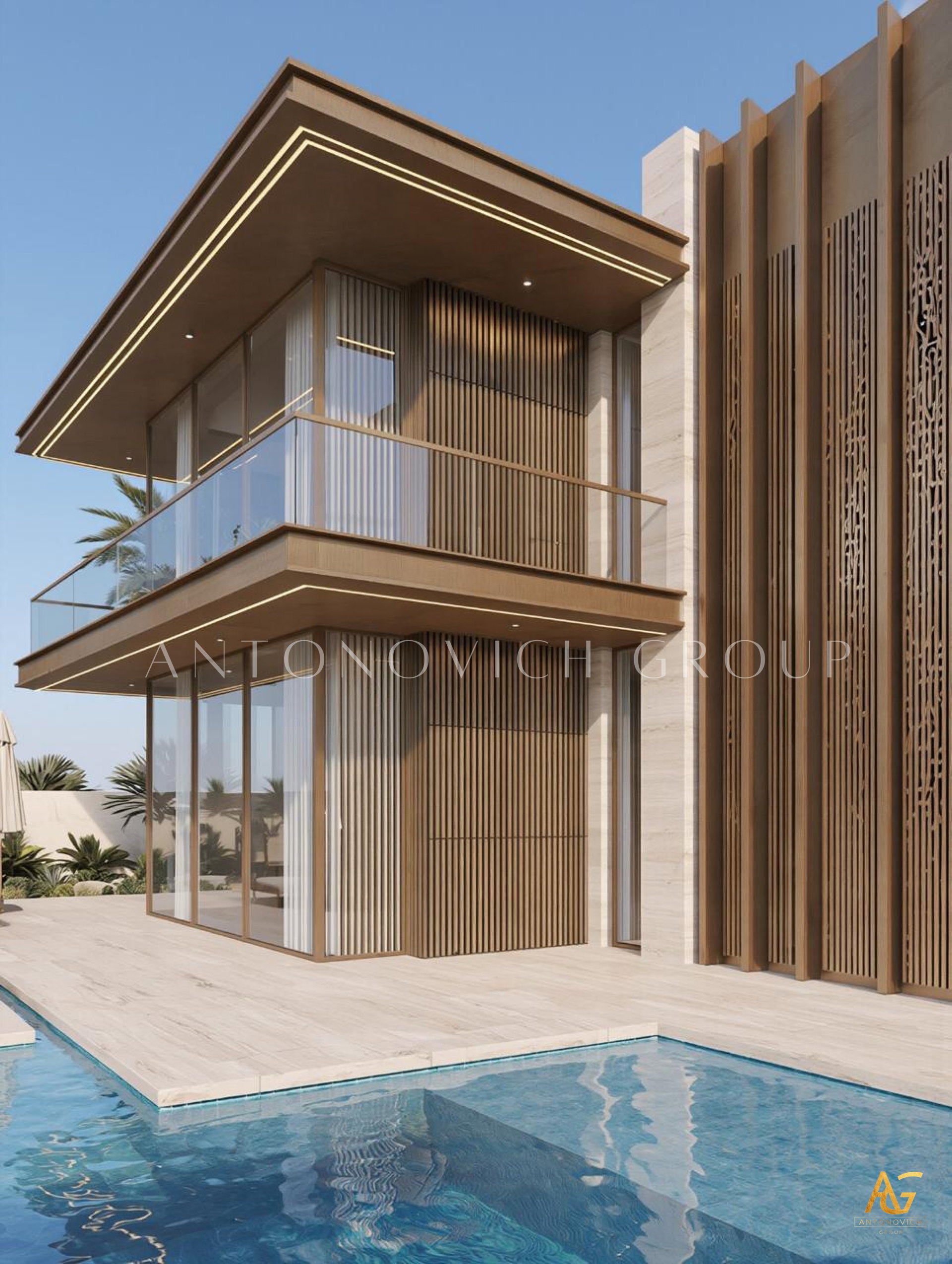
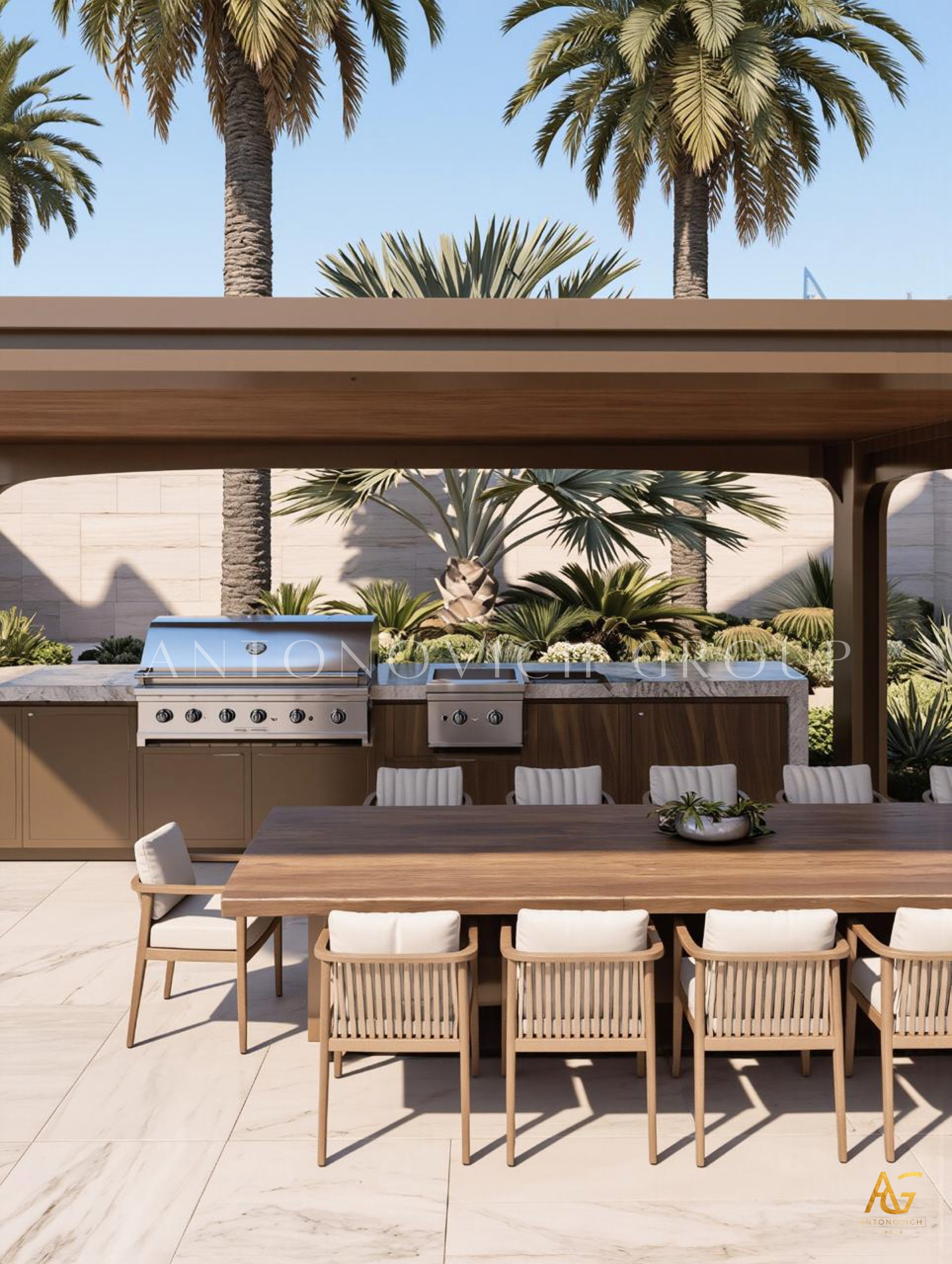
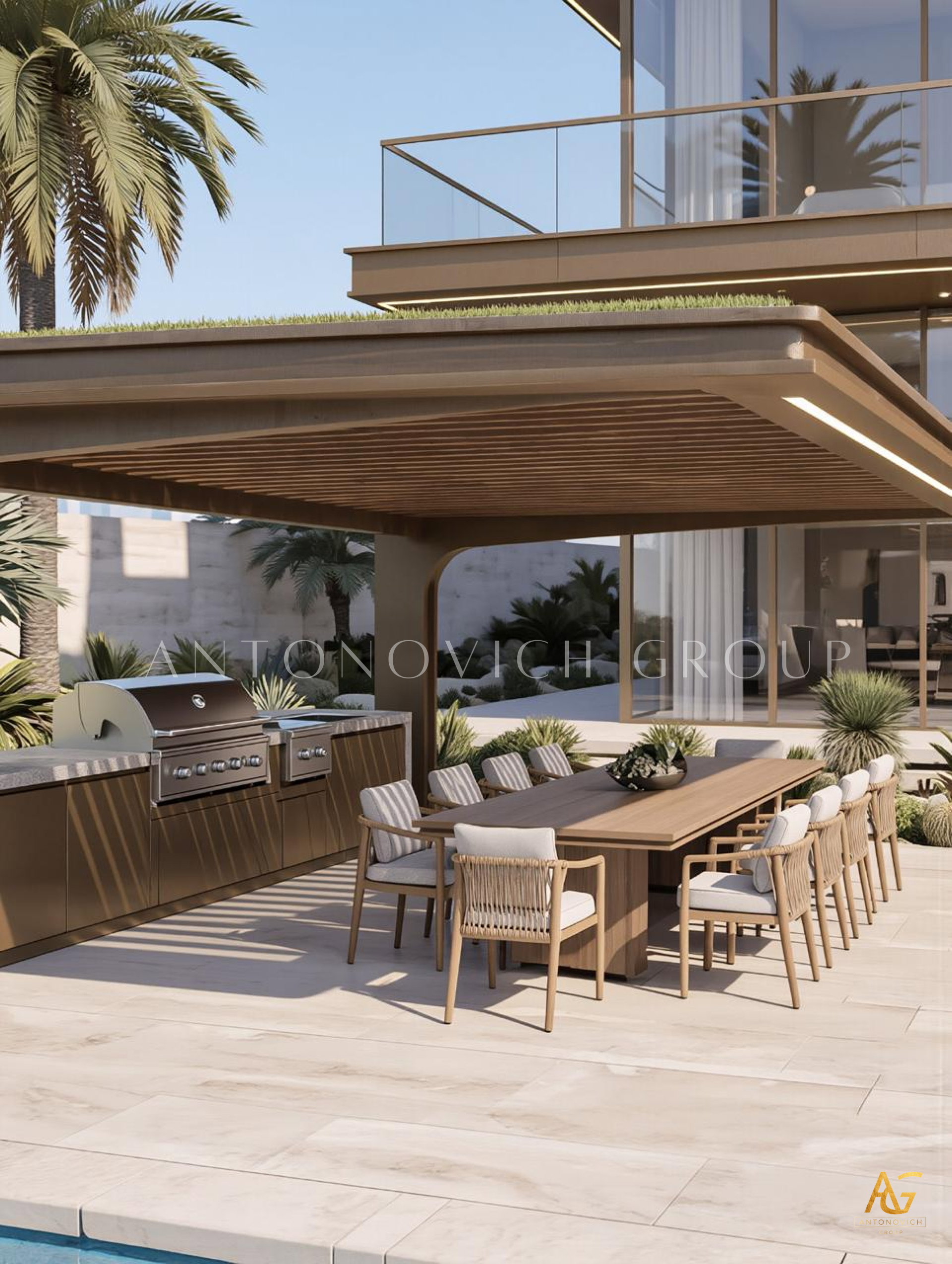
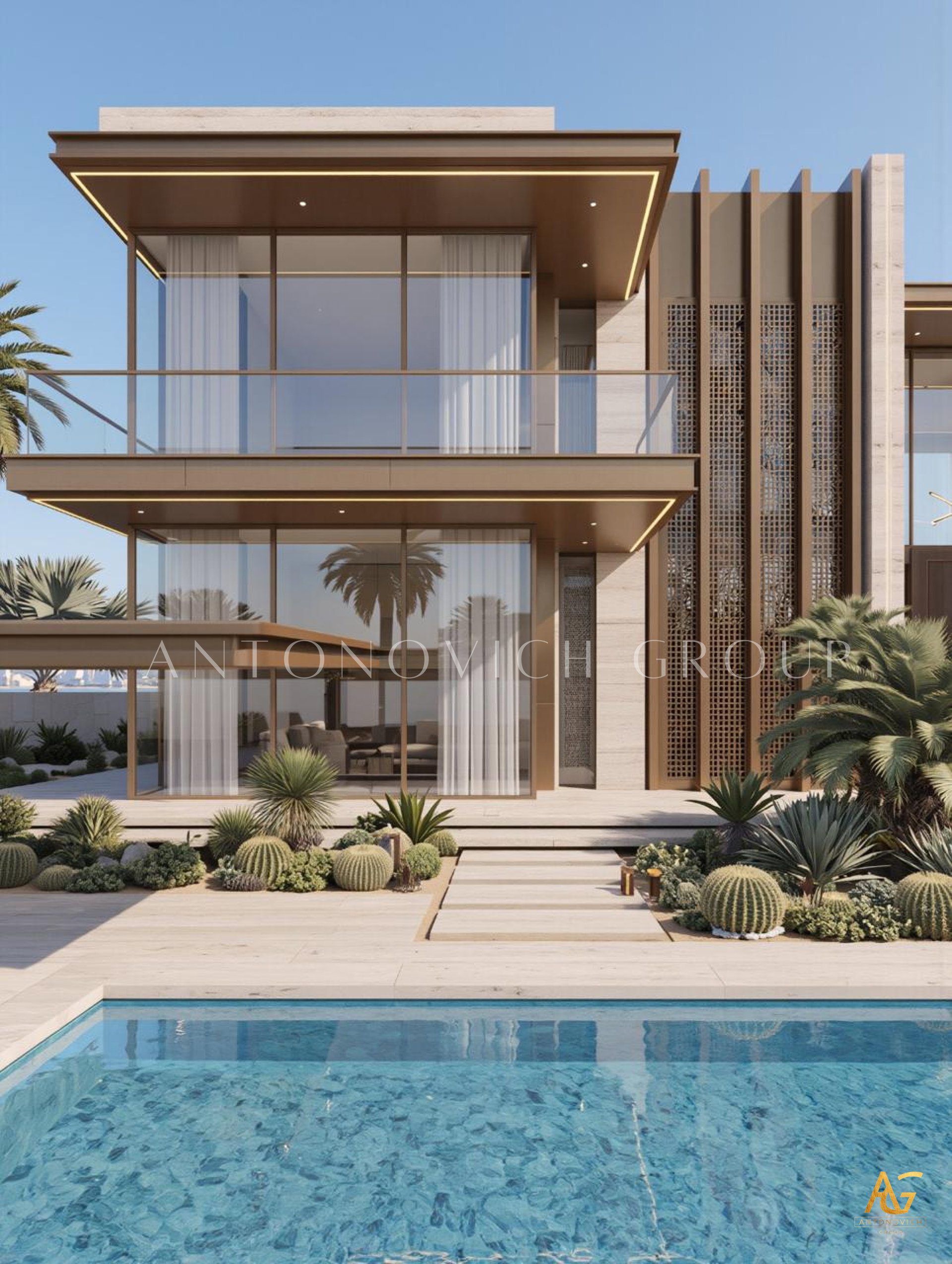
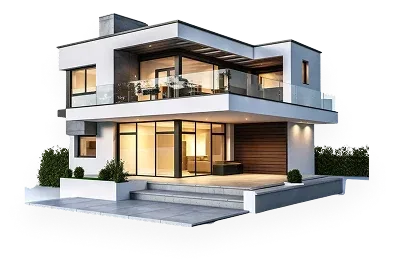
Contemporary villa design, by contrast, prioritizes clean geometric massing, minimal ornamentation, expansive glazing, and material honesty. It tends to favor asymmetry, open-plan living, and a closer visual and physical connection between indoor and outdoor space.
Neither approach is inherently superior — the right choice depends heavily on factors specific to your site, your lifestyle, and your long-term goals for the property.
How Plot Size and Shape Influence the Decision
Larger, Regular Plots
Expansive, rectangular, or symmetrical plots tend to suit classical villa design particularly well. Classical architecture relies heavily on symmetry and formal proportion, which requires generous, evenly distributed space to achieve its full visual impact. A grand entrance flanked by matching wings, a central axis leading to a formal garden — these compositions need room to breathe, and irregular or constrained plots can undermine their intended grandeur.
Irregular or Sloped Plots
Contemporary villa design tends to adapt far more successfully to irregular, angular, or sloped plots. Because contemporary architecture doesn't rely on strict bilateral symmetry, it can respond fluidly to a site's specific constraints — stepping down a slope, wrapping around an unusual boundary line, or orienting different wings toward specific views without disrupting the design's overall coherence.
Waterfront and View-Oriented Plots
For plots with significant views — waterfront, golf course frontage, or skyline outlooks — contemporary design generally offers greater flexibility. Its emphasis on expansive glazing and open-plan living allows the architecture to prioritize view capture in ways that classical facade symmetry sometimes constrains.
Climate and Orientation Considerations
Dubai's climate plays a significant role in this decision as well. Contemporary villa architecture often incorporates climate-responsive features more readily — deep overhangs, strategic shading devices, and glazing calibrated to specific sun exposure. Classical design can certainly incorporate climate performance too, but it typically requires more careful integration to avoid compromising the style's formal symmetry.
If your plot has challenging solar orientation — a west-facing facade receiving intense afternoon sun, for example — contemporary design's flexibility often makes it easier to resolve climate performance without sacrificing architectural intent.
Lifestyle Fit: Which Style Suits How You Actually Live?
Beyond the physical plot itself, the contemporary vs classical villa design decision should also reflect how a family intends to use the home day to day.
Classical villas tend to favor more clearly delineated, formal room arrangements — distinct living rooms, formal dining rooms, and separate family spaces. This suits homeowners who value tradition, formal entertaining, and clearly defined zones within the home.
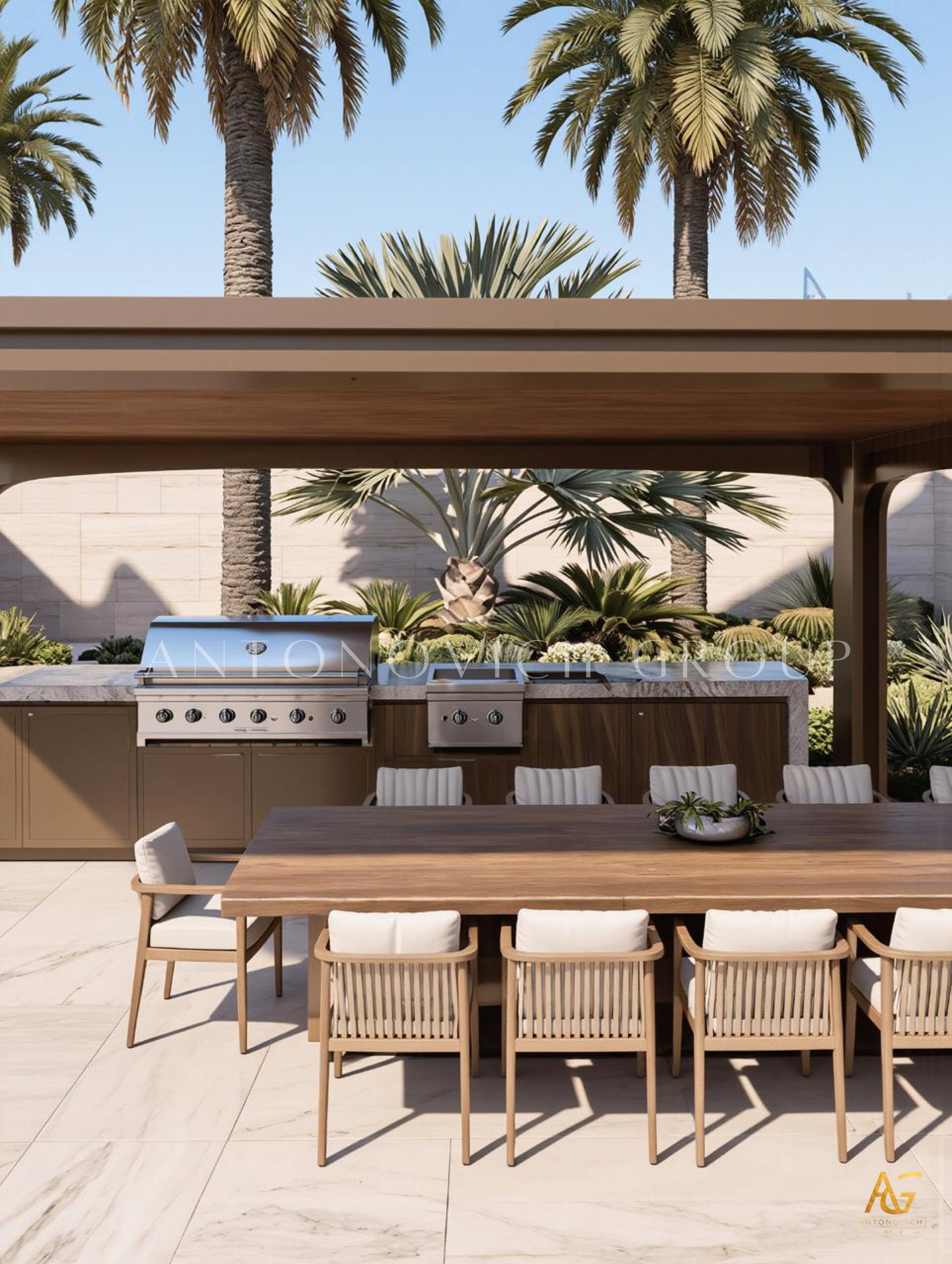
Contemporary villas typically favor open-plan living, with kitchen, dining, and living spaces flowing into one another, often extending directly into outdoor terraces and pool areas. This suits families who prioritize casual, flexible living and frequent indoor-outdoor movement.
Neither lifestyle preference is right or wrong — but mismatching architectural style with actual living patterns is one of the most common regrets we see in villa projects that weren't planned with this alignment in mind from the outset.
Cost and Construction Considerations
It's worth noting that classical villa design often involves higher costs related to detailed stonework, custom millwork, and ornamental plasterwork — craftsmanship-intensive elements that require specialized artisan labor. Contemporary design, while it can also be highly costly depending on material choices and structural complexity, often achieves its impact through large-format materials and precise geometric execution rather than dense ornamental detailing.
Neither approach is inherently more affordable — but understanding where costs concentrate in each style helps set realistic project budgets from the earliest planning stages.
A Third Option: Blending Both Approaches
It's increasingly common — particularly across Dubai's most prestigious residential communities — for homeowners to pursue a hybrid approach: contemporary massing and material honesty combined with select classical detailing, such as a grand entrance portico or formal garden axis, layered into an otherwise modern architectural language.
This blended approach, sometimes described as contemporary classical villa design, can offer the best of both worlds — the timeless grandeur of classical architecture paired with the climate performance and lifestyle flexibility of contemporary design.
Questions to Ask Before Deciding
Before committing to either direction, consider the following:
Does my plot's shape and size support formal symmetry, or would it benefit from a more flexible, adaptive layout?
How important are unobstructed views and indoor-outdoor connectivity to how I want to live?
Do I prioritize formal, distinct living spaces, or open, flexible family living?
What architectural style do neighboring properties follow, and how do I want my villa to relate to that context?
Am I drawn more to timeless grandeur, or to clean, contemporary restraint?
Why Expert Guidance Matters
Choosing between contemporary and classical villa design isn't simply a matter of personal taste — it requires genuine architectural expertise to evaluate how each approach will actually perform on your specific plot, under your specific climate conditions, and within your specific lifestyle needs. This is where working with an experienced architecture and design partner becomes essential.
At Antonovich Group, our design process begins with a thorough evaluation of the plot itself — orientation, dimensions, surrounding context, and client lifestyle — before recommending an architectural direction. Whether the right fit turns out to be boldly contemporary, richly classical, or a thoughtfully blended approach, our goal is always the same: architecture that feels inevitable for its specific site, not simply fashionable for the moment.
Planning a villa project and unsure which architectural direction suits your plot? Contact Antonovich Group to discuss your site with our architecture and design team.
More projects
Any questions?
We will call you back!
We will call you back!
Enter your contact details and our manager will contact you.
Latest Posts

21.09.26
Oceanfront Luxury Residences at Serenia Living Dubai
Bespoke Luxury Apartment Interior Design, Fit-Out, Renovation & Furniture Production by Antonovich Group Serenia Living Dubai represents a distinctive approach t...
Read more
Read more

18.09.26
The Art of Refined Living at St. Regis Dubai
Luxury Apartment Renovation & Bespoke Furnishing by Antonovich Group In Dubai, a luxury residence is more than a place to live. It is an expression of lifestyle,...
Read more
Read more

18.09.26
Modern Luxury Apartment Interior Design & Fit-Out by Antonovich Group
A Bespoke Two-Bedroom Residence at Stella Maris, Dubai Marina, Framed by Bluewaters Island, Marina and JBR Dubai’s waterfront residences demand an interior that...
Read more
Read more

01.09.26
How to Choose the Best Interior Design Company in Doha?
A Complete Guide to Creating a Luxurious Bedroom Interior with Antonovich Group Choosing the best interior design company in Doha is an important decision for ho...
Read more
Read more

29.08.26
Palm Jebel Ali Villa Architecture & Landscape Design
Palm Jebel Ali Villa Architecture and Landscape Design Palm Jebel Ali is becoming one of Dubai’s most prestigious destinations for luxury waterfront living. Its...
Read more
Read more

28.07.26
Luxury Majlis Interior Design in Qatar
Antonovich Group's Expertise in Creating Timeless Arabic Living Spaces A Luxury Majlis Interior Design is more than a beautifully furnished reception room—it is...
Read more
Read more

25.07.26
Bespoke Furniture for Luxury Villas in Doha
World-Class Craftsmanship to Create Bespoke Furniture for Doha's Most Prestigious Luxury Villas. Luxury living is defined by exclusivity, craftsmanship, and time...
Read more
Read more

09.07.26
Turnkey Luxury Interior Design in Qatar: Antonovich Group's Complete Design & Build Excellence
Turnkey Luxury Interior Design in Qatar: Antonovich Group's Complete Design & Build Excellence The demand for turnkey luxury interior design in Qatar has grown s...
Read more
Read more
YouTube Shorts
Recent short videos from Antonovich Group projects, studio work and luxury interiors.
Latest Videos

Antonovich Group | A Global Portfolio of Luxury Interiors
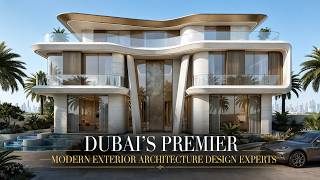
The Future of Luxury Villas | Modern Exterior Architecture by Antonovich Group
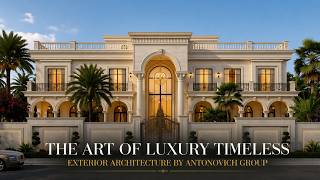
Luxury Classical Villa Design | Timeless Palace Exterior Architecture | Riyadh, Qatar & UAE
Luxury Majlis Interior Design Saudi Arabia | Royal Majlis by Antonovich Group
Zabeel Saray Villa | A Luxury Interior Design Masterpiece by Antonovich Group
Luxury Villa in Palm Jumeirah Dubai | Interior Renovation & Bespoke Furniture
Opera District Transformation Before & After| Dubai’s #1 Luxury Apartment Renovation Company
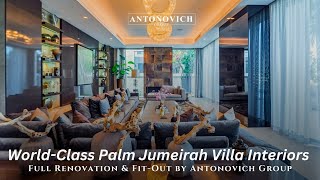
World Class Palm Jumeirah Villa Interiors | Full Renovation & Fit Out by Antonovich Group