Royal Majlis Design: Architecture, Interiors and Ceremony
In the Arabian Peninsula, the majlis is far more than a room. It is the place where a ruler receives his people, where tribal elders resolve disputes, where business is agreed with a handshake, where guests are honoured with coffee and dates, and where families gather for celebrations and condolences. The majlis has been recognised by UNESCO as part of the intangible cultural heritage of humanity — a living tradition of hospitality, dialogue and community.
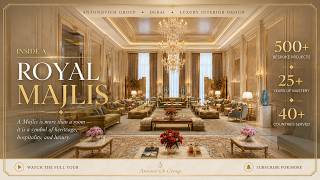
A royal majlis carries this tradition at its highest level. It may receive heads of state, ministers, ambassadors and hundreds of citizens in a single day. Its architecture must express dignity, authority and generosity; its interiors must combine tradition with luxury; its layout must support the precise etiquette of reception; its services must deliver coffee, tea and meals to many guests seamlessly. It is one of the most important — and most demanding — rooms an architect can design.
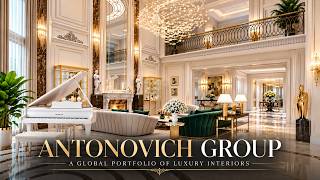
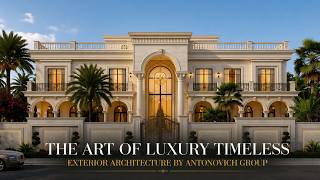
This article explores royal majlis design in depth — its cultural meaning, its types, its architecture, layout and seating, ceilings and walls, materials, furniture, lighting, acoustics, climate, services and ceremony — and shows how Antonovich Group, led by architect Katrina Antonovich, designs majlis halls and pavilions for palaces and private residences across the Gulf and beyond.

Part 1: The Meaning of the Majlis
A Place of Sitting
The word majlis comes from the Arabic for “a place of sitting”. Traditionally, guests sat on cushions along the walls of a room or tent, facing each other across an open space. This arrangement — everyone visible, everyone equal in the circle, the host able to greet each guest — remains the essence of majlis design today.
Hospitality and Honour
Hospitality is a sacred value in Arabian culture. Receiving guests generously reflects the honour of the host and the family. The majlis is where this hospitality is performed: guests are welcomed, seated according to custom, served Arabic coffee and dates, and treated with respect.
Governance and Community
Historically, the ruler’s majlis was where citizens could bring requests, complaints and disputes directly to their leader. This tradition of the open majlis continues in many Gulf states, making the royal majlis a symbol of accessible leadership and community.
Celebration and Condolence
The majlis hosts weddings, Eid celebrations, national occasions, graduations and births, as well as gatherings of condolence. Its design must suit both joyful and solemn occasions.
A Room That Shapes Reputation
Because so many people pass through it, the royal majlis shapes how a family or a leader is perceived. Its beauty, comfort and order speak of the host’s character, generosity and respect for tradition. Few rooms in any building carry such responsibility.
Part 2: Types of Majlis in a Palace
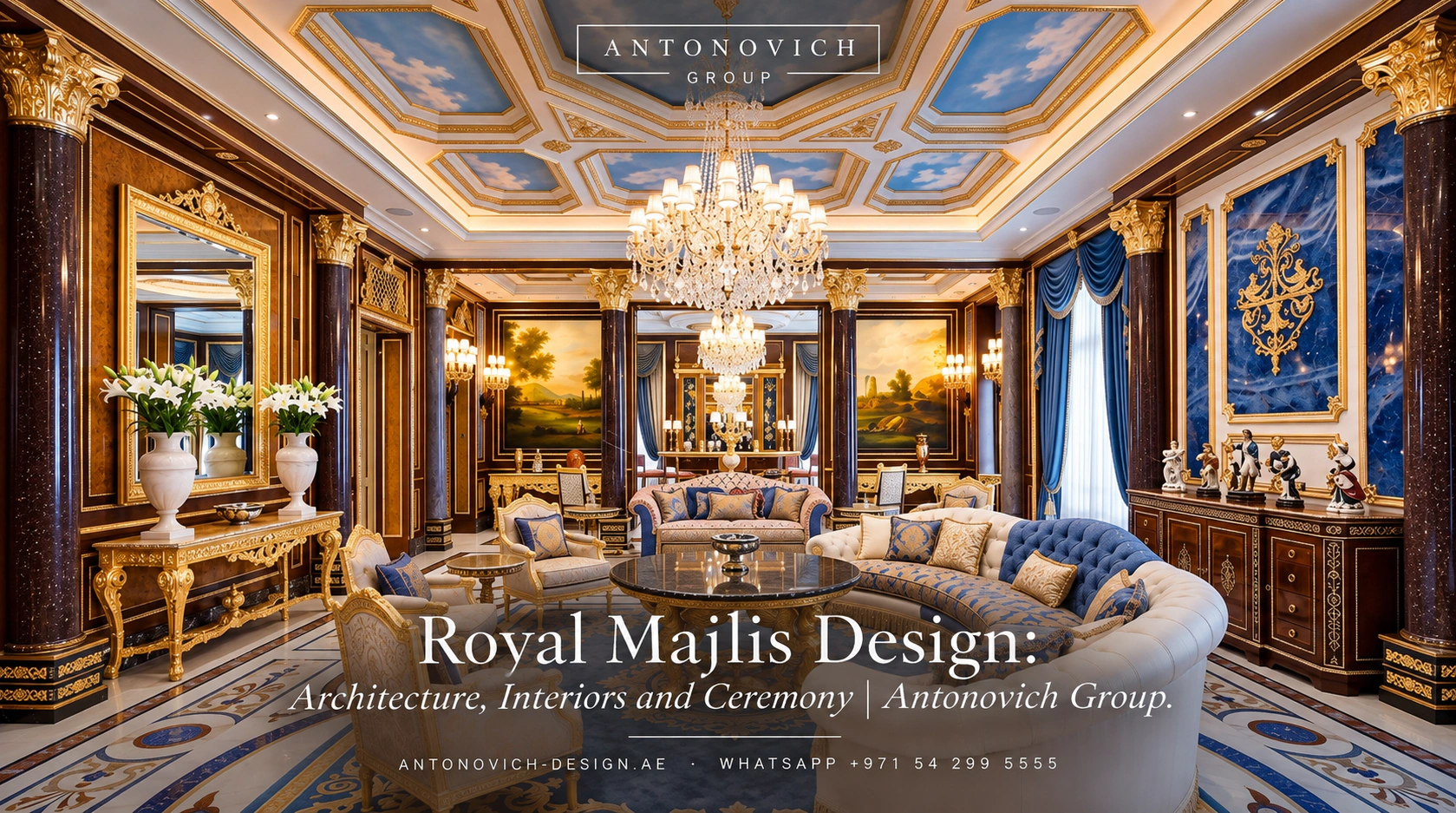
The Grand Royal Majlis
The largest and most formal majlis, used for official receptions, public audiences and major occasions. It may accommodate from one hundred to several hundred guests and is often housed in a dedicated majlis pavilion or a principal wing of the palace.
The Official Majlis
A smaller formal majlis for meetings with dignitaries, delegations and officials, where more private conversations can take place.
The Private Majlis
An intimate majlis for the host’s close friends, family and trusted advisors, often located closer to the private residence.
The Family Majlis
A comfortable majlis where the family gathers daily — informal, warm and furnished for long evenings together.
The Women’s Majlis
A majlis for women to receive their guests, with its own entrance, reception areas and services, offering complete privacy. It is designed with the same quality and grandeur as the men’s majlis, often with a more refined and elegant atmosphere.
The Outdoor Majlis
A majlis in the garden, on a terrace or in a pavilion, used in the cooler months for evening gatherings under the stars, sometimes with a fire pit or traditional tent-inspired structure.
The Desert or Tent Majlis
Some estates include a majlis inspired by Bedouin tents — with woven textiles, low seating and a central fire — connecting the family to its heritage.
Part 3: Placement Within the Estate
Accessibility for Visitors
The grand majlis is usually placed near the estate’s entrance or along the ceremonial route, so visitors can be received without entering the private parts of the palace. It needs its own arrival court, portico and parking.
Connection to the Palace
At the same time, the host must be able to move from the private residence to the majlis discreetly, through a private corridor or garden route, entering the hall from a separate door.
Separation of Men and Women
The men’s and women’s majlis are placed with separate entrances, separate parking and separate service routes, ensuring privacy for both.
Service Access
The majlis requires constant service. It must connect to the main kitchen through hidden routes, with a coffee preparation room and pantry immediately adjacent.
Part 4: The Architecture of the Majlis Hall
Proportion
The classic majlis hall is rectangular, longer than it is wide, allowing seating along all walls with a clear central space. Proportions must make the hall feel grand when full of guests and still comfortable when only a few are present. Typical grand majlis halls range from 200 to more than 1,000 m², with ceiling heights of 6 to 12 metres or more under domes.
The Entrance
Guests enter through a dignified entrance, often from a vestibule where shoes may be removed in traditional settings and where staff welcome arrivals. The entrance is usually placed so that guests see the host’s position as they enter.
The Host’s Position
The host traditionally sits at the head of the majlis, often opposite or to the side of the entrance, in a position where he can see and greet every guest. This position may be emphasised architecturally: a central bay, a niche, a change in ceiling, a backdrop of carved panels or a crest above.
Symmetry and Order
Most royal majlis halls are symmetrical, expressing order and dignity. The central axis runs from the entrance to the host’s seat, with seating arranged evenly along both sides.
Windows and Light
Natural light enters through tall windows, clerestories or a central dome, often filtered through mashrabiya screens, carved panels or sheer curtains to control glare and heat. Light should be soft and even, flattering to guests.
Domes and Vaults
A dome over the majlis creates a sense of grandeur and gathers the space around its centre. Coffered or carved domes, often with a central chandelier, are among the most impressive features of royal majlis halls.
Columns and Arcades
In very large majlis halls, colonnades may divide the space into a central nave and side aisles, adding rhythm and supporting the roof.
Part 5: Seating and Layout
The Perimeter Arrangement
The defining feature of the majlis is seating along the walls. In a royal majlis, this may be continuous sofas, individual armchairs in a row, or a combination. The arrangement ensures that all guests face the centre and can see each other and the host.
Armchairs or Sofas
Individual armchairs are common in formal royal majlis halls, giving each guest a dignified place and making it easy to stand when greeting arrivals.
Continuous sofas create a more traditional and relaxed atmosphere, often used in family and private majlis.
Low floor seating with cushions and armrests evokes heritage, used in traditional or tent-inspired majlis.
Side Tables
Small side tables between seats hold coffee cups, tea glasses, water and dates. Their spacing and height are carefully planned for service.
The Central Space
The open central space is kept clear or furnished with carpets and low tables. It allows staff to move freely, serving guests, and gives the room its sense of openness.
Spacing and Capacity
Seat widths, spacing between seats and the depth of the central space are calculated for comfort, service and capacity. A large majlis may need to accommodate overflow seating for special occasions, with additional chairs that can be brought in.
Secondary Seating Areas
Very large halls may include secondary seating clusters for smaller conversations, without breaking the overall arrangement.
Part 6: Ceilings
The Fifth Façade
In a majlis, where guests sit along the walls looking across the room, the ceiling is highly visible and becomes one of the main decorative surfaces.
Ceiling Types
• Domed ceilings with coffers, ribs or carved decoration.
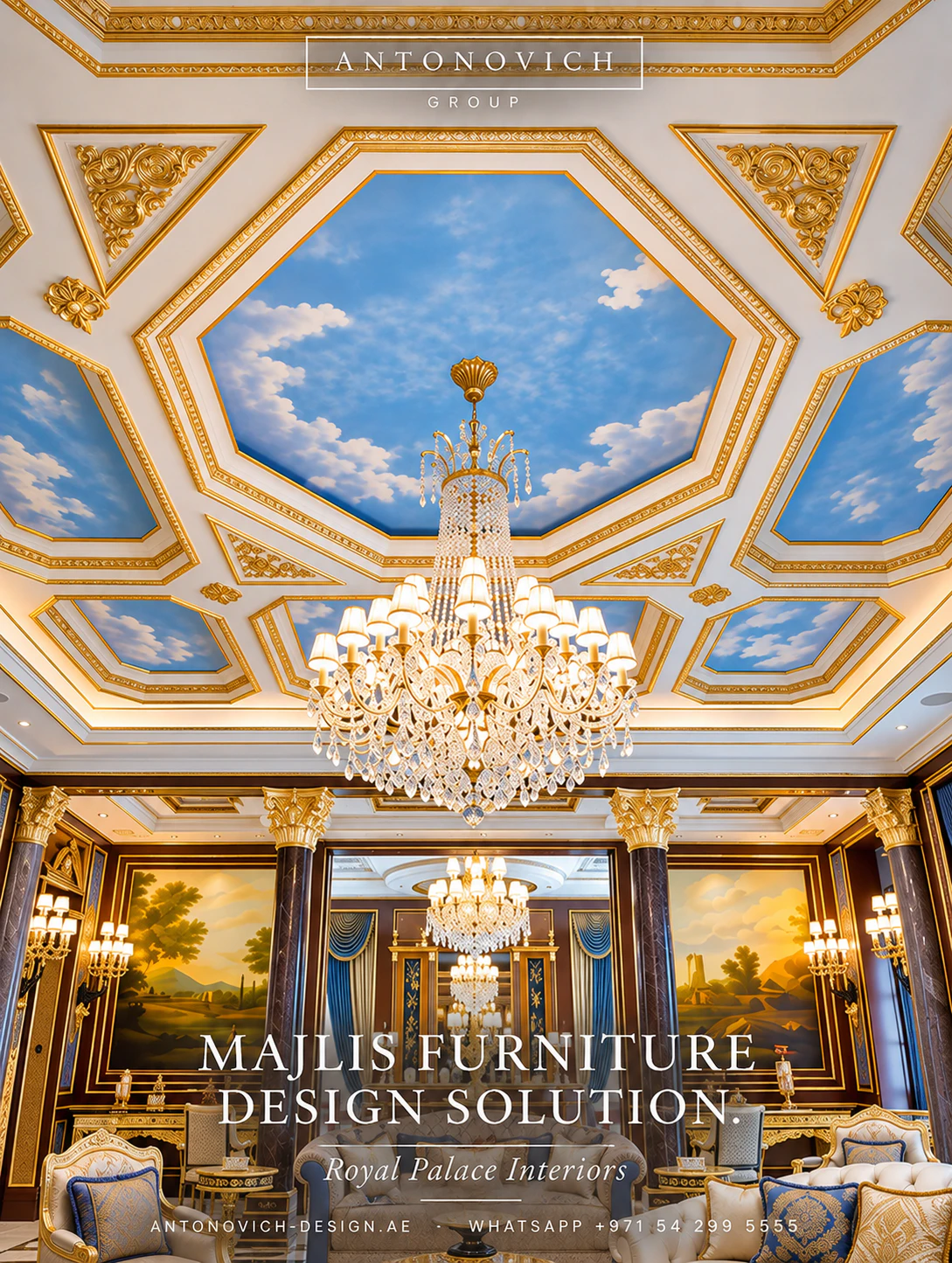
• Coffered ceilings with deep geometric panels.
• Carved wood ceilings inspired by traditional Arabian and Islamic craft.
• Painted ceilings with ornamental patterns.
• Muqarnas — honeycomb vaulting — in Islamic-style majlis.
• Tray ceilings with indirect lighting coves.
Integration of Services
Ceilings conceal air conditioning, lighting, sound systems, sprinklers and sensors. These must be integrated with decoration so that diffusers, speakers and detectors disappear into the design.
Part 7: Walls
Wall Treatments
The walls of a royal majlis form the backdrop to the seated guests. They may be finished with:
• Carved wood panelling with geometric or floral patterns.
• Carved stone or plaster (gypsum) in traditional patterns.
• Fabric or silk wall coverings for warmth and acoustics.
• Marble or onyx panels, sometimes backlit.
• Mashrabiya screens over windows and niches.
• Calligraphy panels with verses or poetry.
• Mirror and gold details for sparkle.
The Backdrop of the Host
The wall behind the host’s seat is often the most richly decorated: a carved panel, a crest, a niche with lighting, or a calligraphic composition. It frames the host as the centre of the majlis.
Niches and Display
Niches can display heritage objects: falcons, incense burners, dallah coffee pots, swords, manuscripts or gifts from visiting dignitaries.
Part 8: Floors and Carpets
Floors
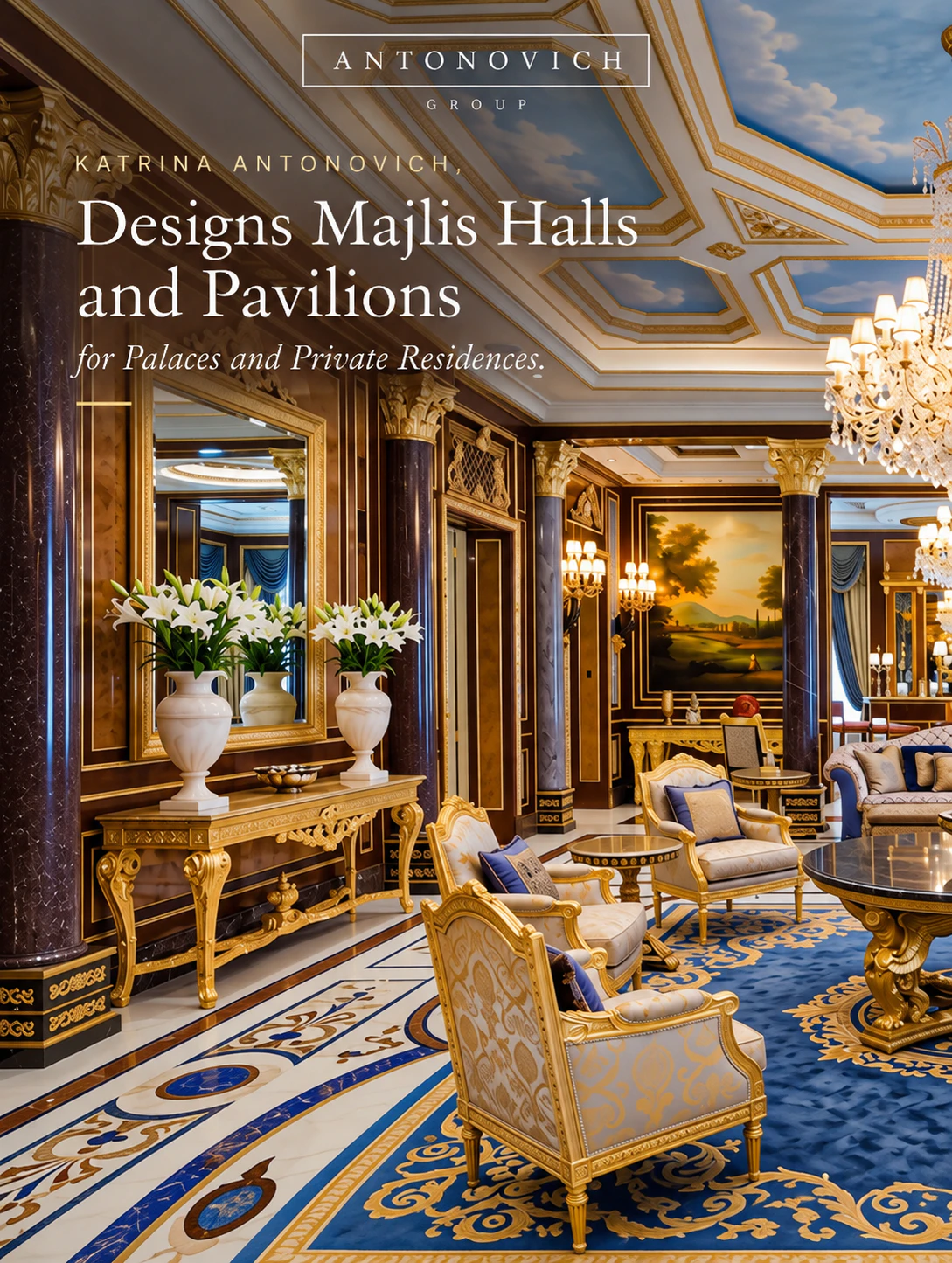
Marble and natural stone floors, often with inlaid patterns, give the majlis durability and elegance. Patterns may echo the ceiling or define the central space.
Carpets
Large hand-knotted carpets — Persian, Turkish, Afghan or custom-designed — soften the floor, improve acoustics and add colour and pattern. Carpets for royal majlis halls are often commissioned in custom sizes and designs to fit the room and match the interior.
Part 9: Materials and Palette
Traditional Richness
Royal majlis interiors draw on a rich palette:
• Natural stone and marble.
• Carved woods such as walnut, oak, teak and mahogany.
• Gold finishes on mouldings, furniture and ornament.
• Silk and velvet upholstery.
• Brocades and embroidered fabrics.
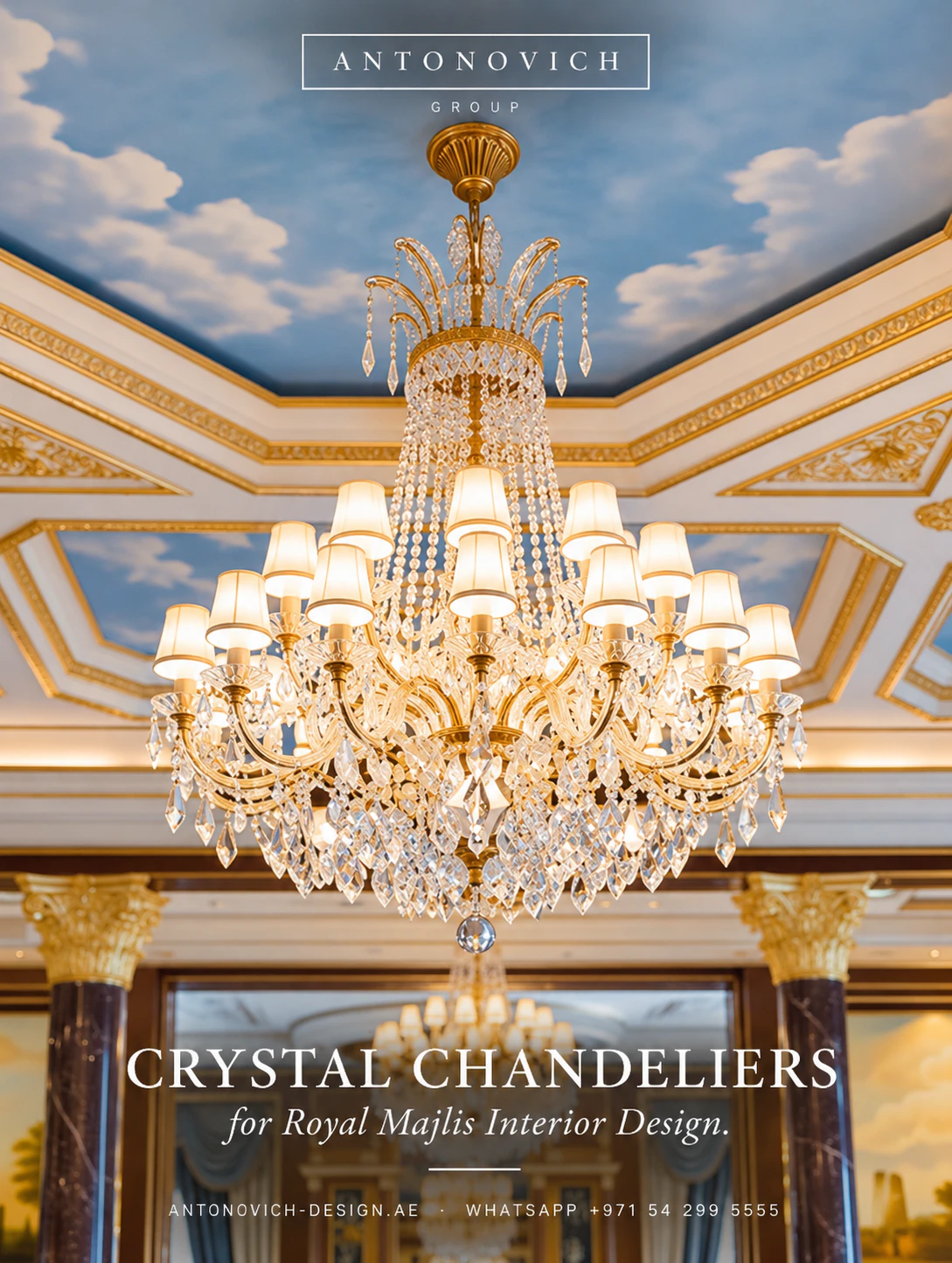
• Crystal in chandeliers.
• Brass and bronze fittings.
Colours
Classic majlis palettes include warm creams and ivories, deep reds, burgundies, golds, emerald greens and royal blues. Contemporary majlis often favour lighter neutrals — ivory, sand, champagne, taupe — accented with gold.
Durability
Majlis halls are used intensively. Fabrics, finishes and floors must be durable, stain-resistant and easy to maintain without losing luxury.
Part 10: Furniture
Bespoke Majlis Seating
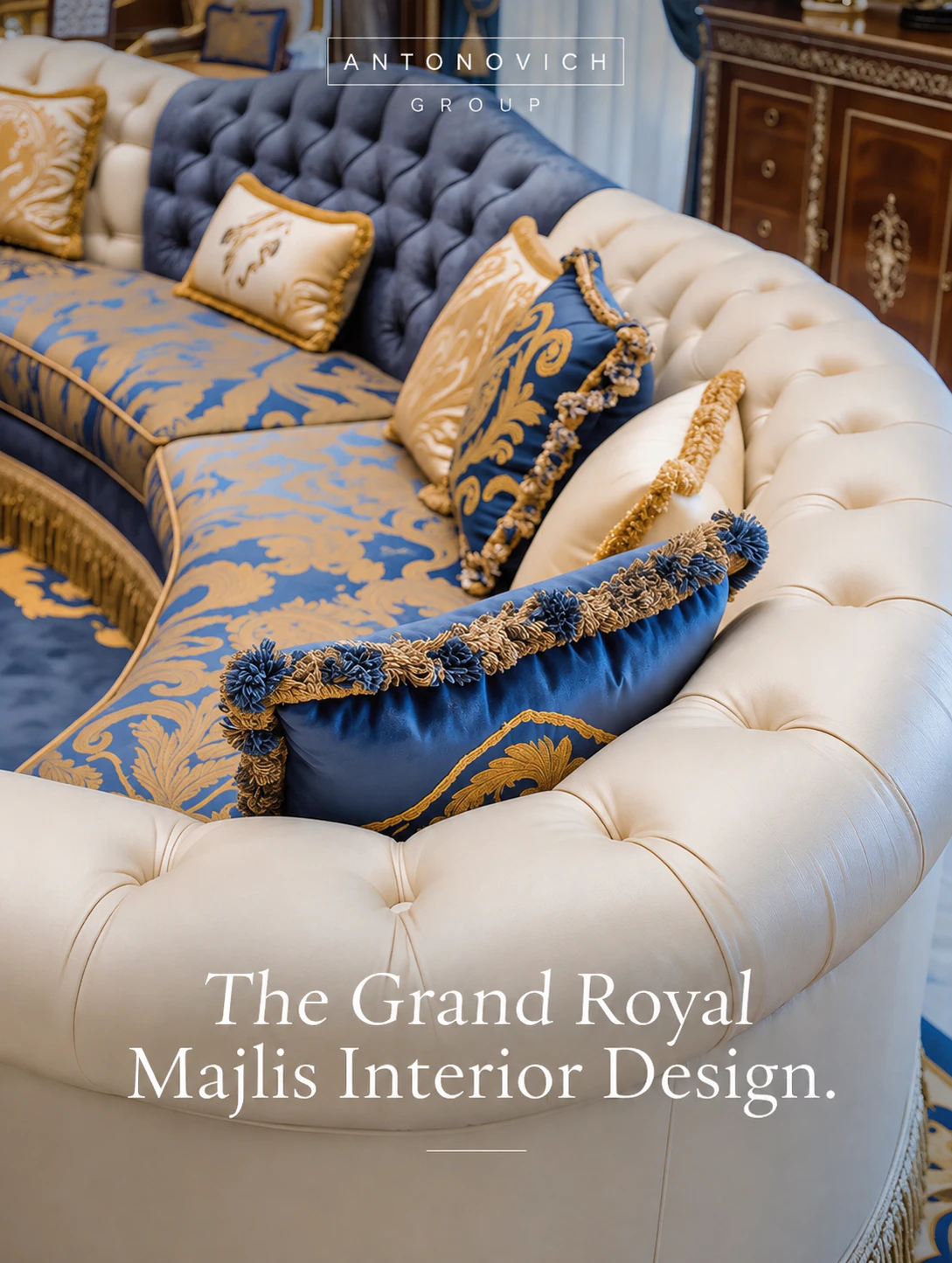
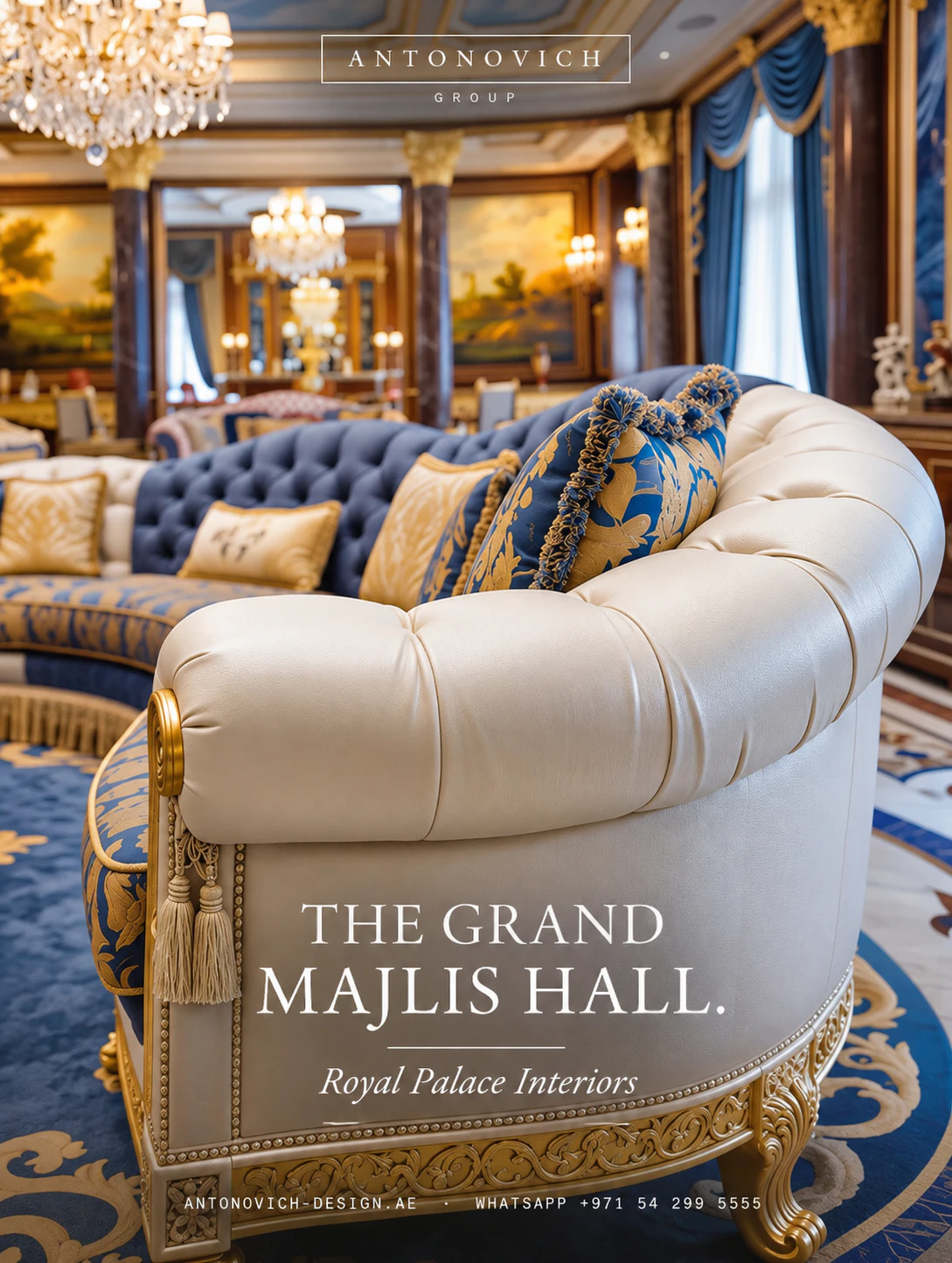
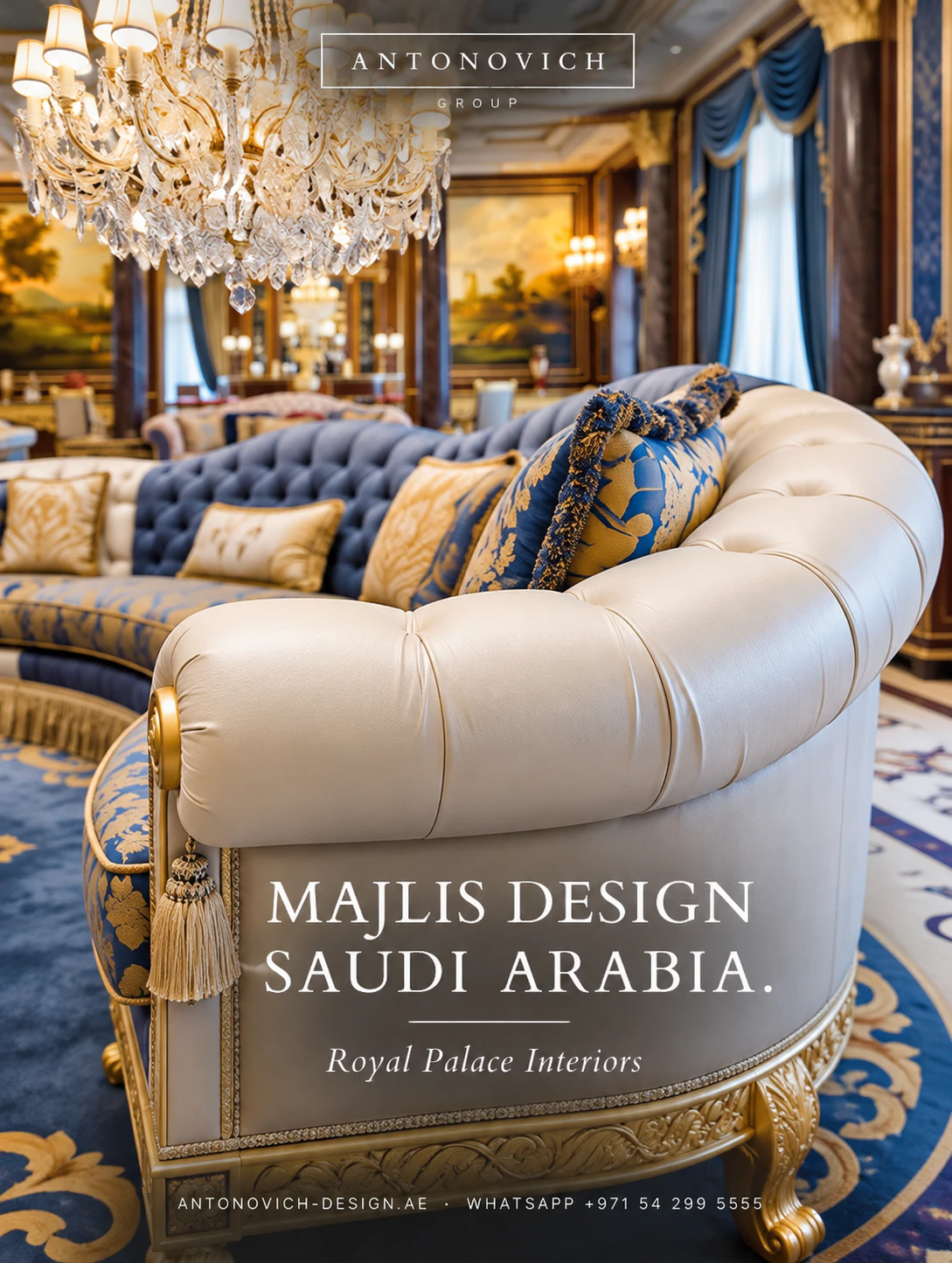
Royal majlis furniture is almost always custom-made: armchairs and sofas sized for the room, upholstered in custom fabrics, with carved and gilded frames or refined contemporary forms. Comfort is crucial, as guests may sit for hours.
Side Tables and Consoles
Side tables, consoles and display cabinets complement the seating, crafted in matching woods and finishes.
Coffee Service Furniture
Trolleys, trays and stands for coffee and tea service may be designed as part of the interior.
Antonovich Group Furniture
Antonovich Group designs and manufactures bespoke majlis furniture in-house, coordinating seating, tables, consoles, panels and decorative elements so the entire majlis feels designed as one.
Part 11: Lighting
Layers of Light
• Chandeliers as centrepieces, often crystal, sized to the room’s scale.
• Indirect cove lighting in ceilings.
• Wall sconces along the seating.
• Accent lighting for niches, art and the host’s backdrop.
• Natural light through windows and domes.
Atmosphere
Lighting should flatter guests, create warmth and allow different scenes: bright for formal receptions, softer for evening gatherings, special scenes for celebrations. A lighting control system makes switching between scenes effortless.
Part 12: Acoustics
The Challenge
A majlis full of people, with hard stone floors, high ceilings and domes, can become noisy and echoing. Conversations across the room may become difficult.
Solutions
• Carpets and rugs absorbing sound.
• Fabric wall panels and upholstered seating.
• Carved wood and plaster diffusing sound.
• Acoustic ceiling treatments concealed within decoration.
• Dome geometry studied to avoid focusing echoes.
• Discreet sound systems for speeches and recitations.
Good acoustics allow the host to speak to the whole majlis and guests to converse comfortably with their neighbours.
Part 13: Climate and Comfort
Cooling
The majlis must remain cool even when full of guests on a hot evening. Air conditioning is designed for high occupancy, with discreet diffusers and quiet operation. Zoning allows parts of large halls to be cooled efficiently when only partly used.
Air Quality
Incense (bakhoor and oud) is an important part of majlis hospitality. Ventilation must handle incense smoke and maintain fresh air without draughts.
Fragrance
Fragrance systems and traditional incense burners are planned as part of the experience, welcoming guests with the scents of oud and amber.
Part 14: Services and Hospitality
The Coffee Room
Arabic coffee (gahwa) and dates are the heart of majlis hospitality. A dedicated coffee preparation room, adjacent to the hall, allows coffee and tea to be prepared and served immediately. It includes equipment for roasting, brewing and keeping coffee hot, storage for dallahs and cups, and washing facilities.
Service Routes
Staff enter and leave the majlis through discreet service doors, often near the entrance or at the sides, so that service flows without disturbing guests.
Dining
Many majlis pavilions include a dining hall for meals following gatherings, connected to the kitchen. Traditional meals may be served on large platters, requiring generous tables or floor dining arrangements.
Ablution and Prayer
A prayer room and ablution facilities near the majlis allow guests to pray at the appropriate times.
Cloakrooms and Toilets
Generous facilities are needed for large gatherings, designed with the same quality as the majlis itself.
Part 15: Technology
A royal majlis today integrates discreet technology:
• Audio systems for speeches, recitations and ceremonies.
• Video screens concealed in panels or furniture for presentations or news.
• Broadcast facilities for official occasions.
• Lighting and climate control.
• Security systems — cameras, access control and screening at entrances.
All technology is hidden within the architecture so the majlis retains its timeless character.
Part 16: The Outdoor Majlis
Evenings Under the Sky
In the cooler months, the outdoor majlis becomes the centre of social life. It may be:
• A covered terrace adjoining the indoor majlis.
• A garden pavilion with open sides.
• A tent-inspired structure with woven textiles.
• A sunken seating area around a fire pit.
Comfort Outdoors
Outdoor cooling, heating for winter evenings, misting systems, wind screens, lighting and weather-resistant furniture make the outdoor majlis usable for much of the year.
Part 17: Styles of Royal Majlis
Traditional Arabian
Carved wood, gypsum, mashrabiya, low seating, rich carpets and heritage objects — rooted in the architecture of the Gulf.
Classical Palatial
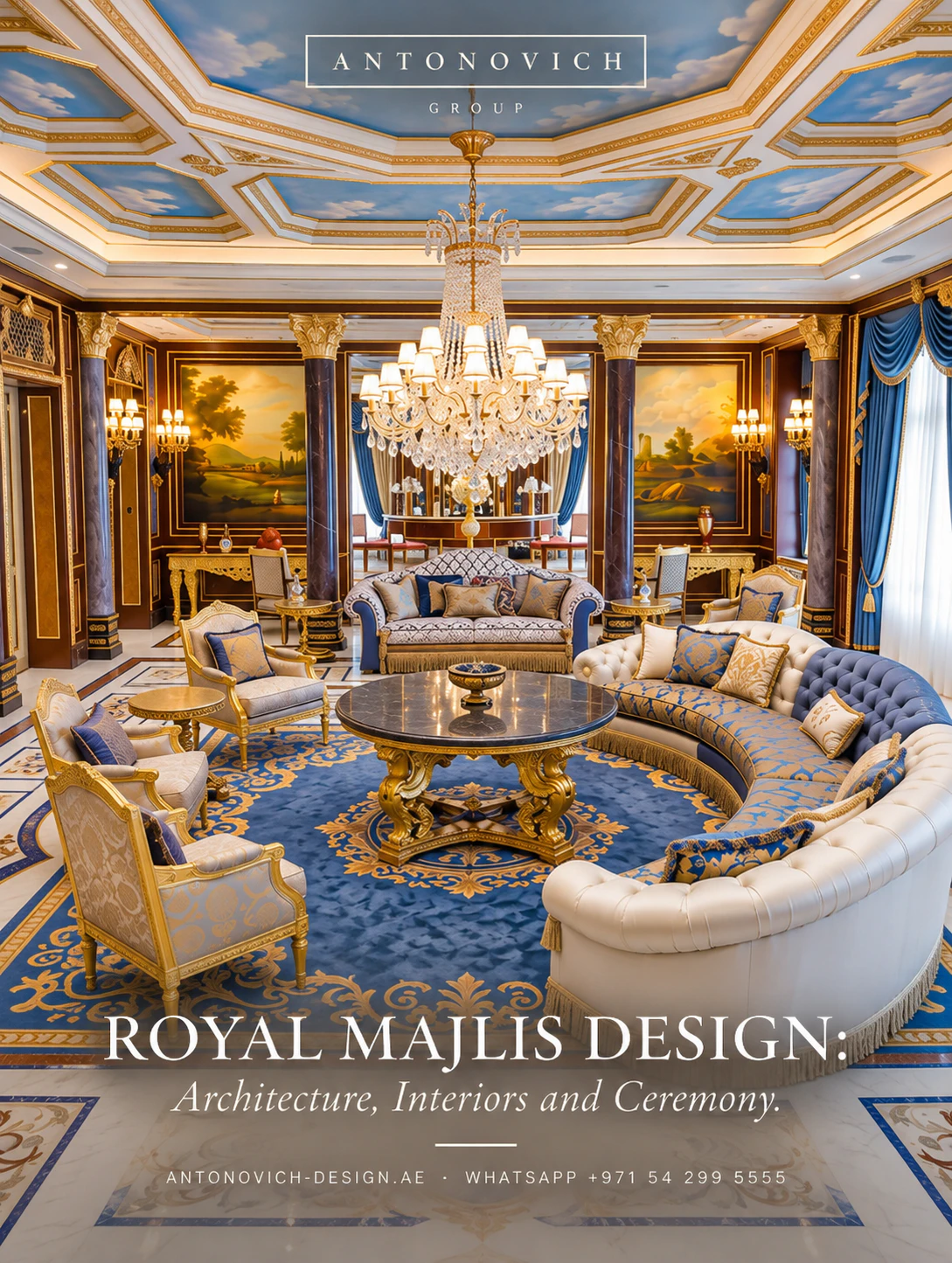
Gilded mouldings, coffered ceilings, crystal chandeliers, carved armchairs in silk and velvet — inspired by European palace interiors, adapted to majlis etiquette.
Islamic Grand Style
Domes, muqarnas, calligraphy, geometric patterns, marble and inlay — drawing on the great monuments of Islamic architecture.
Contemporary Luxury
Clean lines, refined materials, neutral palettes with gold accents, modern lighting — a majlis for a new generation, still respecting traditional layout.
Fusion
Many royal majlis combine styles: classical proportions with Arabian carved details, or contemporary furniture under a traditional ceiling. The key is a coherent vision.
Part 18: Etiquette and Ceremony in Design
The Order of Arrival
In a royal majlis, the sequence of arrival follows a careful etiquette. Guests are received at the entrance, guided to their places according to status and custom, and greeted by the host. The architecture supports this: a vestibule where guests gather, an entrance aligned with the host’s seat, and a clear path along which guests approach to greet him.
Seating by Honour
The places nearest the host are traditionally reserved for the most honoured guests. The layout must make these positions clear without signage — through the arrangement of chairs, the width of seats, the composition of the wall behind or subtle changes in furniture.
The Coffee Ceremony
Coffee is served in a precise order, usually beginning with the most honoured guest or the guest of the host’s right hand. The server moves around the majlis with the dallah and small cups. The width of the central space, the spacing of chairs and the location of service doors all affect how gracefully this ceremony unfolds.
Incense and Departure
As gatherings end, incense is often passed among guests as a gesture of farewell. Ventilation, the placement of incense burners and the route back to the entrance are considered in the design.
Large Occasions
For national days, Eid and weddings, the majlis may receive hundreds of guests in waves. The architecture must allow guests to enter, greet the host and leave in a continuous flow, with additional seating, extended service and overflow areas in adjacent halls or gardens.
Part 19: A Majlis Through the Day
A royal majlis is rarely used in only one way. Its design must work across the rhythms of the day and the year.
Morning. In some palaces, the majlis opens in the morning for official audiences: citizens and officials arrive with requests, and the host receives them in turn. Natural light fills the hall; the atmosphere is formal and orderly.
Afternoon. Meetings with delegations and business partners take place in the official or private majlis, with more intimate seating and the possibility of closed doors.
Evening. After sunset, the majlis becomes a social space. Friends and family arrive, coffee and tea flow, conversation lasts late into the night. Lighting is softer, incense fills the air and the outdoor majlis may open onto the garden.
Ramadan. During the holy month, the majlis hosts iftar gatherings and long evenings of visits, with increased service and dining capacity.
Eid and national days. The majlis receives hundreds of well-wishers, sometimes thousands, in continuous waves throughout the day.
Condolences. For gatherings of condolence, the majlis must offer a dignified, calm atmosphere for three days of visits.
Designing for all these uses requires flexible lighting scenes, adaptable seating, expandable service and careful attention to the flow of people.
Part 20: The Majlis in Private Villas
The royal majlis tradition also shapes the majlis in private villas. Even in a home of 1,000 m², the majlis is often the most important reception room, and the same principles apply at a smaller scale:
• A separate guest entrance so visitors do not pass through family areas.
• Perimeter seating with a clear host’s position.
• A coffee preparation area close to the majlis.
• Durable, luxurious materials and comfortable bespoke seating.
• Good acoustics and cooling for evening gatherings.
• A women’s majlis or family living room with its own access.
For villa owners in Dubai, Abu Dhabi and Saudi Arabia, a well-designed majlis transforms how the home receives guests. Antonovich Group designs majlis rooms for villas as part of complete interior and turnkey renovation projects.
Part 21: Budget and Timeline
The cost of a royal majlis depends on its size, ceiling complexity, materials, carved work, furniture and technology. Major cost elements include domes and decorative ceilings, carved wood and stone, marble floors, custom carpets, chandeliers, bespoke furniture and integrated systems.
Timelines typically include several months for design and approvals, followed by manufacturing of furniture and joinery, which may run in parallel with construction. Bespoke majlis furniture and carved panels require careful scheduling so they arrive on site when the room is ready for installation.
Antonovich Group: Designing Royal Majlis
Antonovich Group, led by architect Katrina Antonovich, designs royal majlis halls, majlis pavilions, women’s majlis and outdoor majlis for palaces, state residences and private villas across the UAE, Saudi Arabia, the wider Gulf and beyond. The firm combines a deep respect for majlis tradition with palatial architecture, luxurious interiors and bespoke furniture manufactured in-house.
What Antonovich Group Delivers
• Architectural design of majlis halls and pavilions.
• Interior design: ceilings, walls, floors, lighting and acoustics.
• Bespoke majlis furniture manufactured in-house.
• Custom carpets, fabrics and finishes.
• Coffee rooms, dining and service planning.
• Women’s majlis with complete privacy.
• Outdoor majlis and garden pavilions.
• Technology integration.
• Turnkey delivery from design to installation.
Katrina Antonovich’s Approach
Katrina Antonovich begins every majlis by understanding how the host receives guests: how many people come, how they are seated, how coffee is served, where the host sits and how he enters. Only then does she shape the architecture and interiors around this ceremony, so that tradition and beauty support each other in every detail.
The Majlis Design Process
1. Brief: reception customs, guest numbers, occasions and preferred style.
2. Space planning: seating layout, host’s position, entrances and services.
3. Architectural concept: proportions, ceilings, domes, windows.
4. Interior concept: materials, palette, furniture and lighting.
5. Detailed design: carved panels, ceilings, furniture drawings, lighting plans.
6. Samples and prototypes: fabrics, finishes, a sample armchair.
7. Manufacturing of furniture and joinery.
8. Installation and styling.
Common Mistakes
Ignoring etiquette. Layouts that don’t support the host’s position or seating customs.
Poor acoustics. Echoing halls where conversation is difficult.
Uncomfortable seating. Beautiful chairs that are tiring to sit in for hours.
Weak service. Coffee rooms too far away, staff crossing guest routes.
Insufficient cooling. Halls that overheat when full.
Visible technology. Speakers and diffusers that spoil the ceiling.
Inferior women’s majlis. Lower quality than the men’s majlis.
Frequently Asked Questions
What is a royal majlis? The grand reception hall of a palace, where the host receives guests, dignitaries and citizens according to Arabian traditions of hospitality.
How large should a royal majlis be? From around 200 m² for a private palace to more than 1,000 m² for a grand royal or state majlis, depending on guest numbers.
How is seating arranged in a majlis? Along the walls, facing a central open space, with the host at the head of the room.
Do you design women’s majlis? Yes, with separate entrances, services and the same level of quality and luxury.
Do you make majlis furniture? Yes. Antonovich Group designs and manufactures bespoke majlis furniture in-house.
How do you manage acoustics in large majlis halls? With carpets, fabric panels, upholstered seating, carved surfaces and concealed acoustic treatments.
Can a majlis combine traditional and modern styles? Yes. Many majlis combine traditional layouts and details with contemporary materials and furniture.
Do you design majlis rooms for villas? Yes, as part of complete villa interior and turnkey renovation projects in Dubai, Abu Dhabi and Saudi Arabia.
How long does it take to design and furnish a royal majlis? Design typically takes several months, with furniture and joinery manufactured in parallel with construction.
Do you design outdoor majlis? Yes, including terraces, garden pavilions and tent-inspired structures with outdoor cooling and heating.
The Heart of Arabian Hospitality
The majlis is where a palace welcomes the world. Antonovich Group designs royal majlis halls that honour tradition, express dignity and surround every guest with beauty, comfort and the warmth of true Arabian hospitality.
Confidential Consultation · WhatsApp +971 54 299 5555 · antonovich-design.ae