Palace Gardens: Fountains, Parterres and Lakes
A palace without gardens is a building; a palace with gardens is a world. From the paradise gardens of Persia and Andalusia to the formal parterres of Versailles and the landscape parks of England, the greatest palaces in history have been inseparable from their gardens. The garden extends the architecture into nature, frames the palace in views, cools the air, perfumes the evening and gives the family and their guests places to walk, gather and celebrate.
In the Gulf and other hot regions, gardens carry even deeper meaning. Water and greenery in the desert are the ultimate expressions of abundance and care. A palace garden with fountains, canals and shaded walks is a living statement of hospitality and culture — and, in the Islamic tradition, an image of paradise itself.
Designing a palace garden is one of the most complex tasks in architecture. It requires mastery of geometry and proportion, knowledge of plants and climate, engineering of water and irrigation, and an understanding of how people live outdoors. It must look magnificent from the palace windows, delight those who walk through it and remain beautiful through the seasons and the decades.
This article explores the art of palace garden design in depth — formal gardens and parterres, fountains and water features, canals and lakes, paradise gardens, landscape parks, private gardens, planting, climate, lighting and maintenance — and shows how Antonovich Group, led by architect Katrina Antonovich, designs gardens as an integral part of its palace estates.

Part 1: The Garden as Architecture
Extending the Palace
The finest palace gardens are designed together with the palace, not after it. The axes of the building continue into the garden; the proportions of the façade are echoed in the parterres; terraces step down from the reception rooms; fountains are placed where they can be seen from the main salons. The garden becomes a series of outdoor rooms that complete the palace’s plan.
The Garden Axis
Behind the palace, the main axis usually continues as the garden axis: a long composition of terraces, parterres, fountains, canals and lawns that leads the eye towards a distant focal point — a pavilion, an obelisk, a lake, a view of the sea or mountains. This axis gives the garden its structure and drama.
Cross Axes and Garden Rooms
Cross axes create secondary compositions: side gardens, bosquets, rose gardens, citrus groves, each with its own character. These garden rooms provide variety, intimacy and destinations for walks.
Views From the Palace
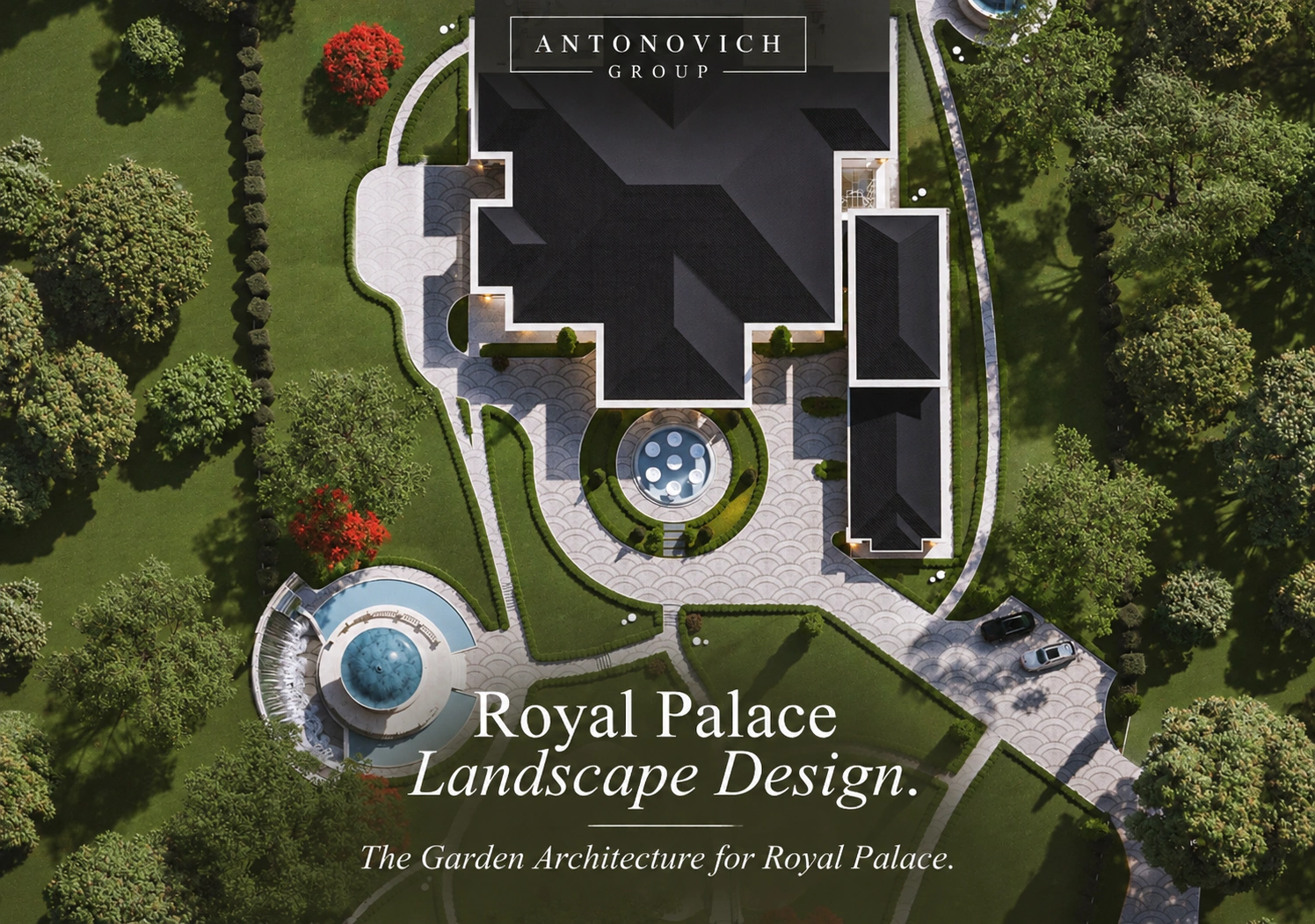
Gardens are designed to be seen from the palace: from terraces, balconies and the windows of reception rooms and private apartments. Parterres are especially effective when seen from above, where their patterns read clearly. Every important room should look onto a carefully composed view.
Levels and Terraces
Changes of level create some of the most beautiful effects in garden design: terraces with balustrades, grand staircases, ramps, cascades and sunken gardens. Even on flat sites, gentle level changes can add depth and drama.
Part 2: Formal Gardens and Parterres
What Is a Parterre?
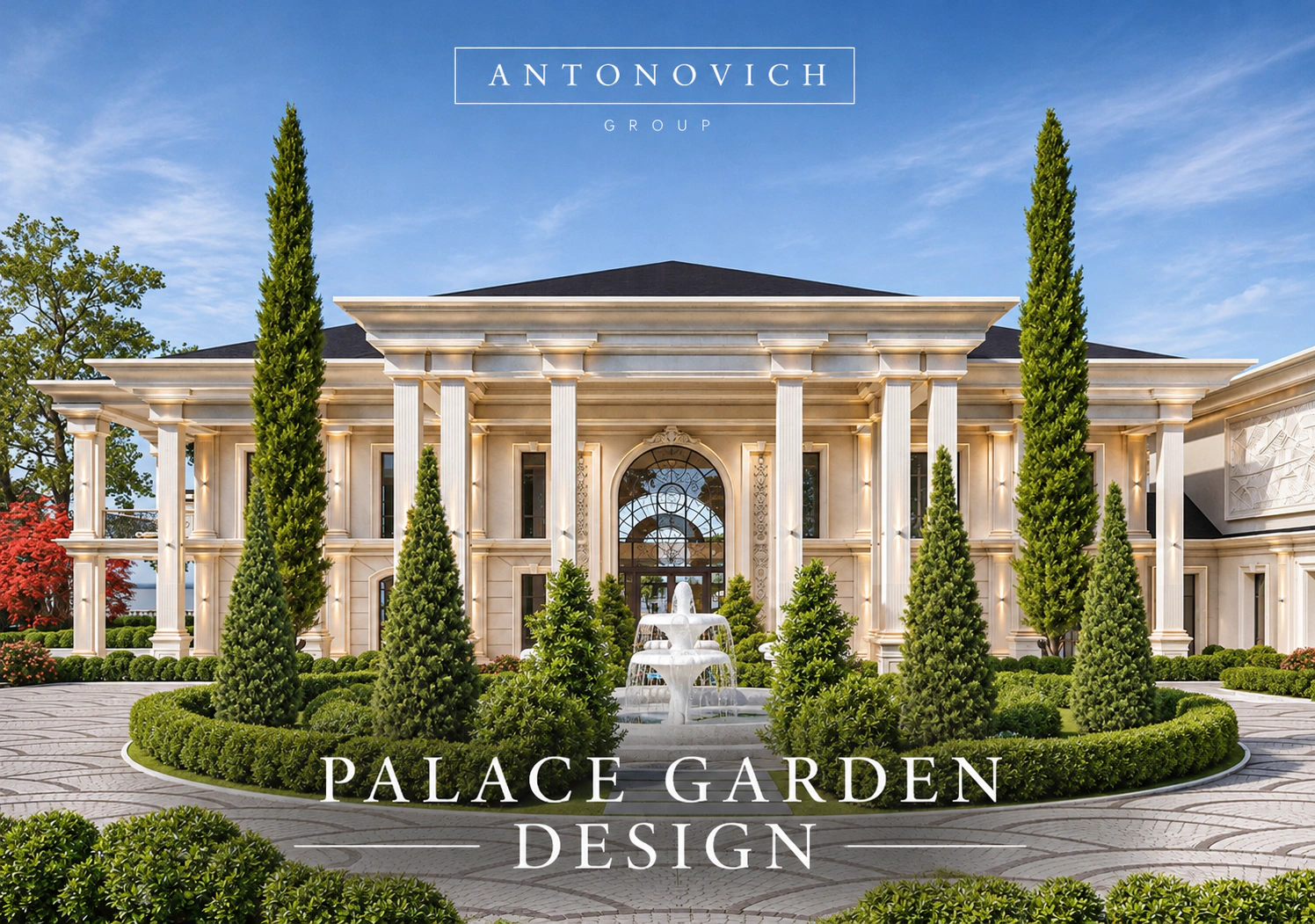
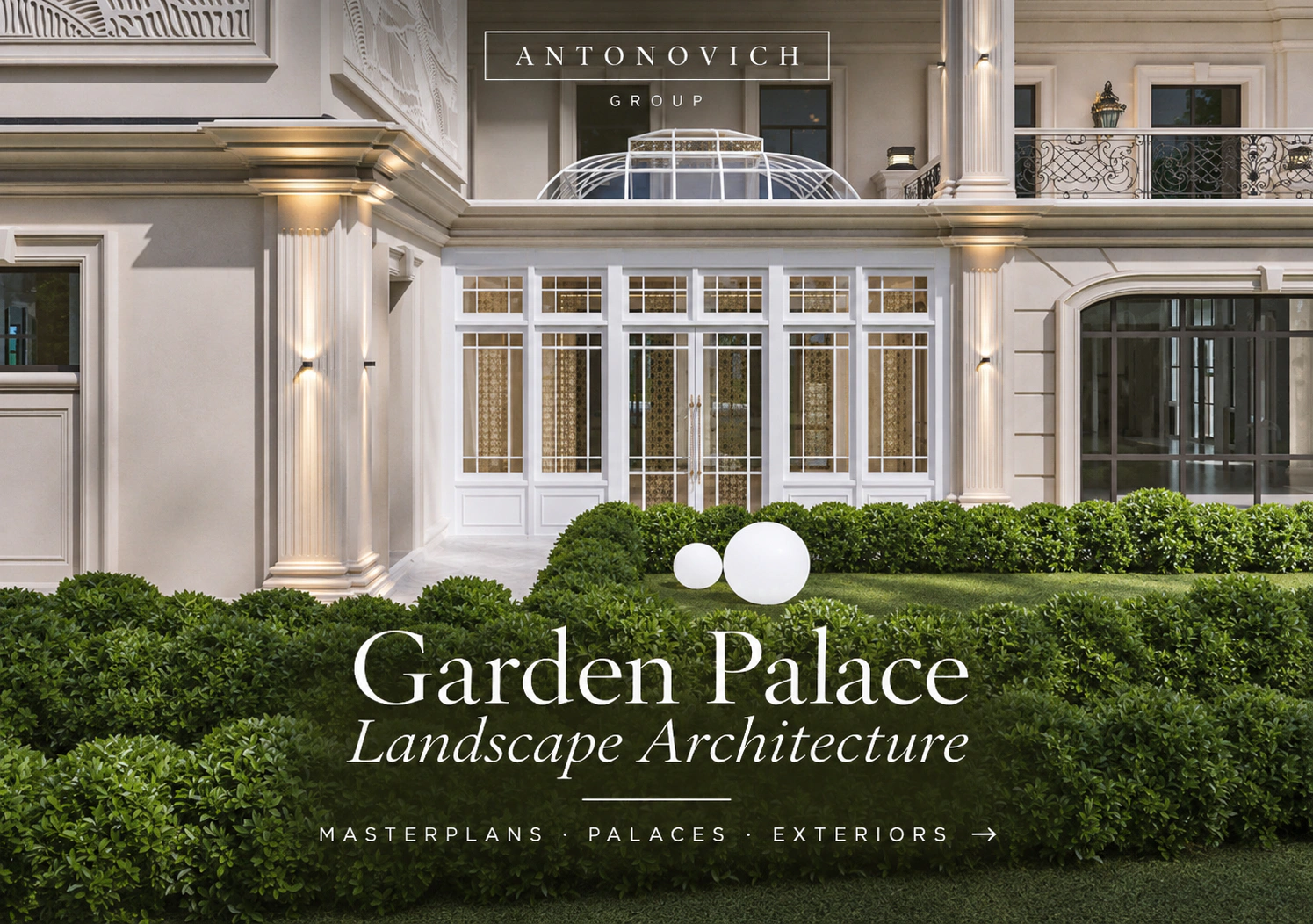
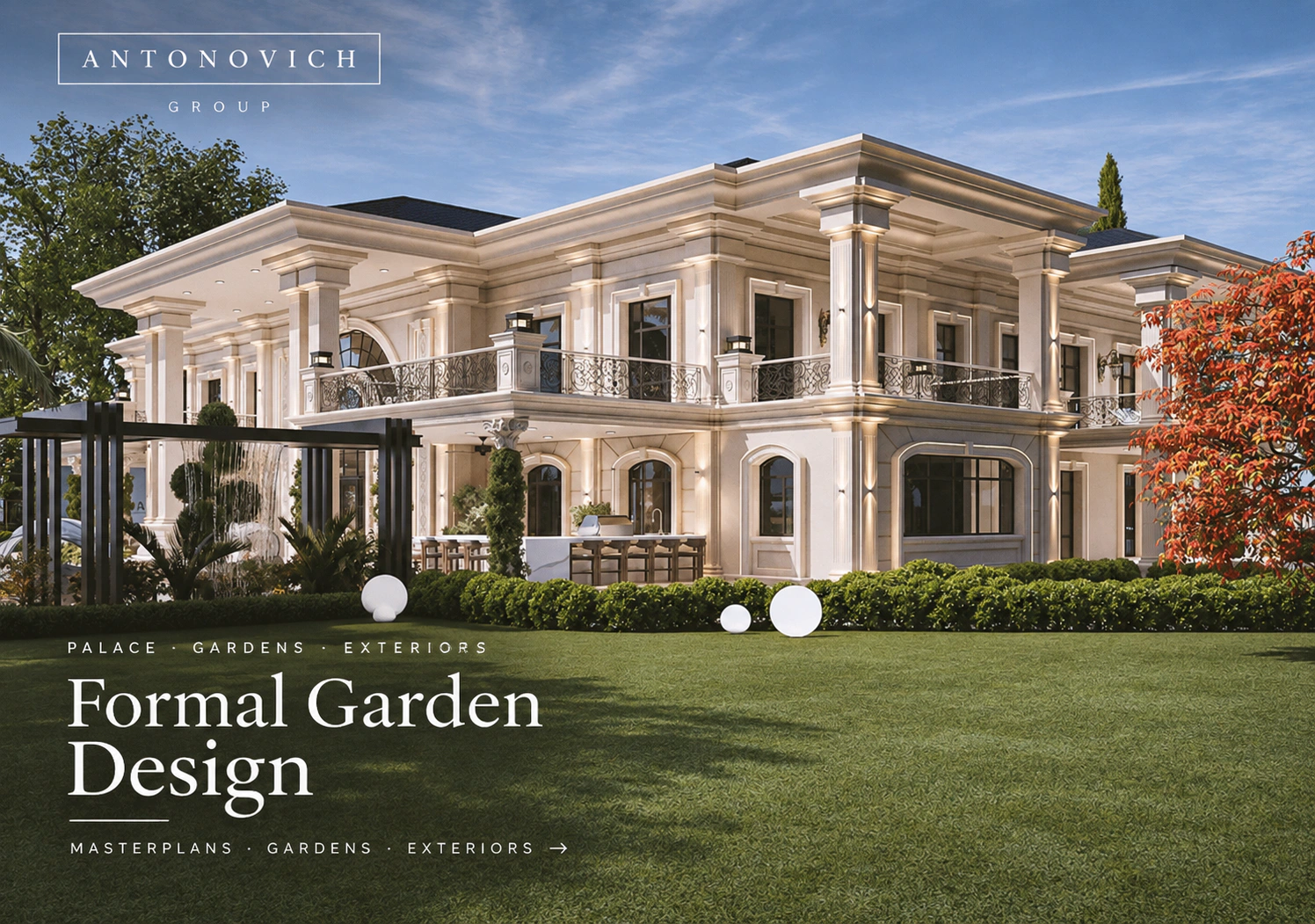
A parterre is a formal garden laid out on a level surface, composed of planting beds arranged in symmetrical patterns, separated by paths. The beds are typically edged with low clipped hedges and filled with flowers, coloured gravel, lawn or low plants. Seen from above, a parterre reads like an embroidered carpet laid in front of the palace.
Types of Parterre
Parterre de broderie. The most elaborate type, with swirling patterns of clipped hedges inspired by embroidery, a signature of French palace gardens.
Parterre à l’anglaise. Simpler patterns of lawn cut into geometric shapes, edged with paths or flower borders.
Compartment parterres. Geometric beds — squares, rectangles, circles — arranged symmetrically, often filled with flowers or roses.
Water parterres. Patterns formed by shallow pools and channels instead of planting, reflecting the sky and the palace.
Contemporary parterres. Simplified geometries, modern materials and drought-tolerant plants, combining classical order with sustainability.
Design Principles
• Symmetry around the garden axis.
• Proportion related to the palace façade.
• Pattern legible from the palace windows and terraces.
• Hierarchy of central and secondary elements.
• Framing with hedges, walls, trees or colonnades.
• Focal points such as fountains, sculptures or urns.
Topiary
Clipped shapes — cones, spheres, pyramids, spirals and hedges — add architecture to the garden. In hot climates, plants are chosen for their ability to be clipped and to withstand heat, such as certain species of ficus, myrtle, conocarpus, podocarpus and native shrubs.
Paths and Surfaces
Gravel walks are traditional in formal gardens, but in hot, windy climates stabilised gravel, natural stone or decorative paving may be more practical. Paths must be comfortable to walk, well drained and integrated with lighting and irrigation.
Part 3: Fountains
The Fountain as Centrepiece
Fountains are the jewels of palace gardens. They bring movement, sound and sparkle; they cool the air; they become focal points in courts and at the crossings of axes. A monumental fountain in the forecourt welcomes guests; fountains in the parterres animate the garden; small fountains in courtyards create intimate calm.
Types of Fountain
Monumental tiered fountains. Multiple basins rising one above another, often with sculptures, overflowing water and jets — ideal for forecourts and main crossings.
Basin fountains with jets. Large basins with vertical jets, sometimes choreographed, creating dramatic displays.
Sculptural fountains. Fountains built around figures, animals or abstract forms, in stone or bronze.
Wall fountains. Water flowing from a wall into a basin, suited to courtyards and terraces.
Islamic fountains. Low basins with gentle bubbling jets, often star-shaped or geometric, connected to channels — designed for contemplation rather than spectacle.
Dancing fountains. Programmable jets synchronised with lights and music, for events and evening displays.
Contemporary fountains. Minimal forms, water walls, mirror pools and sheets of water.
Materials
Fountains are built in natural stone, marble, precast stone, bronze and mosaic. Gold details on sculptures and basins add palatial character. Materials must resist constant water, chemicals and sun.
Engineering
Behind every fountain is an engineering system: pumps, filtration, treatment, pipework, nozzles, lighting, controls and plant rooms, usually hidden underground. Water levels, splash, wind effects and evaporation must be calculated. In hot climates, wind sensors can reduce jet heights on windy days to limit water loss and spray.
Sound and Scale
The sound of a fountain is as important as its appearance. A great forecourt fountain should create a majestic roar; a courtyard fountain a gentle murmur. Scale and flow are designed to create the right atmosphere for each space.
Part 4: Canals, Pools and Cascades
Canals
Long canals along the garden axis are among the most powerful features of palace gardens. They reflect the palace and the sky, draw the eye into the distance and create a sense of order and calm. Canals can be lined with fountains, framed by lawns and trees and crossed by bridges.
Reflecting Pools
Still pools placed in front of the palace or pavilions create perfect reflections, doubling the architecture. Their edges, depth and finish are designed to maximise the mirror effect.
Rills and Channels
Narrow channels of water running through gardens, a feature of Islamic and Mughal gardens, connect fountains and pools, bringing the sound and movement of water throughout the garden.
Cascades
On sloping sites, cascades and water staircases create spectacular effects as water tumbles from one terrace to the next. Even on flat sites, raised basins can create small cascades.
Water Edges
The edges of pools and canals — stone copings, balustrades, steps into the water, planted margins — are designed with care, as they are seen and touched up close.
Part 5: Lakes
The Lake in the Landscape
On larger estates, a lake becomes the centrepiece of the landscape park. It reflects the palace, cools the air, attracts birds and creates a setting for pavilions, bridges and boat rides. A palace seen across a lake is one of the most romantic images in architecture.
Formal and Natural Lakes
Formal lakes have geometric shapes and stone edges, aligned with axes — a continuation of the formal garden.
Natural lakes have irregular shores, islands, planted margins and gentle slopes, inspired by the English landscape garden.
Lake Features
• Islands with pavilions or groves.
• Bridges in stone or ornamental ironwork.
• Water pavilions standing at the edge or over the water.
• Fountains and jets within the lake.
• Boathouses and jetties.
• Planted margins of reeds and water plants.
Engineering a Lake
Lakes require careful engineering: waterproof lining, depth for water quality, circulation, filtration, aeration, inflow and overflow, and management of evaporation and algae. In arid regions, lakes may use treated water and are often combined with irrigation storage, so that the lake becomes part of the estate’s water infrastructure.
Safety
Lake edges, depth and access are designed with safety in mind, especially for children, using shallow margins, planted barriers and discreet railings where needed.
Part 6: Paradise Gardens
The Chahar Bagh
The paradise garden, or chahar bagh, is one of the oldest garden forms in the world. A rectangular enclosed garden is divided into four parts by water channels meeting at a central fountain or pavilion. The four channels symbolise the rivers of paradise; the enclosed garden symbolises a protected world of peace and abundance.
Elements of the Paradise Garden
• Enclosure by walls or arcades.
• Water channels dividing the garden.
• A central fountain or pavilion.
• Sunken planting beds with fruit trees and flowers.
• Raised walkways for viewing.
• Shade from trees and pavilions.
• Fragrance from roses, jasmine and citrus.
The Paradise Garden Today
In contemporary palace estates, paradise gardens are created as private family gardens, courtyard gardens within the palace or as part of the women’s areas. They provide cool, intimate and meaningful spaces deeply connected to regional culture.
Part 7: Landscape Parks
The English Landscape Tradition
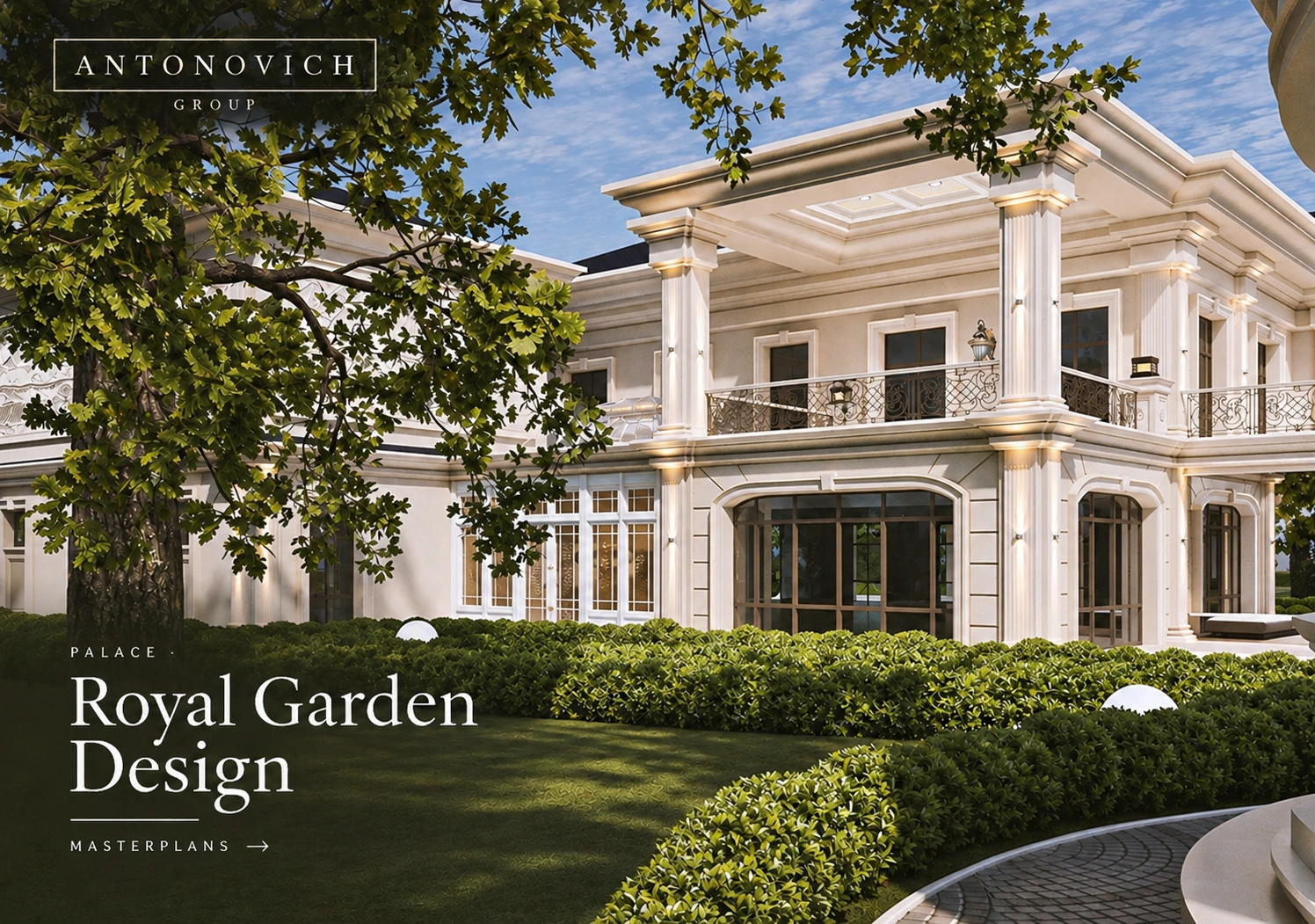
Beyond the formal gardens, larger estates often include landscape parks: sweeping lawns, groves of trees, winding paths, lakes and distant views. Inspired by the English landscape garden, they create a sense of space, freedom and natural beauty.
Adapting to Climate
In hot climates, landscape parks are adapted with drought-tolerant grasses or native groundcovers, shade trees, efficient irrigation and areas of natural desert landscape. In Central Asia and other continental climates, the parkland can include deciduous trees that bring autumn colour and winter structure.
Uses of the Park
Landscape parks provide space for walking, riding, picnics, events and children’s play, as well as buffers for privacy and security around the estate.
Part 8: Private and Courtyard Gardens
The Family Garden
Close to the private residence, the family garden is intimate and enclosed: lawns for children, shaded terraces for meals, a pool, fragrant planting and quiet corners. It is screened from guests and staff.
Courtyard Gardens
Courtyards within the palace bring light, air and greenery into the heart of the building. With a central fountain, trees and planting, they become cool oases visible from surrounding rooms.
Kitchen and Herb Gardens
Many families enjoy growing fruit, vegetables and herbs. Kitchen gardens, orchards and greenhouses can be beautifully designed as part of the estate.
Roof Gardens
In urban palaces or where space is limited, roof gardens provide private outdoor spaces with views.
Part 9: Planting
Choosing Plants for the Climate
Plant selection is critical for beauty, sustainability and maintenance. In the Gulf, plants must tolerate heat, intense sun, salinity and wind; in continental climates, they must survive cold winters.
The Palette
• Palms: date palms, Washingtonia and royal palms for avenues and accents.
• Shade trees: native and adapted species providing canopy.
• Clipped shrubs and hedges for formal structure.
• Flowering plants for colour: bougainvillea, hibiscus, oleander, roses.
• Fragrant plants: jasmine, gardenia, citrus, frangipani.
• Groundcovers and grasses for lawns and low planting.
• Native and desert plants for water-efficient landscapes.
Seasonal Change
Planting plans are designed for colour and interest across the seasons, including the cooler months when outdoor life is most active in the Gulf.
Mature Trees
Large estates often transplant mature trees to give the garden an established character from the first day. This requires careful sourcing, transport and aftercare.
Part 10: Climate and Comfort
Designing for Heat
In hot climates, palace gardens must provide comfort:
• Shade from trees, pergolas, colonnades and pavilions.
• Water for evaporative cooling.
• Orientation of terraces and seating to avoid the hottest sun.
• Wind protection with planting and walls.
• Light-coloured paving to reduce heat absorption.
• Outdoor cooling systems in pavilions and seating areas.
Designing for Cold
In continental climates, gardens are designed for beauty in winter: evergreen structure, sculptural trees, lit fountains drained in freezing weather and sheltered terraces that catch the winter sun.
Microclimate
A well-designed palace garden creates its own microclimate, noticeably cooler and more comfortable than the surrounding land.
Part 11: Irrigation and Water Management
Responsible Water Use
Water is precious, especially in arid regions. Palace gardens must use it wisely:
• Drip and subsurface irrigation for efficiency.
• Smart controllers responding to weather and soil moisture.
• Treated and recycled water from the estate’s wastewater systems.
• Water storage in tanks, lakes and reservoirs.
• Recirculation in fountains and water features.
• Drought-tolerant planting in less visible areas.
• Zoning of planting by water needs.
Integrating Systems
Irrigation, fountains, lakes and stormwater are designed as one integrated water system, often managed from the estate’s central control.
Part 12: Sculpture, Ornament and Garden Architecture
Sculpture
Statues, urns, vases and obelisks punctuate the garden, mark axes and add art to the landscape. They may be classical figures, animals, abstract works or pieces commissioned for the family.
Balustrades and Steps
Stone balustrades frame terraces; grand staircases connect levels. Their proportions and carving are designed in harmony with the palace.
Pavilions and Pergolas
Garden pavilions, gazebos, pergolas and colonnades provide shade and destinations within the garden.
Furniture
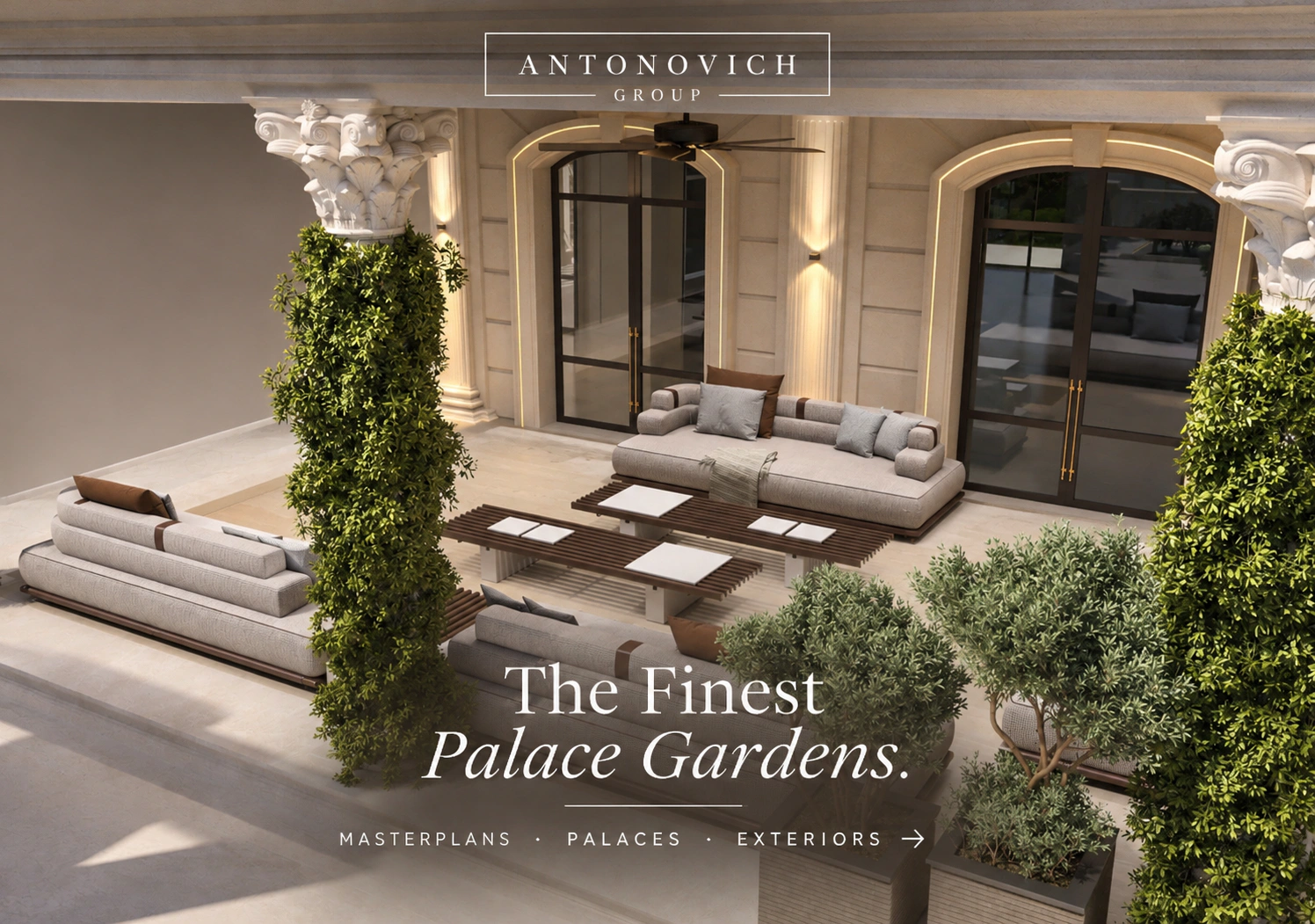
Garden benches, outdoor majlis seating, dining sets and daybeds are designed to match the palace’s style and withstand the climate.
Part 13: Lighting the Gardens
The Garden at Night
In hot climates, evenings are the most beautiful time in the garden. Lighting transforms the landscape into a magical setting:
• Uplighting of palms and trees.
• Lit fountains with underwater lights.
• Glowing pavilions.
• Lanterns along paths and on terraces.
• Subtle lighting of parterres and hedges.
• Lit façades reflected in pools and lakes.
Control and Scenes
Lighting scenes can be programmed for everyday evenings, events, celebrations and security, all controlled from a central system.
Part 14: Gardens for Events
Palace gardens host weddings, celebrations, receptions and national events. They are designed with:
• Lawns and courts large enough for marquees and outdoor dining.
• Hidden power, water and data points.
• Access for catering and event teams.
• Lighting and sound infrastructure.
• Separate areas for men and women where needed.
A garden designed for events can host thousands of guests without damaging its planting or disturbing the family’s private life.
Part 15: Maintenance and Longevity
The Living Garden
Unlike buildings, gardens grow and change. A palace garden requires a skilled team of gardeners, specialists in topiary, fountains, irrigation and plant health. The design should anticipate maintenance:
• Access for machinery and staff.
• Service routes hidden from view.
• Nurseries and stores for plants and equipment.
• Plant choices suited to the available maintenance.
• Management plans for the long term.
Gardens That Improve With Time
A well-designed palace garden becomes more beautiful each year, as trees mature, hedges thicken and the landscape settles into its setting.
Part 16: Gardens for Villas
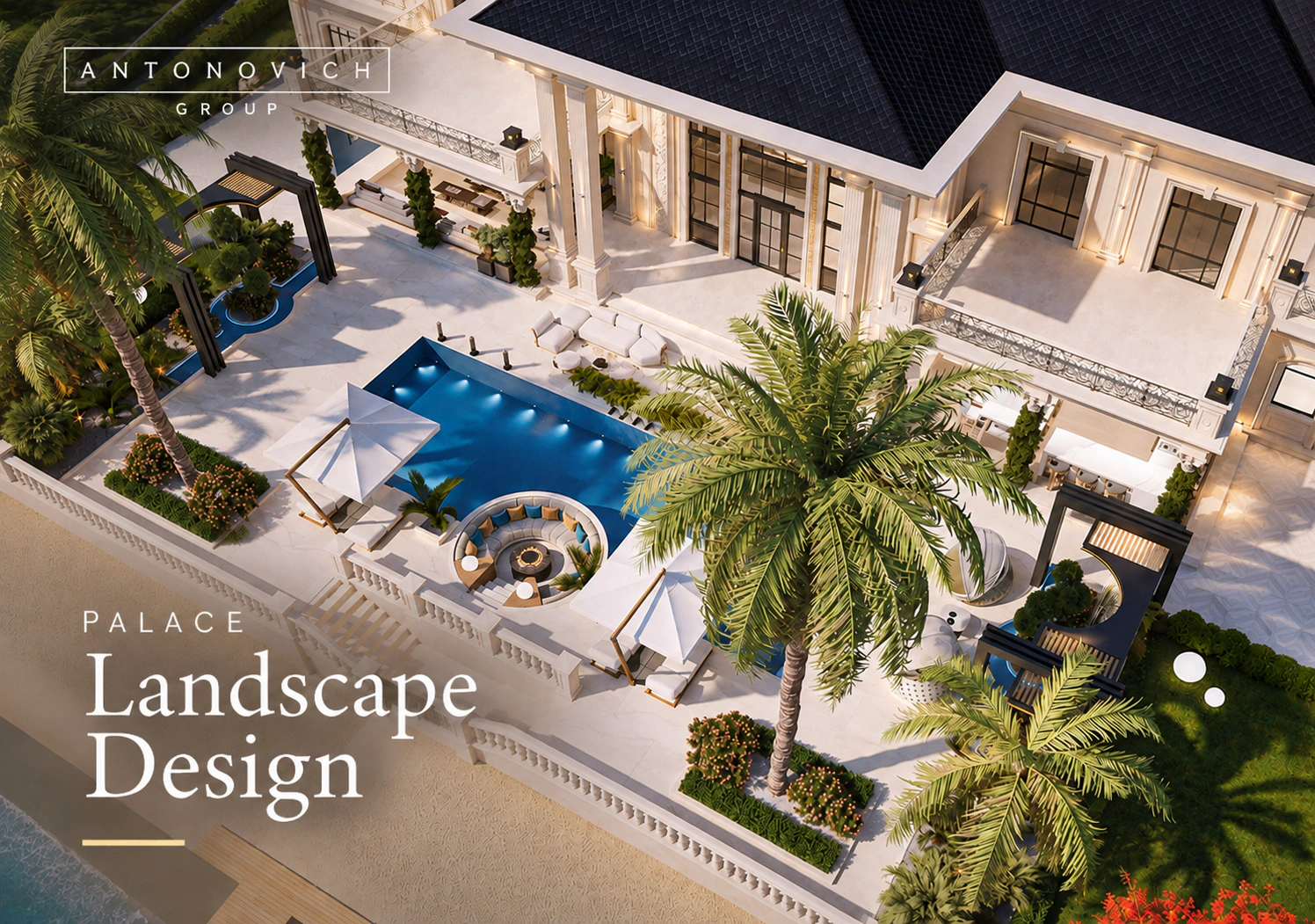
The principles of palace gardens can be scaled for luxury villas: a formal garden with a fountain on the main axis, a shaded terrace, a pool with a pavilion, fragrant planting and evening lighting. For villa owners in Dubai, Abu Dhabi and Saudi Arabia, a well-designed garden transforms how the home is used and enjoyed. Antonovich Group designs villa landscapes and exterior renovations with the same care as its palace estates.
Part 17: Great Garden Traditions and What They Teach
The French Formal Garden
The French formal garden teaches the power of geometry and perspective. Long axes, broad terraces, embroidered parterres, monumental fountains and canals stretching to the horizon express order and grandeur. The lesson for palace estates today is the importance of a strong central composition seen from the main rooms of the palace.
The Italian Renaissance Garden
Italian gardens teach the art of terraces and water on sloping sites: staircases, balustrades, grottoes, water chains and cascades, with views over the surrounding landscape. On hillside estates, these lessons create unforgettable gardens.
The English Landscape Garden
The English landscape garden teaches the beauty of apparent naturalness: sweeping lawns, clumps of trees, serpentine lakes and temples placed in the landscape. It reminds designers that the outer parts of an estate can be calm, open and romantic, in contrast with the formality near the palace.
The Persian and Andalusian Garden
The paradise gardens of Persia and Andalusia teach the poetry of enclosure, water and shade: courtyards with channels and fountains, orange trees, fragrant flowers and the soft sound of water. They show how gardens can create cool, intimate refuges in hot climates.
The Mughal Garden
Mughal gardens combine the paradise garden with monumental scale: terraced gardens with long water channels, cascades, pavilions and tombs or palaces set at the end of the axis. They are especially relevant for estates in South Asia and the Gulf.
A Synthesis for Today
The most successful contemporary palace gardens often combine these traditions: a French-inspired formal garden near the palace, paradise gardens for family privacy, Italian terraces on slopes and an English-inspired landscape park at the edges — all adapted to local climate, culture and sustainability.
Part 18: A Walk Through a Palace Garden
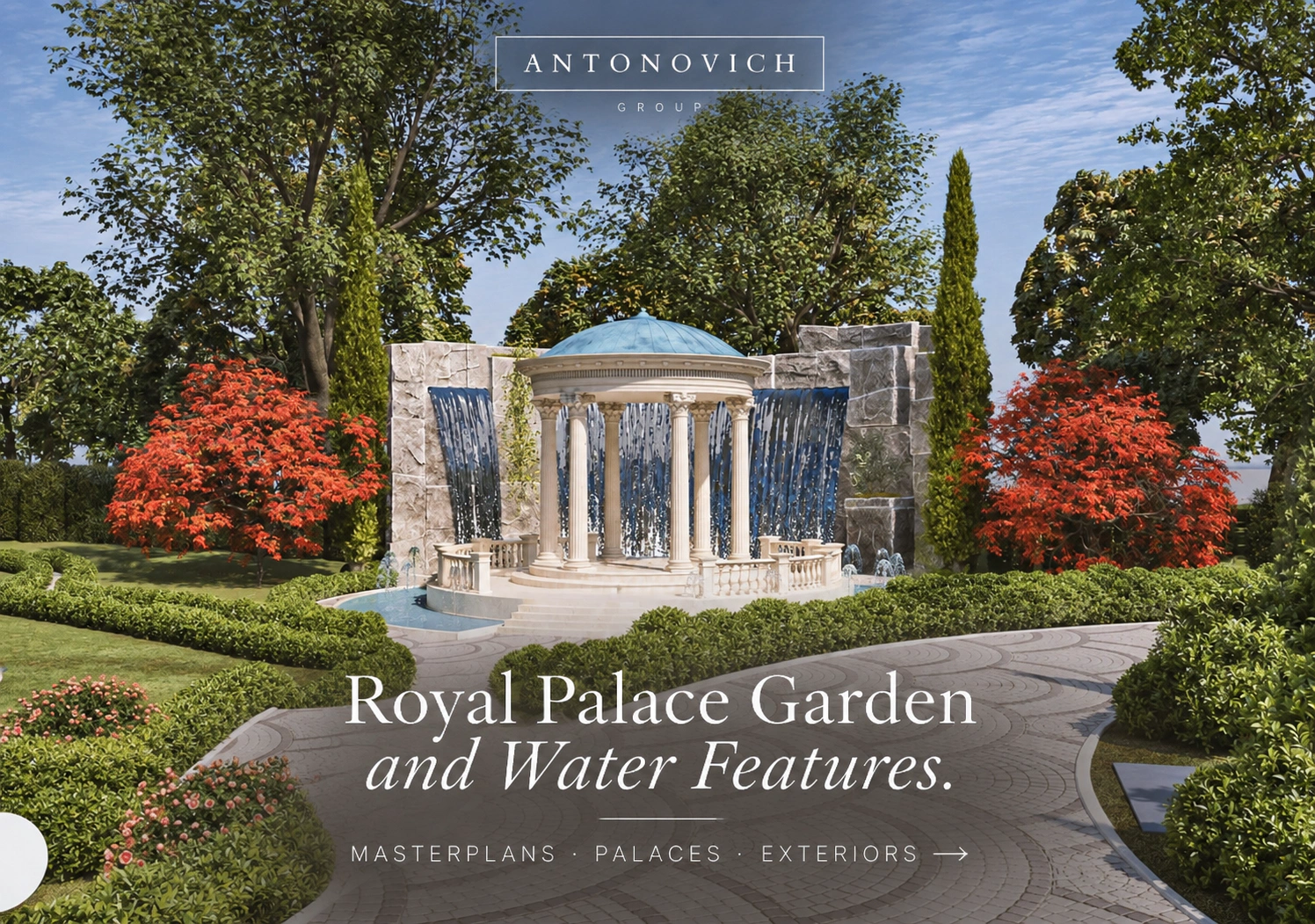
Imagine stepping out of the main reception hall of a Gulf palace onto a broad stone terrace at sunset. Below, a parterre of clipped hedges and white roses spreads out in a symmetrical pattern, centred on a tiered fountain whose jets catch the last golden light. A wide staircase with balustrades descends to the garden level. Beyond the parterre, a long canal lined with small jets leads the eye towards a domed pavilion reflected in its water, half a kilometre away.
To either side, avenues of palms shade gravel walks. Behind clipped hedges lie garden rooms: a citrus grove with a small fountain, a rose garden, a shaded paradise garden with channels and jasmine reserved for the family. As darkness falls, uplights reveal the palms, the fountain glows from within, lanterns line the paths and the pavilion at the end of the canal becomes a lantern in the landscape. The air is cooler here than outside the walls, and filled with the sound of water and the scent of jasmine.
This is what palace garden design aims to create: not simply planting around a building, but a complete experience of beauty, comfort and wonder.
Part 19: Budgeting a Palace Garden
Gardens are often underestimated in palace budgets. In reality, a high-quality landscape with fountains, lakes, stone terraces, mature trees, lighting and irrigation represents a significant share of the estate’s investment. The main cost elements are:
• Hardscape: stone terraces, staircases, balustrades, paths and walls.
• Water features: fountains, canals, pools and lakes with their engineering systems.
• Planting: especially mature palms and trees.
• Irrigation and water infrastructure.
• Lighting and electrical systems.
• Garden architecture, sculpture and furniture.
• Establishment and maintenance during the first years.
Planning the landscape budget from the start allows the garden to be designed to the same standard as the palace, rather than reduced at the end of the project when funds are limited.
Antonovich Group: Designing Palace Gardens
Antonovich Group, led by architect Katrina Antonovich, designs palace gardens as an integral part of its masterplans and architecture across the Gulf, Central Asia, South Asia and Africa. The firm’s estates feature ceremonial axes with monumental fountains, formal parterres, canals, reflecting pools, lakes with pavilions, paradise gardens and private family gardens.
What Antonovich Group Delivers
• Landscape masterplans integrated with the palace masterplan.
• Formal garden and parterre design.
• Fountain and water feature design with engineering coordination.
• Lake and canal design.
• Planting design suited to climate.
• Garden architecture: pavilions, pergolas, balustrades, steps.
• Lighting design for gardens and water.
• Irrigation and water strategy coordination.
• Outdoor furniture design and manufacturing.
• Villa landscape design and exterior renovation.
Katrina Antonovich’s Approach
Katrina Antonovich designs the garden at the same time as the palace, drawing the axes, terraces and fountains together with the plans of the reception rooms. For her, the view from the main salon onto the garden is as important as the salon itself — and the garden’s evening atmosphere of water, light and fragrance is one of the most precious gifts an estate can offer its family.
The Garden Design Process
1. Brief: how the family uses outdoor spaces, preferred styles and plants.
2. Site analysis: climate, soil, water, views and levels.
3. Landscape concept: axes, garden rooms, water features and planting character.
4. Masterplan integration with buildings and infrastructure.
5. Schematic design: layouts, levels, fountains and lakes.
6. Detailed design: planting plans, hardscape, water engineering, lighting and irrigation.
7. Specifications and sourcing: plants, stone, sculpture and furniture.
8. Construction support.
9. Planting and establishment.
10. Maintenance planning.
Common Mistakes
Designing the garden after the palace. Axes and views that don’t align.
Too little shade. Gardens unusable for much of the year.
Unsustainable water use. Lawns and features that consume excessive water.
Wrong plants. Species that cannot survive the climate.
Fountains without engineering. Splash, noise, algae and failure.
Ignoring night. Gardens that disappear after sunset.
No maintenance plan. Beautiful gardens that decline quickly.
Frequently Asked Questions
What is a parterre? A formal garden of planting beds arranged in symmetrical patterns, edged with clipped hedges and best seen from above.
Can palace gardens work in desert climates? Yes, with shade, water features, climate-appropriate planting, efficient irrigation and recycled water.
What types of fountains suit palaces? Monumental tiered fountains for forecourts, basin fountains with jets for parterres, Islamic fountains for courtyards and dancing fountains for events.
How are lakes maintained in arid regions? Through lining, circulation, filtration, aeration and treated water, often integrated with irrigation storage.
What is a paradise garden? A traditional enclosed garden divided into four parts by water channels, symbolising paradise.
Do you design lighting for gardens? Yes, including uplighting, lit fountains, path lighting and programmable scenes.
Do you design gardens for villas? Yes, as part of villa landscape and exterior renovation projects.
Should the garden be designed at the same time as the palace? Yes. Axes, terraces, views and services must be coordinated from the start for the palace and garden to work as one composition.
How long does a palace garden take to establish? Hardscape and water features follow the construction programme; planting looks complete within one to three years, with mature trees giving an established look from the start.
A World of Water, Light and Green
The garden is where a palace breathes. Antonovich Group designs palace gardens of fountains, parterres and lakes that frame the architecture, cool the air and create a world of beauty for generations.
Confidential Consultation · WhatsApp +971 54 299 5555 · antonovich-design.ae