
Updated at: 07.08.26

Volumes of Faith: Antonovich Group and the New Cubist Language of Mosque Design
An Architectural Study in Modular Form, Kufic Ornament, and the Discipline of Negative Space
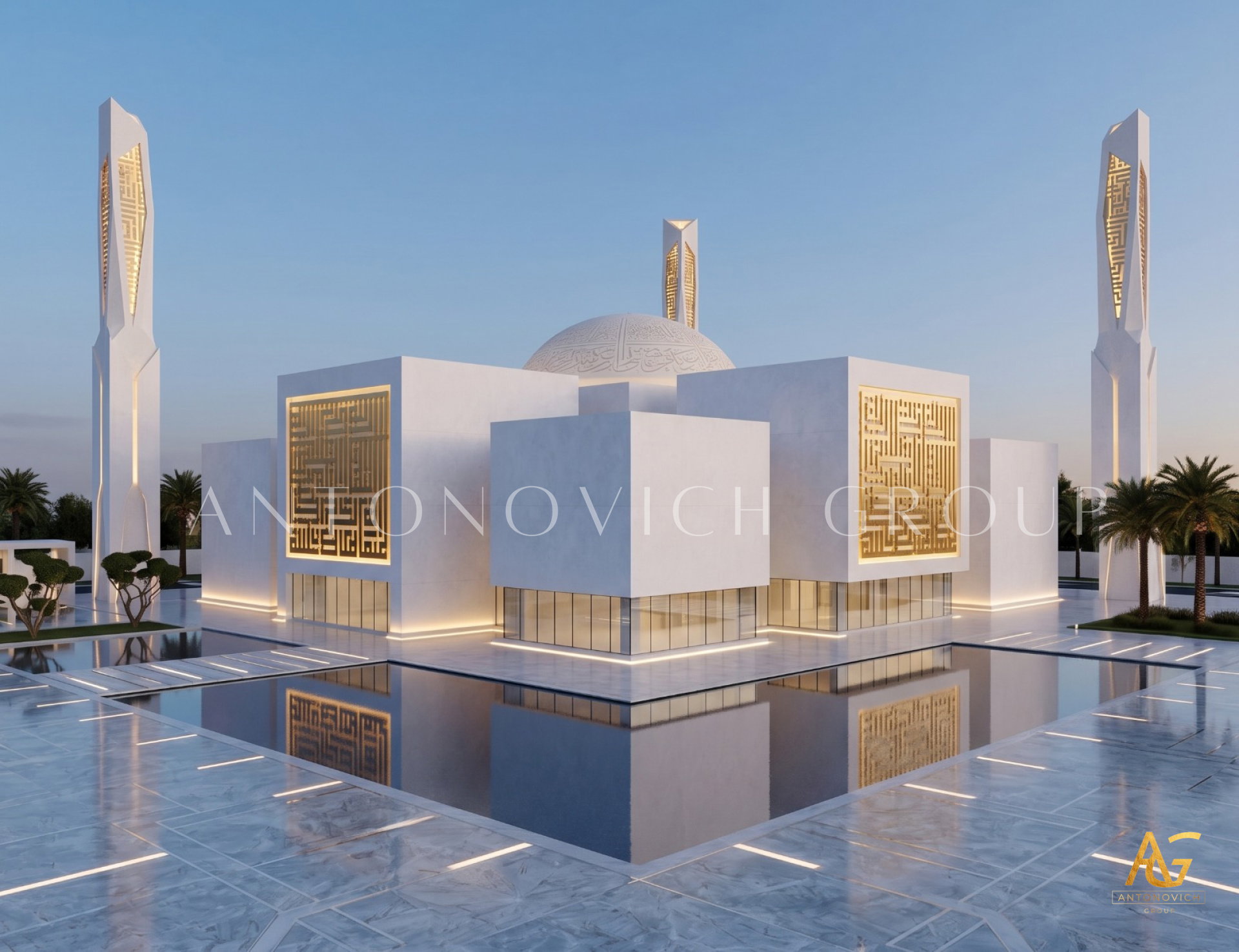
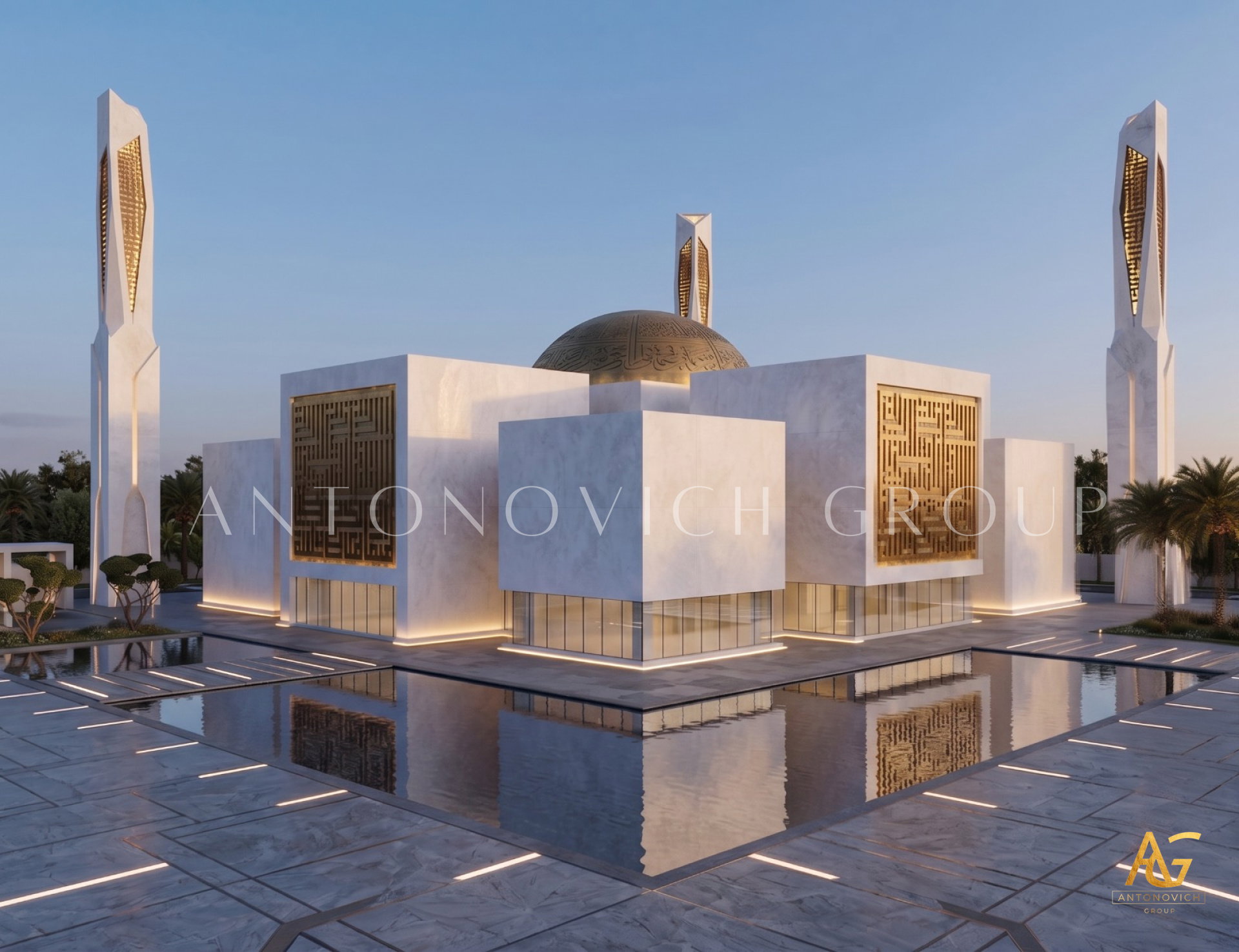
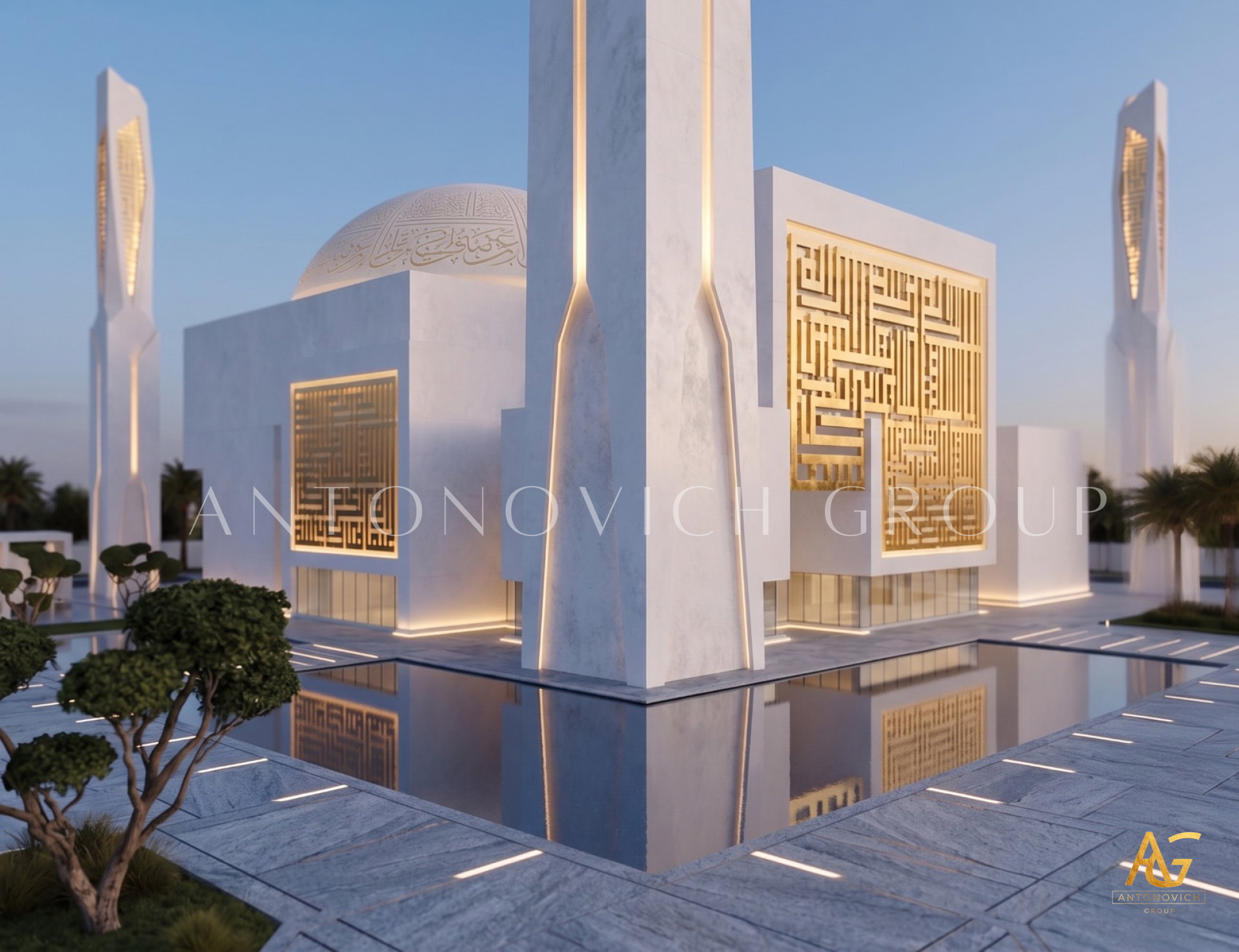
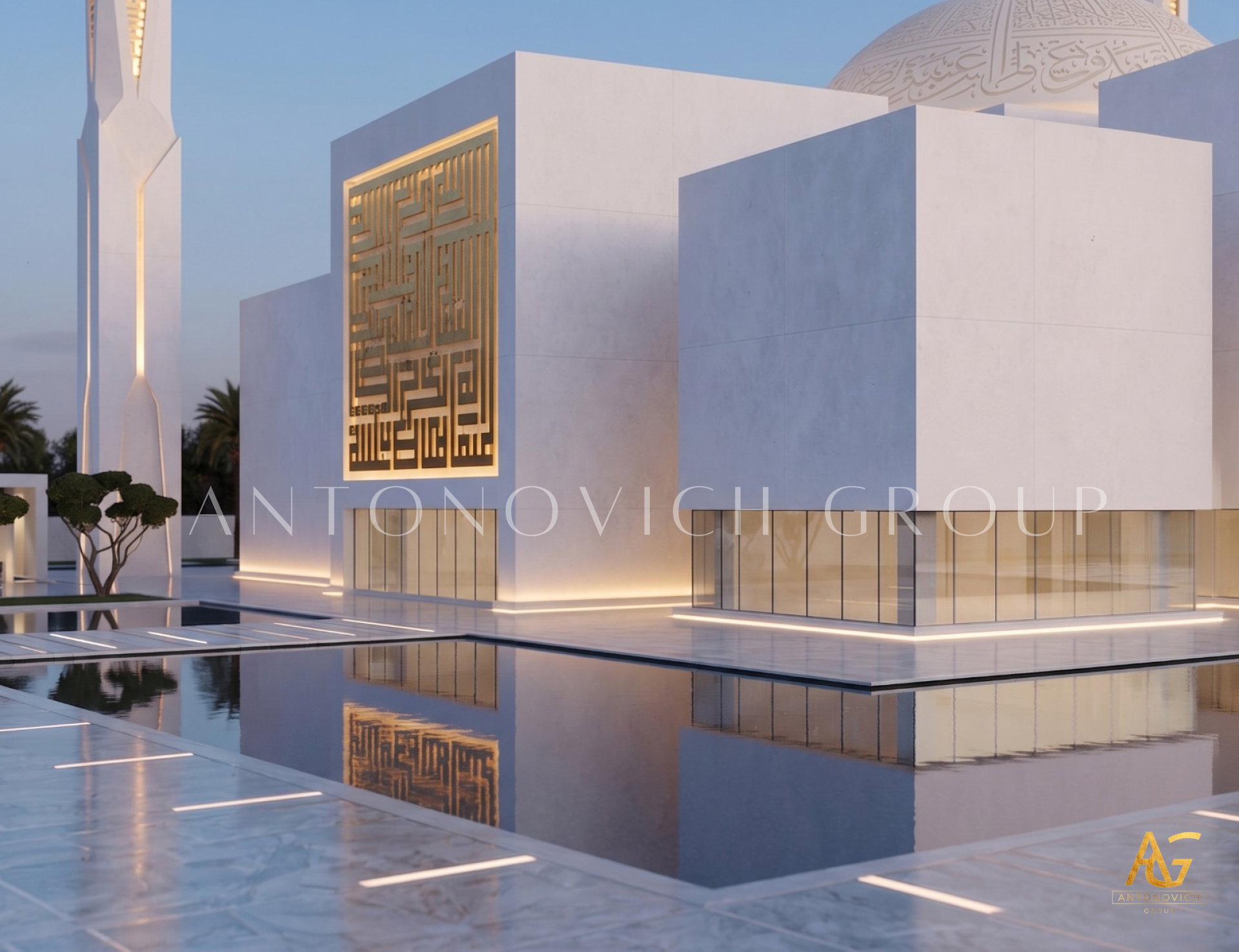
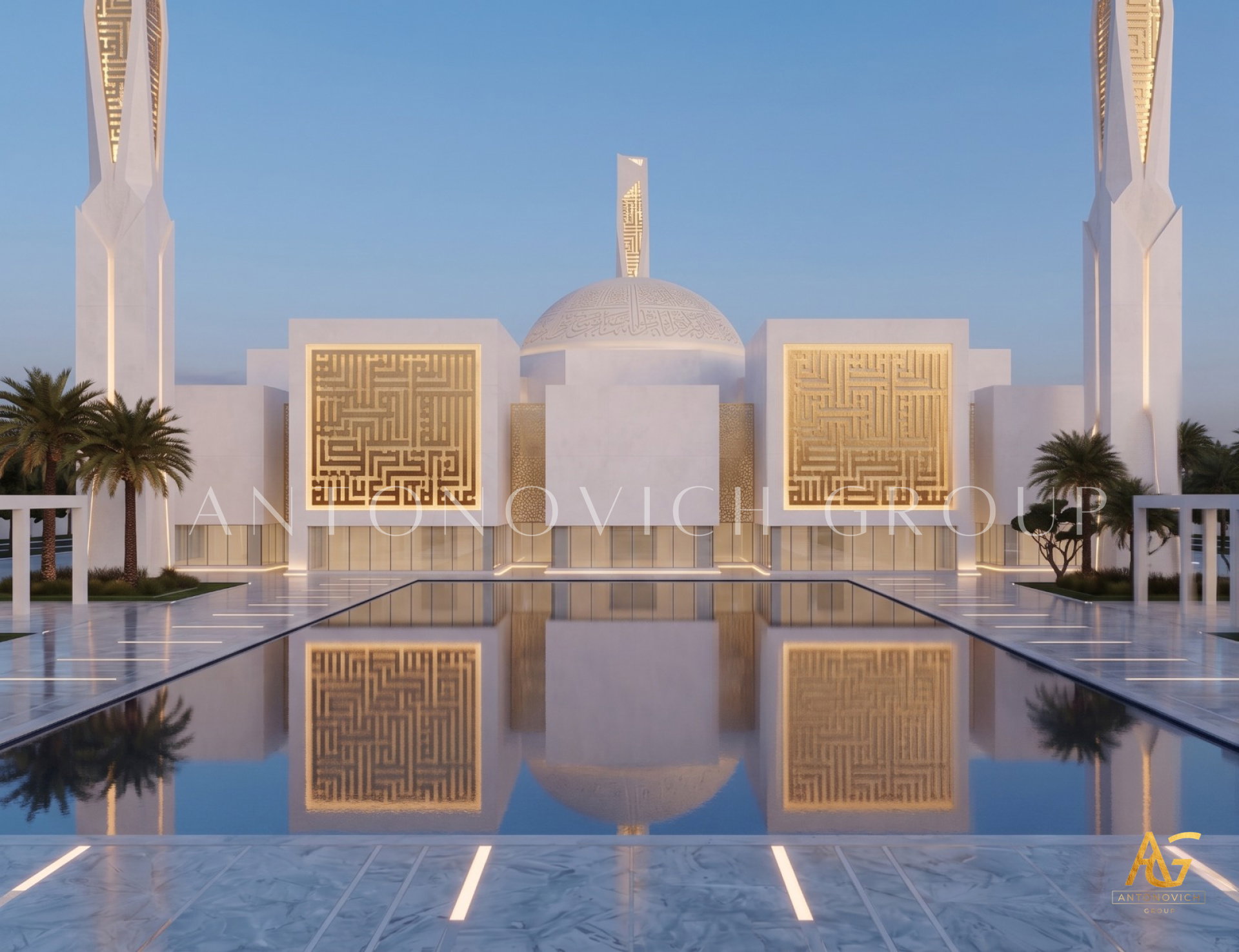
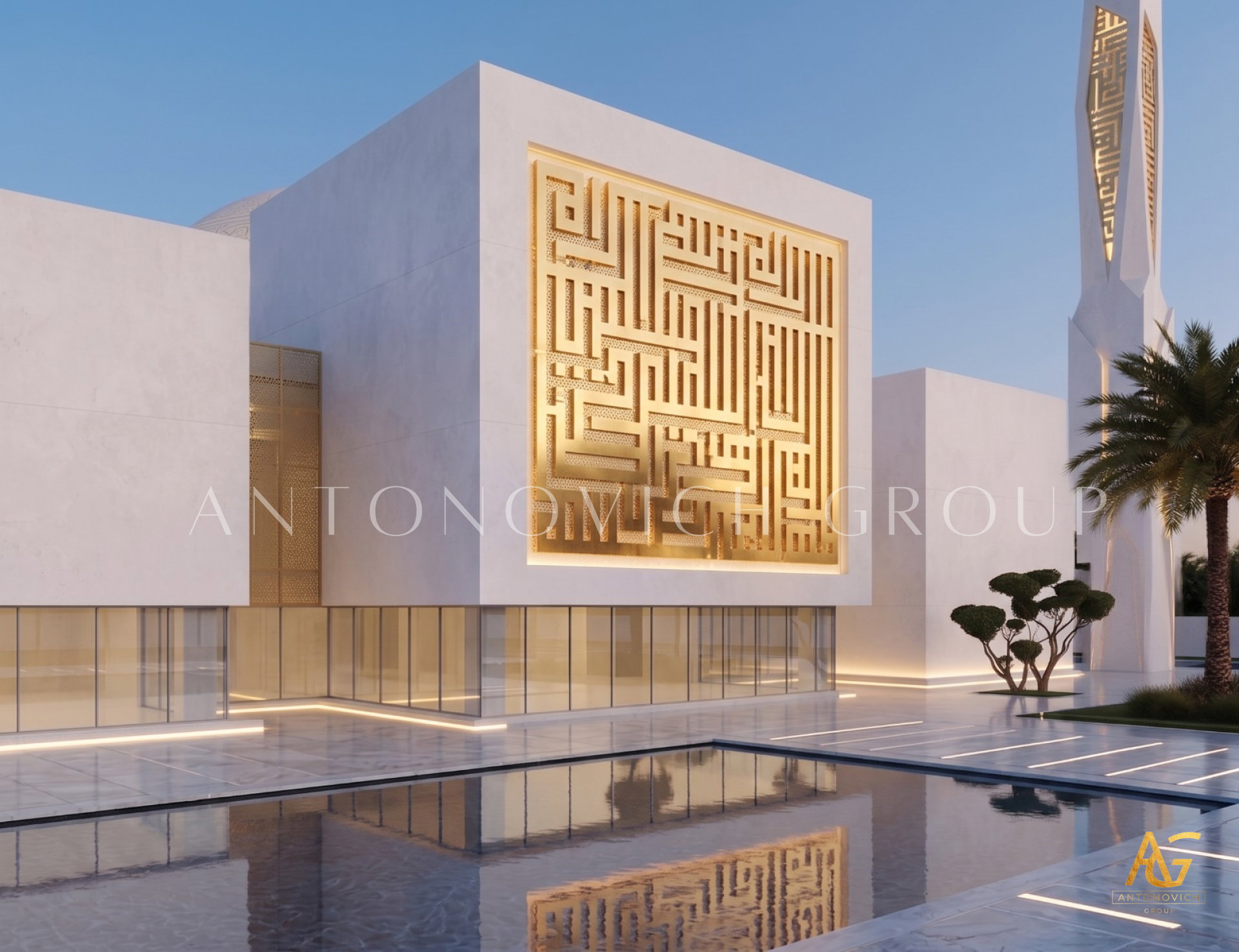
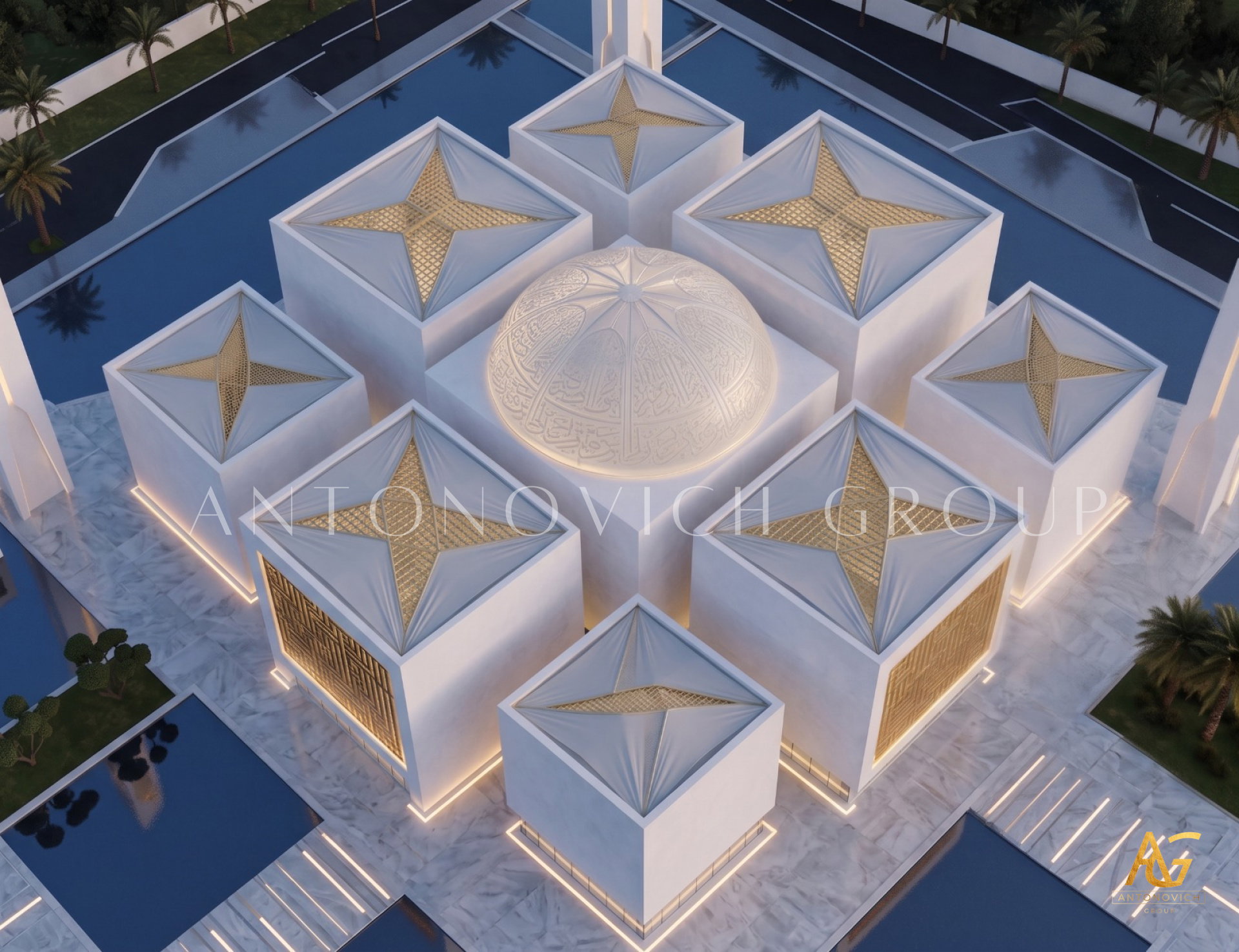
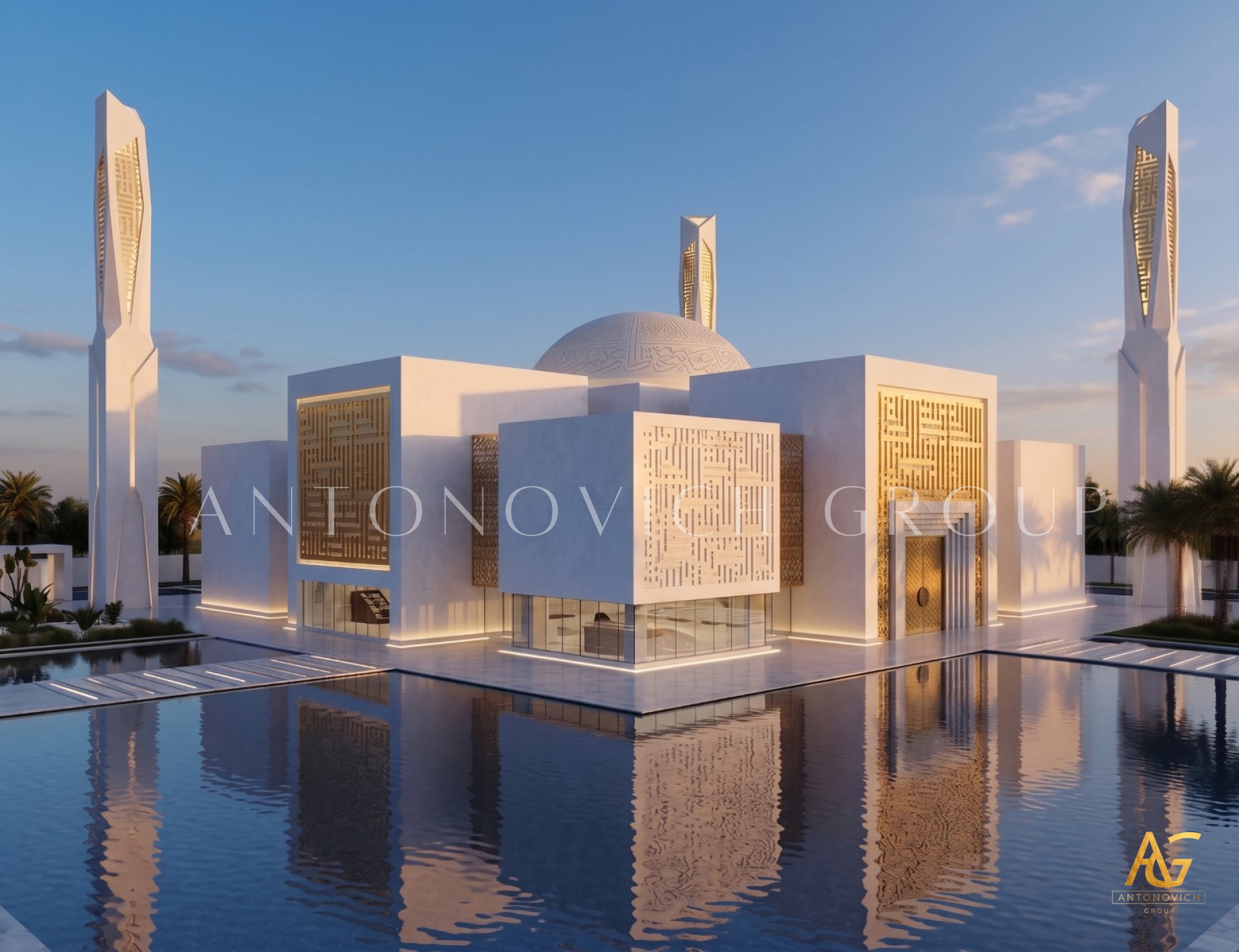
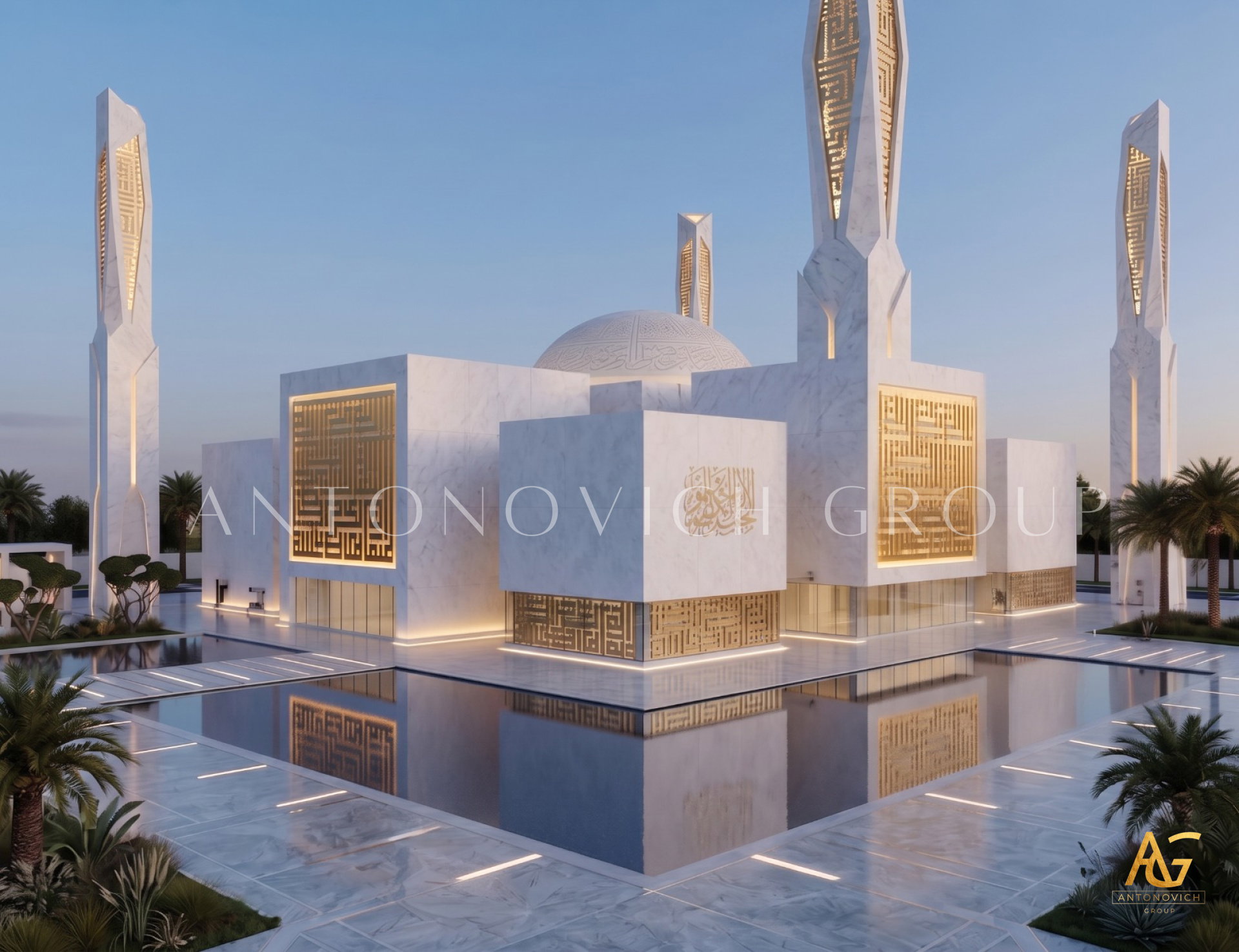
Architecture criticism often reserves the word "cubist" for galleries and museums — rarely for sacred space. Yet the concept featured above makes a compelling case for reconsidering that boundary. A composition of interlocking white volumes, arranged with the precision of a sculptural study, rises around a single carved dome. Golden Kufic script glows from recessed panels cut directly into the mass of the building, while faceted, crystalline minarets stand apart from the main structure like sentinels catching the last light of dusk. This is not ornamentation layered onto architecture. This is architecture as ornament — a distinction that sits at the heart of Antonovich Group's evolving practice in modern mosque architectural design.
Where much of contemporary Gulf religious architecture has explored curvature, symmetry, or classical proportion, this concept charts a different course entirely: modular cubist mosque design, built from stacked geometric volumes rather than continuous curved form. It's a bold architectural position, and one worth examining in detail.
A Different Kind of Symmetry
Traditional mosque composition tends to rely on axial symmetry — a central dome flanked by matching minarets, mirrored facades, balanced massing. This design keeps a version of that logic intact, but reinterprets it through cubic modular architecture, where the building reads less as a single unified silhouette and more as an assembly of related geometric parts.
This design direction is emerging for several clear reasons within the region's architectural landscape:
- A search for architectural distinction — as landmark mosques multiply across Gulf cities, cubist and modular forms offer a visually differentiated identity
- Structural efficiency — modular volumetric design often simplifies construction logistics compared to complex curved geometries
- A renewed interest in negative space — using the gaps and separations between building masses as intentional design elements, not just structural necessity
- Ornament as concentrated moment — rather than distributing detail evenly across a facade, this approach reserves ornamental intensity for specific, carefully composed panels
Antonovich Group's command of contemporary Islamic architectural composition is evident in how confidently this design commits to its geometric logic, without diluting the building's spiritual legibility.
Anatomy of the Design
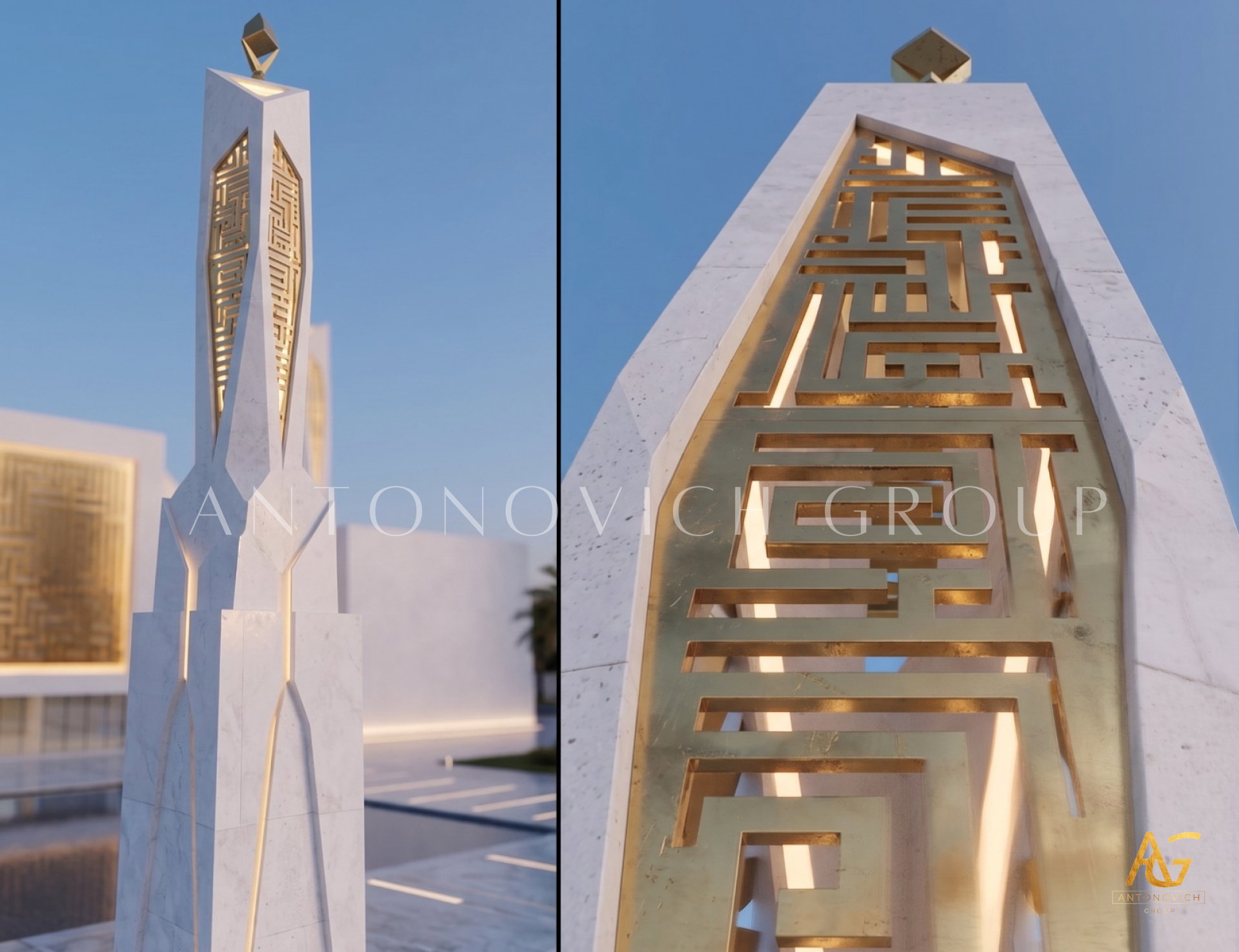
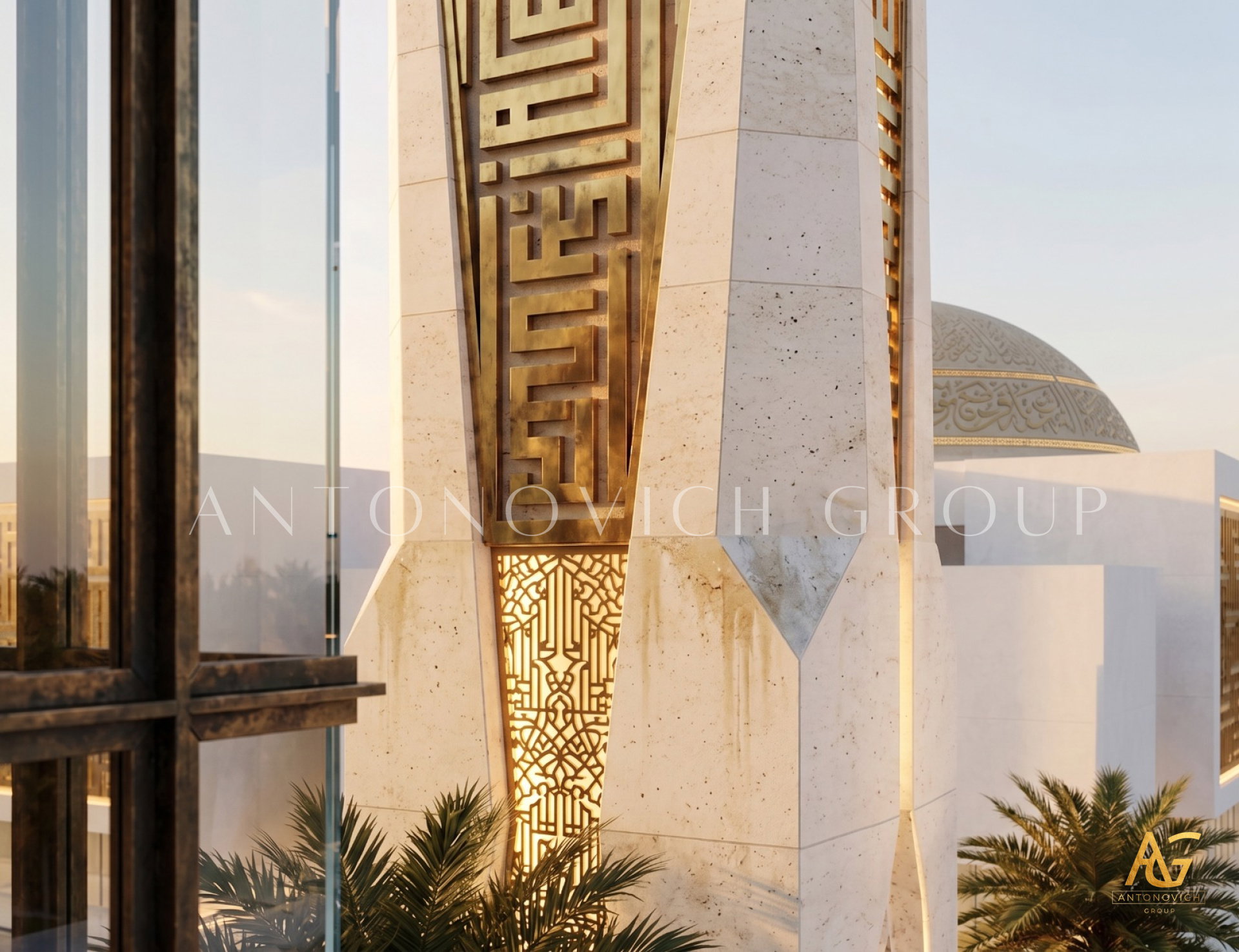
The Detached Crystalline Minarets Rather than integrating the minarets into the main building mass, this design places them as freestanding, faceted towers — angular, almost gem-like in form, with narrow illuminated slots tracing their vertical seams. This treatment of contemporary minaret architecture transforms the minaret from an appendage into an independent sculptural object, deepening the sense of ceremonial arrival as visitors move through the surrounding plaza.
The Carved Dome as Quiet Anchor Set back and partially concealed behind the cubic volumes, the mosque's dome is subtly finished with fine calligraphic carving across its surface — a restrained counterpoint to the building's otherwise sharp geometry. This use of subtle dome ornamentation allows the dome to retain its traditional symbolic role without dominating the composition, a careful balancing act that reflects mature architectural judgment.
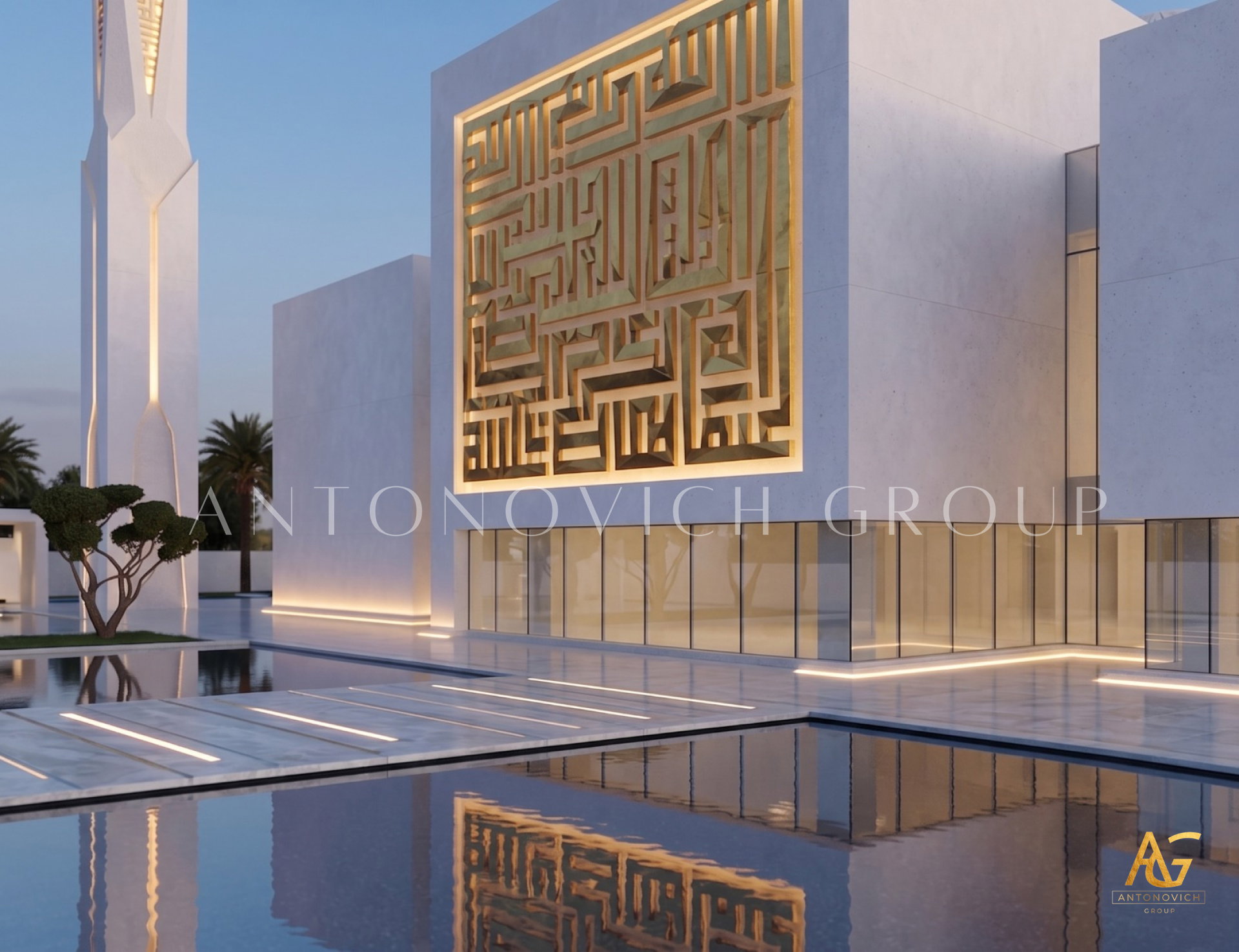
Recessed Golden Kufic Panels The building's defining visual signature is its use of large-scale Kufic calligraphy, rendered in gold and set into deep-cut recesses within the white volumetric walls. This approach to Kufic calligraphic facade design creates dramatic contrast and shadow play, particularly at dusk, when the illuminated script appears to float against the building's matte white surfaces.
The Glazed Base Condition At ground level, a continuous band of glazing wraps around the lower portion of the structure, visually separating the solid upper volumes from the ground plane and creating an impression of quiet levitation. This detail reflects Antonovich Group's broader expertise in contemporary facade transparency and threshold design, softening the building's monumentality at human scale.
The Marble Plaza and Reflecting Pool A vast, precisely jointed marble plaza surrounds the mosque, punctuated by linear light strips and a still reflecting pool that doubles the building's presence. This treatment of luxury public plaza design extends the architectural discipline of the building itself into its immediate landscape, ensuring the entire composition — not just the structure — feels intentional.
Why Modular Design Deserves Serious Consideration
It would be easy to dismiss cubist mosque architecture as a stylistic novelty. But the concept featured here suggests something more substantial: that modular sacred architecture can offer genuine advantages — clarity of construction logic, striking visual identity, and a fresh vocabulary for religious buildings within increasingly competitive skyline environments.
Their broader process for this design category typically includes:
- Volumetric composition studies, testing how modular masses relate to one another in scale and rhythm
- Precision facade fabrication planning, particularly for deep-relief calligraphic panels
- Material contrast strategy, balancing matte stone surfaces against gilded ornamental elements
- Landscape and plaza integration, treating the surrounding hardscape as an extension of the architectural language
- Cultural review and liturgical alignment, ensuring modular form doesn't compromise spiritual function
Architecture as Composed Restraint
What ultimately distinguishes this concept isn't its geometry alone, but its discipline — the willingness to let empty space, sharp edges, and a single concentrated ornamental gesture carry the building's spiritual weight, rather than relying on layered decoration throughout. It's a demanding design approach, one that leaves little room for error, and Antonovich Group's execution here demonstrates real command of that restraint.
As modern mosque architecture continues to diversify across the Gulf, concepts like this one suggest the field is far from settled — and that firms willing to experiment with form, while remaining anchored in cultural meaning, will define what comes next in luxury religious and cultural architecture.
More projects
Any questions?
We will call you back!
We will call you back!
Enter your contact details and our manager will contact you.
Latest Posts

17.10.26
Premium Wall Panels and Finest Lighting Solutions | Address Dubai Opera Residences
Redefining Modern Luxury Apartment Interiors in Downtown Dubai In Dubai’s prestigious residential landscape, luxury apartment interior design is defined by the t...
Read more
Read more

16.10.26
Bespoke Joinery at Address Dubai Opera Residences, Dubai
Bespoke Joinery at Address Dubai Opera Residences Bespoke joinery helps make an apartment feel complete. At Address Dubai Opera Residences in Downtown Dubai, cus...
Read more
Read more

16.10.26
Apartment Renovation and Interior Design at Address Dubai Opera Residences
A successful apartment renovation brings together thoughtful interior design, quality materials and precise execution. At Address Dubai Opera Residences, Antonov...
Read more
Read more

21.09.26
Oceanfront Luxury Residences at Serenia Living Dubai
Bespoke Luxury Apartment Interior Design, Fit-Out, Renovation & Furniture Production by Antonovich Group Serenia Living Dubai represents a distinctive approach t...
Read more
Read more

18.09.26
The Art of Refined Living at St. Regis Dubai
Luxury Apartment Renovation & Bespoke Furnishing by Antonovich Group In Dubai, a luxury residence is more than a place to live. It is an expression of lifestyle,...
Read more
Read more

18.09.26
Modern Luxury Apartment Interior Design & Fit-Out by Antonovich Group
A Bespoke Two-Bedroom Residence at Stella Maris, Dubai Marina, Framed by Bluewaters Island, Marina and JBR Dubai’s waterfront residences demand an interior that...
Read more
Read more

01.09.26
How to Choose the Best Interior Design Company in Doha?
A Complete Guide to Creating a Luxurious Bedroom Interior with Antonovich Group Choosing the best interior design company in Doha is an important decision for ho...
Read more
Read more

29.08.26
Palm Jebel Ali Villa Architecture & Landscape Design
Palm Jebel Ali Villa Architecture and Landscape Design Palm Jebel Ali is becoming one of Dubai’s most prestigious destinations for luxury waterfront living. Its...
Read more
Read more
YouTube Shorts
Recent short videos from Antonovich Group projects, studio work and luxury interiors.
Latest Videos
DOWNTOWN DUBAI APARTMENT | MODERN LUXURY, THOUGHTFULLY EXECUTED
Antonovich Group | A Global Portfolio of Luxury Interiors
The Future of Luxury Villas | Modern Exterior Architecture by Antonovich Group
Luxury Classical Villa Design | Timeless Palace Exterior Architecture | Riyadh, Qatar & UAE
Luxury Majlis Interior Design Saudi Arabia | Royal Majlis by Antonovich Group
Zabeel Saray Villa | A Luxury Interior Design Masterpiece by Antonovich Group
Luxury Villa in Palm Jumeirah Dubai | Interior Renovation & Bespoke Furniture
Opera District Transformation Before & After| Dubai’s #1 Luxury Apartment Renovation Company