
Updated at: 07.08.26

The Building as Manuscript: Inscribed Mosque Architecture by Antonovich Group
An Architectural Study in Angular Geometry, Surface-Wide Calligraphy, and the Poetics of Olive Grove Landscaping
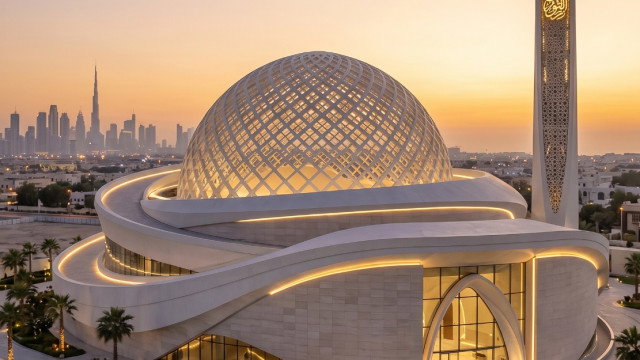
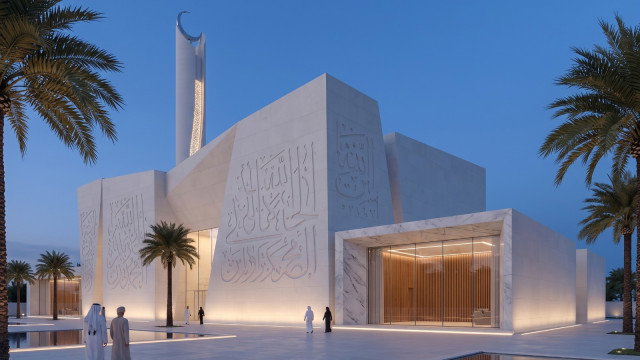
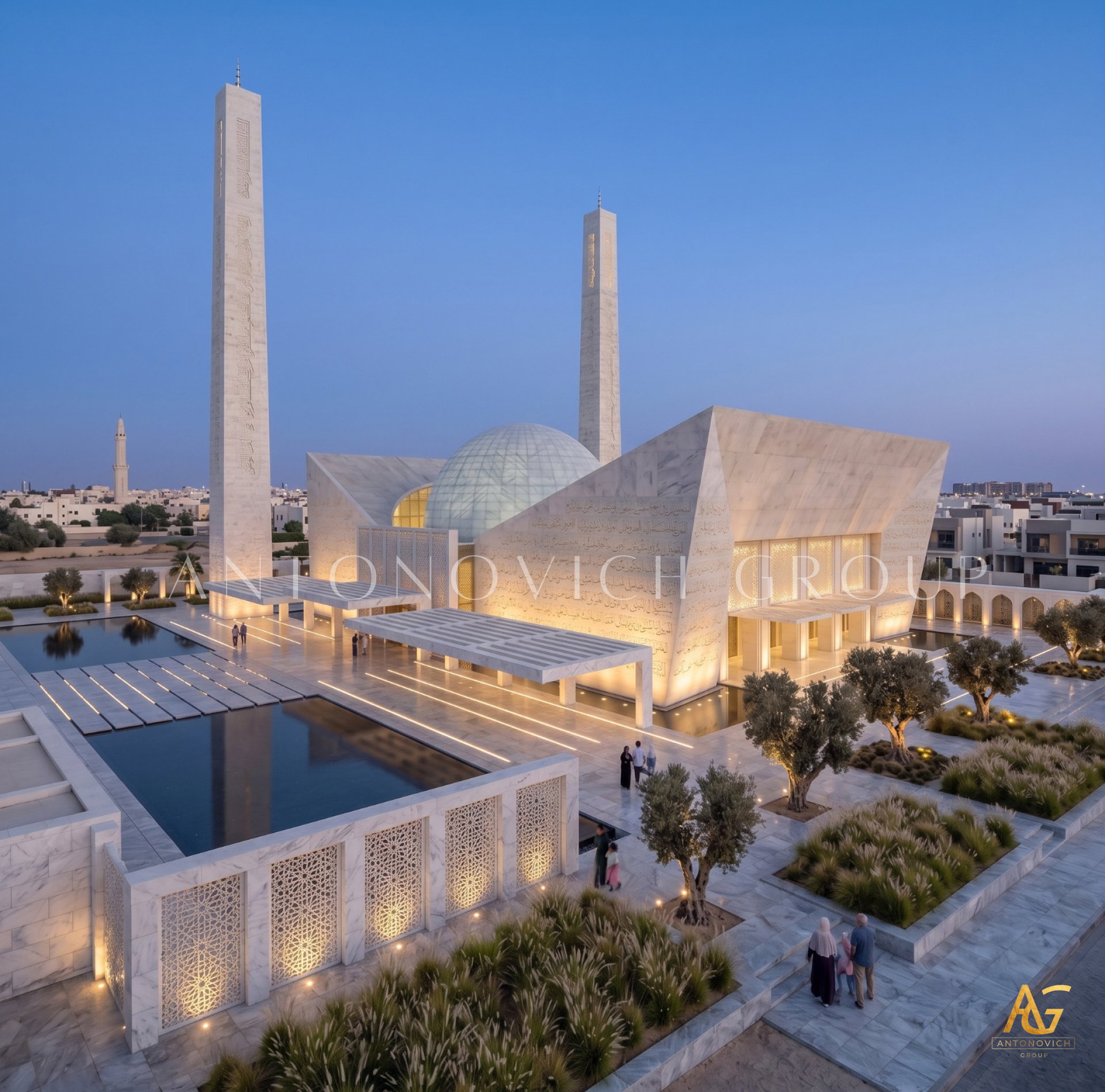
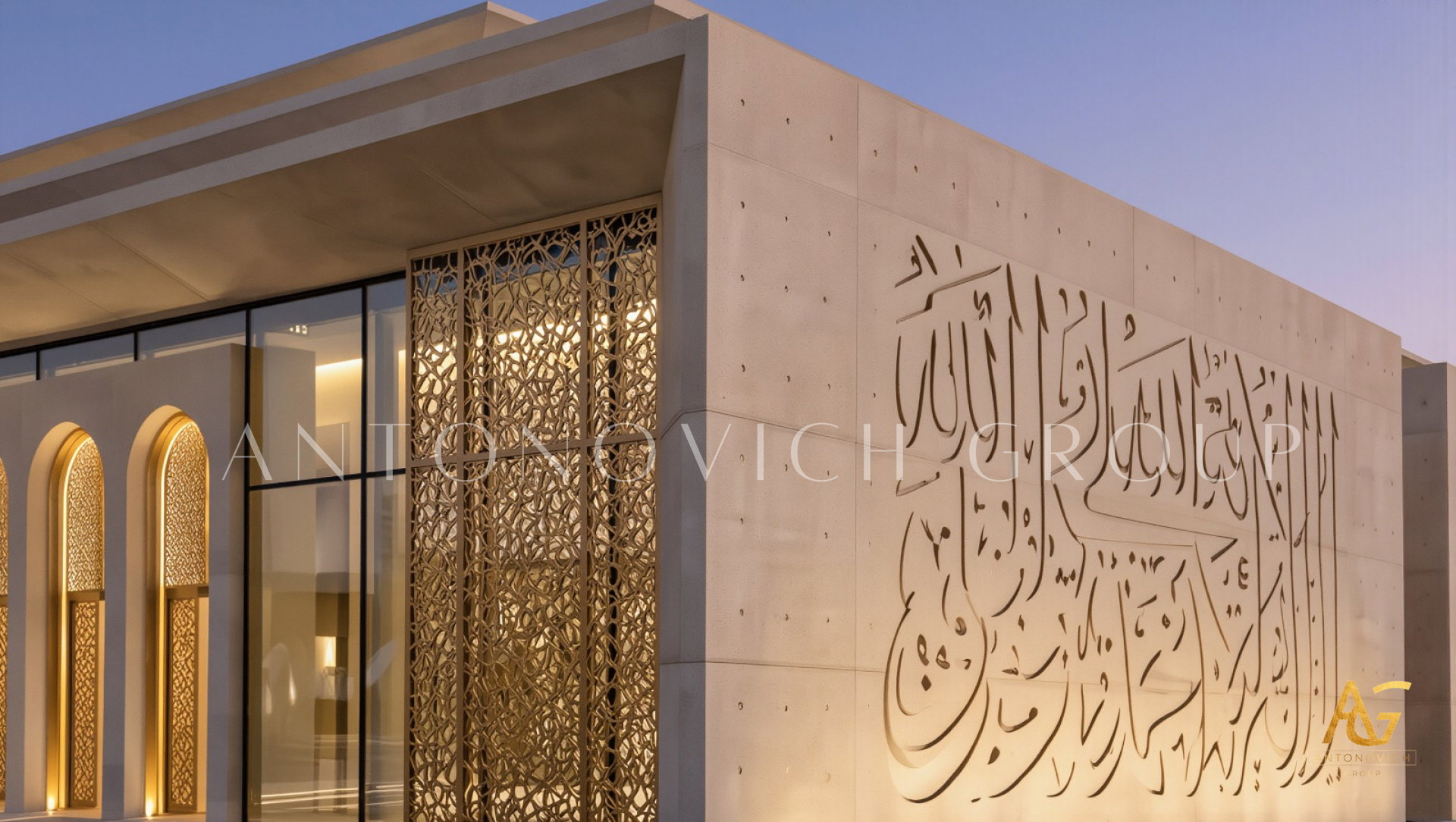
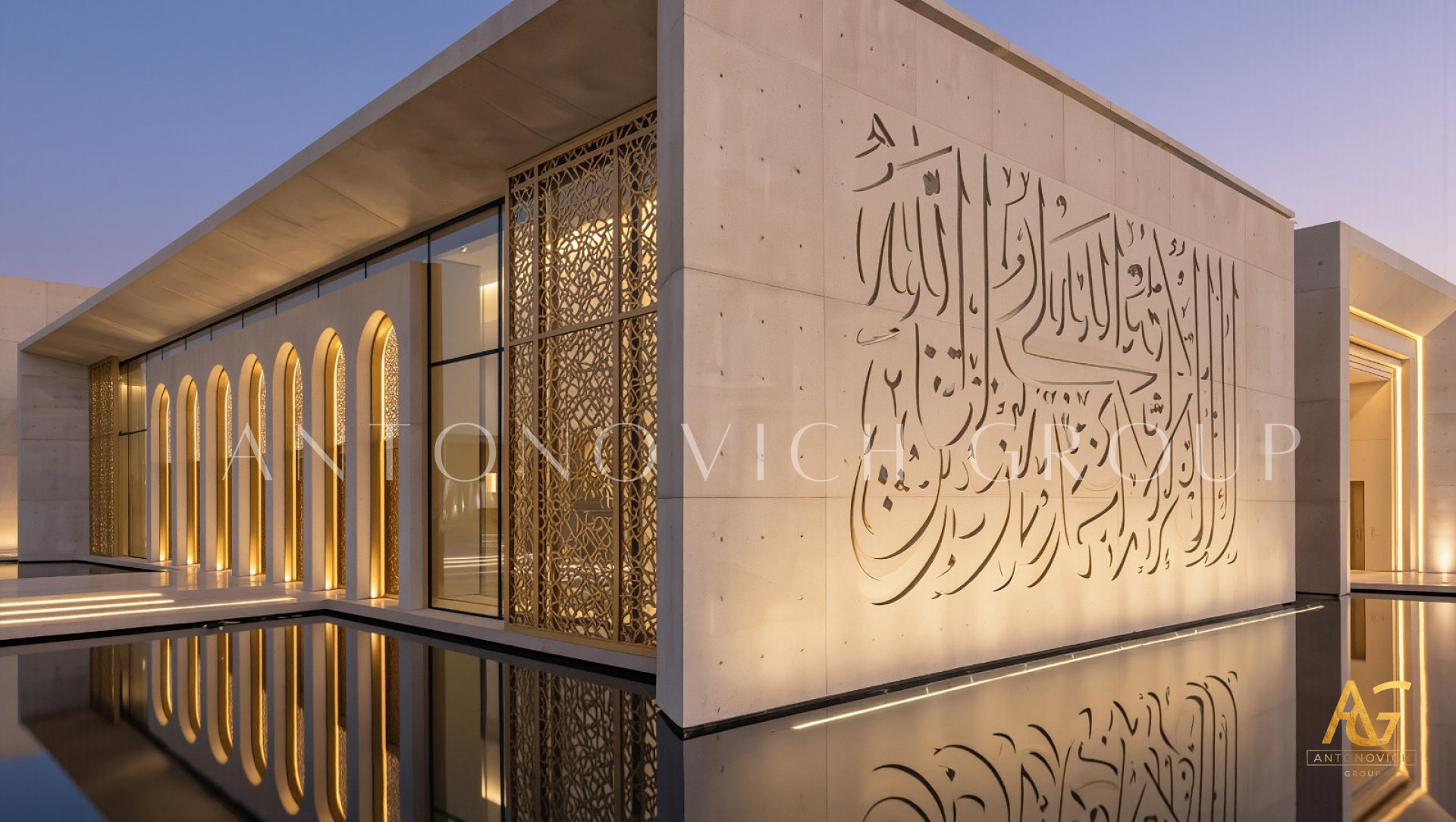
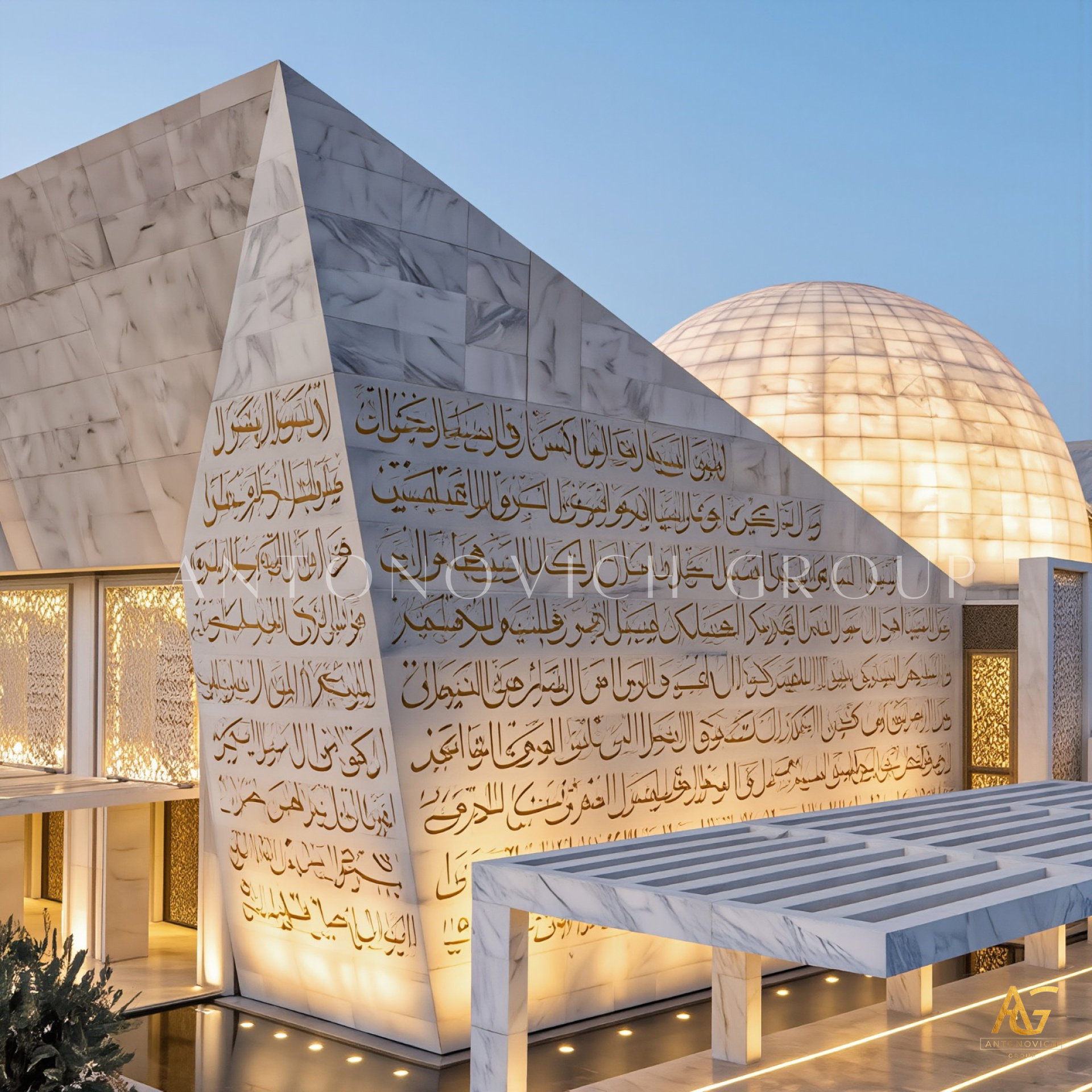
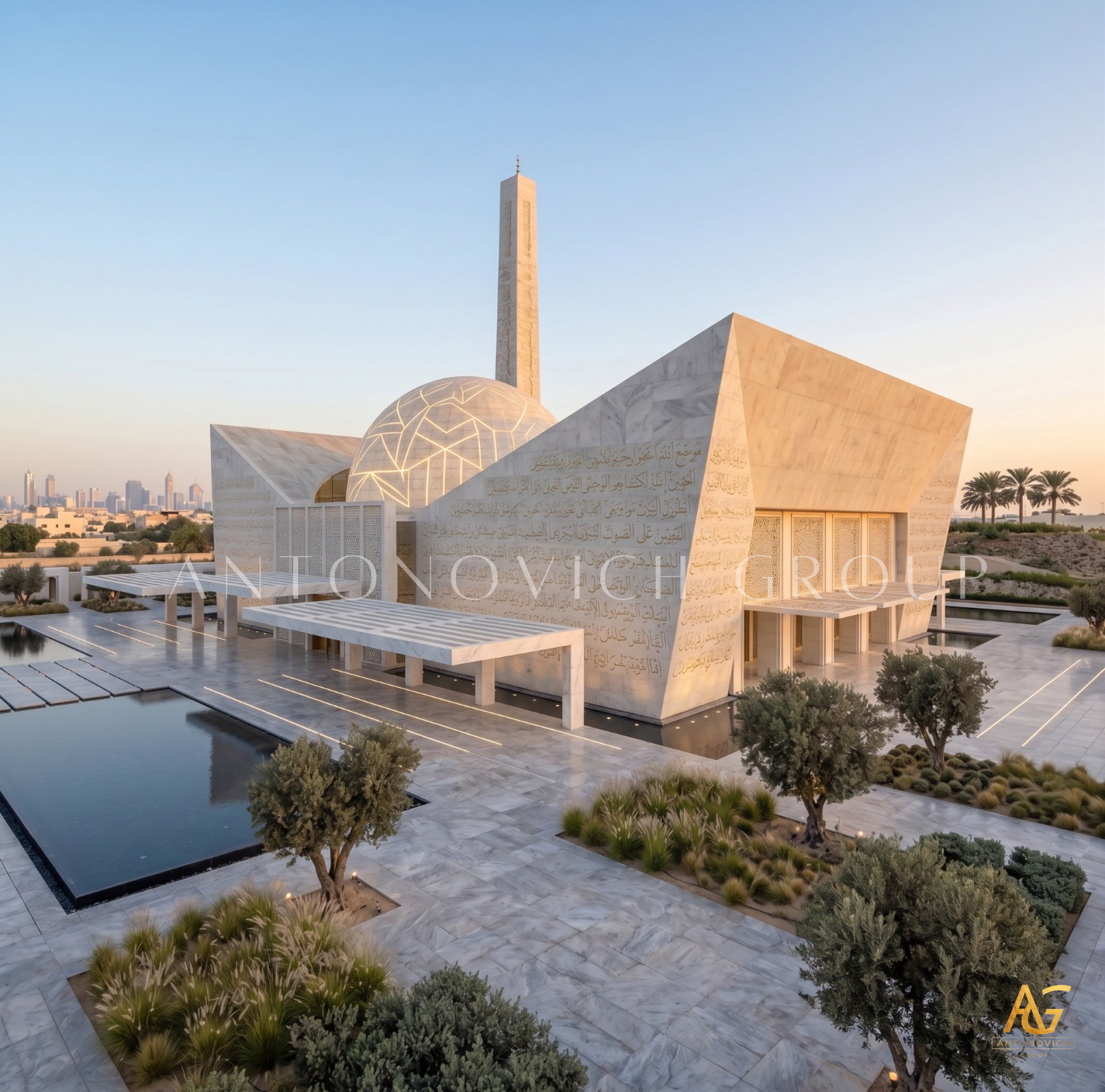
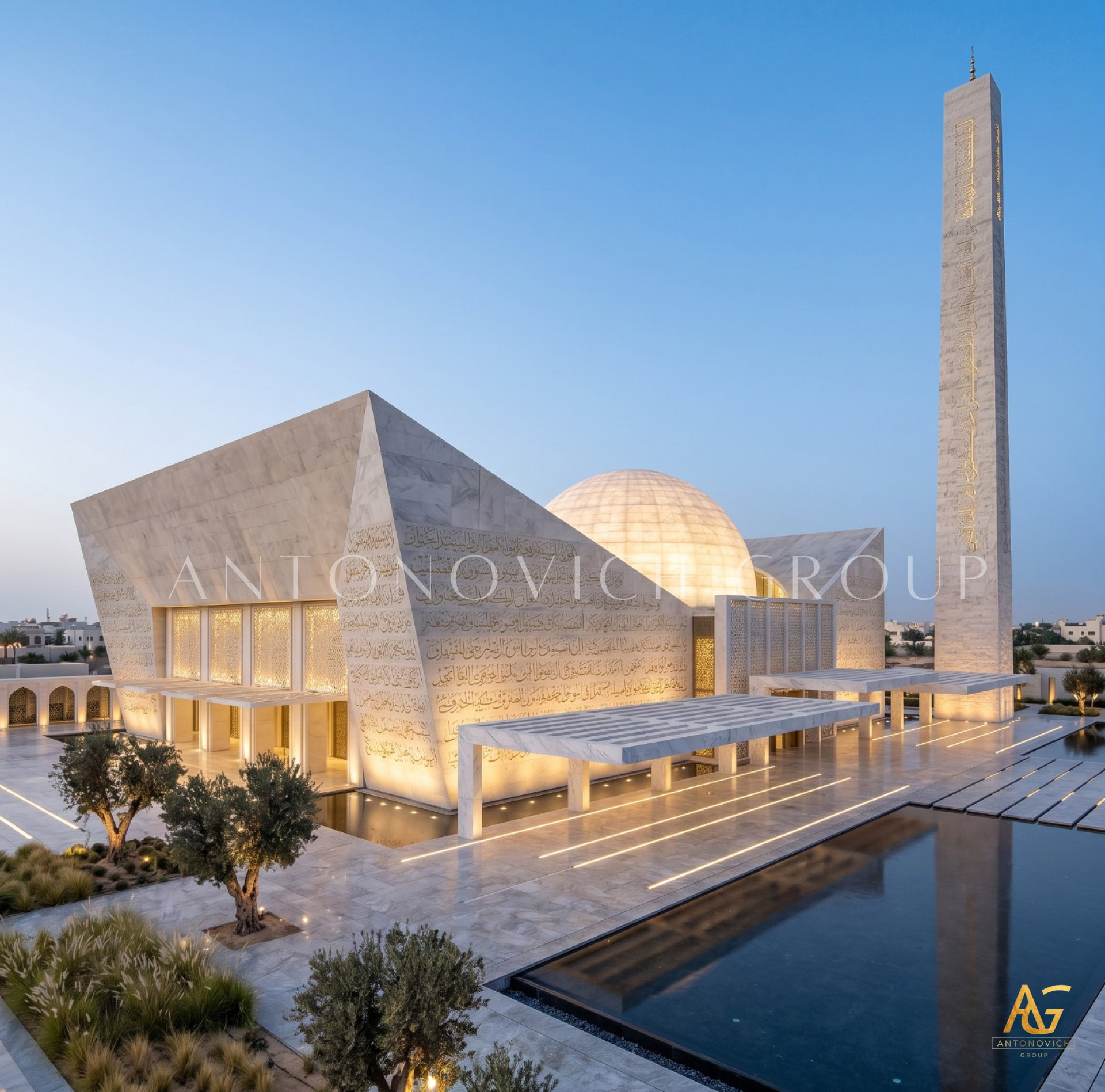
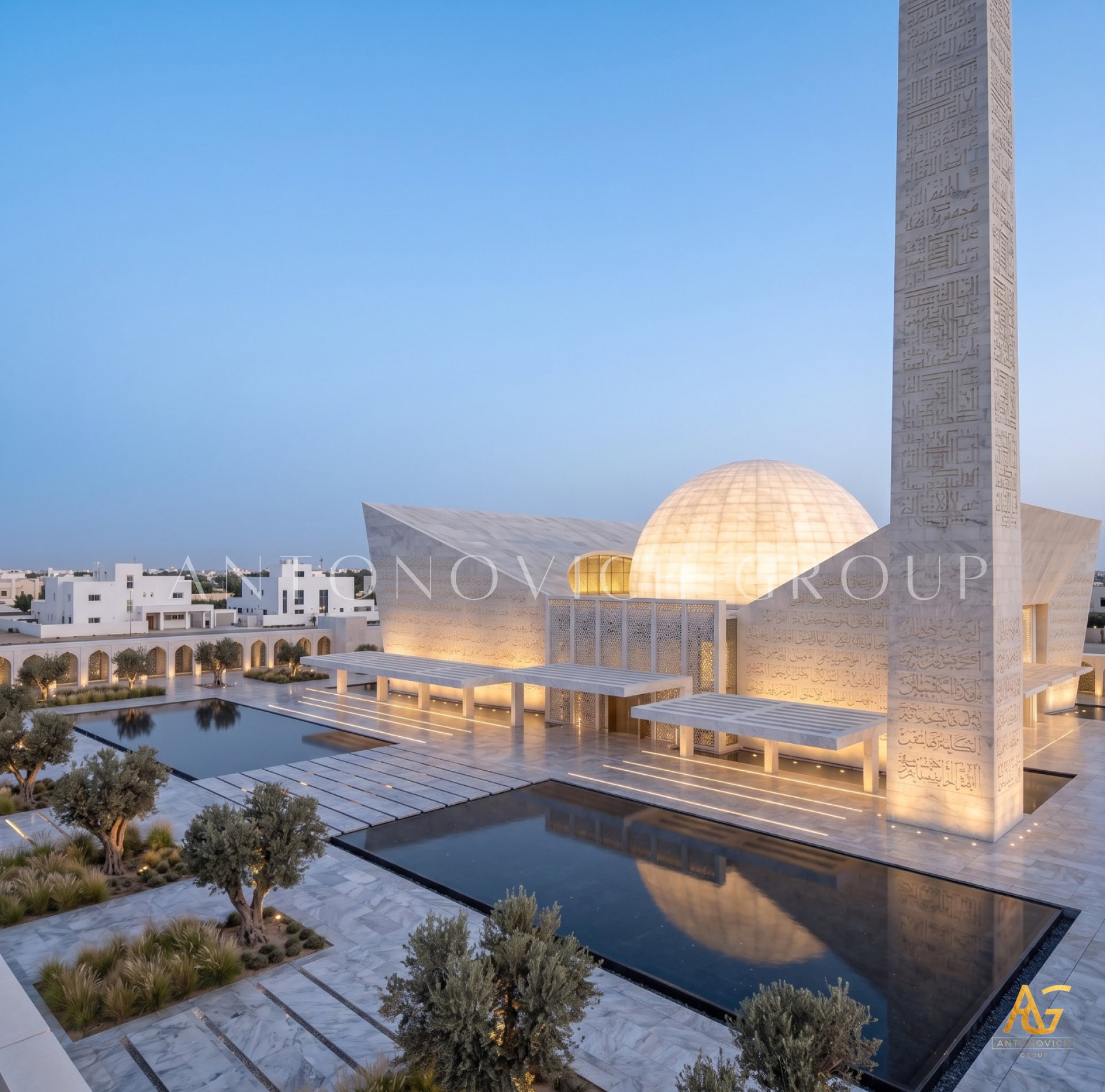
There's a specific kind of architectural courage required to cover an entire building in text. Not a symbolic gesture confined to a single panel, but sacred script unfurling across nearly every visible stone surface — as if the mosque itself has become an open manuscript, meant to be read as much as it is meant to be entered. The concept featured above embraces this idea fully. Dense, continuous calligraphy wraps around angular, faceted stone volumes, while a geometric linear dome and a slender obelisk minaret rise above an olive-lined plaza framed by cantilevered stone canopies. This is a markedly different proposition within modern mosque architecture — one where the building's surface becomes its primary narrative device.
Scripture as Structure: A Different Kind of Ornament
Where many contemporary mosque designs treat calligraphy as an accent — concentrated in a single facade panel, a dome band, or an entrance lintel — this concept takes the opposite approach entirely. Nearly every angled stone surface carries dense, continuous inscription, transforming Islamic calligraphic architecture from a decorative gesture into the building's dominant material language.
This design choice reflects a distinct set of priorities within contemporary religious architecture:
- Text as texture — using the density and rhythm of script to create visual richness across large stone surfaces, functioning almost like a woven pattern
- Legibility at proximity, abstraction at distance — the calligraphy reads as pure texture from afar, resolving into legible script only as visitors draw closer
- Angular geometry as canvas — the building's faceted, canted walls provide varied surface angles that catch and shift light across the inscribed text throughout the day
- A devotional reading experience — encouraging visitors to physically approach and engage with the building's surface, rather than absorbing its meaning from a distance
Antonovich Group's command of this approach reflects real sophistication in contemporary Islamic architectural ornamentation — the confidence to let scripture carry the majority of a building's visual identity, rather than relying on structural spectacle alone.
Anatomy of the Design
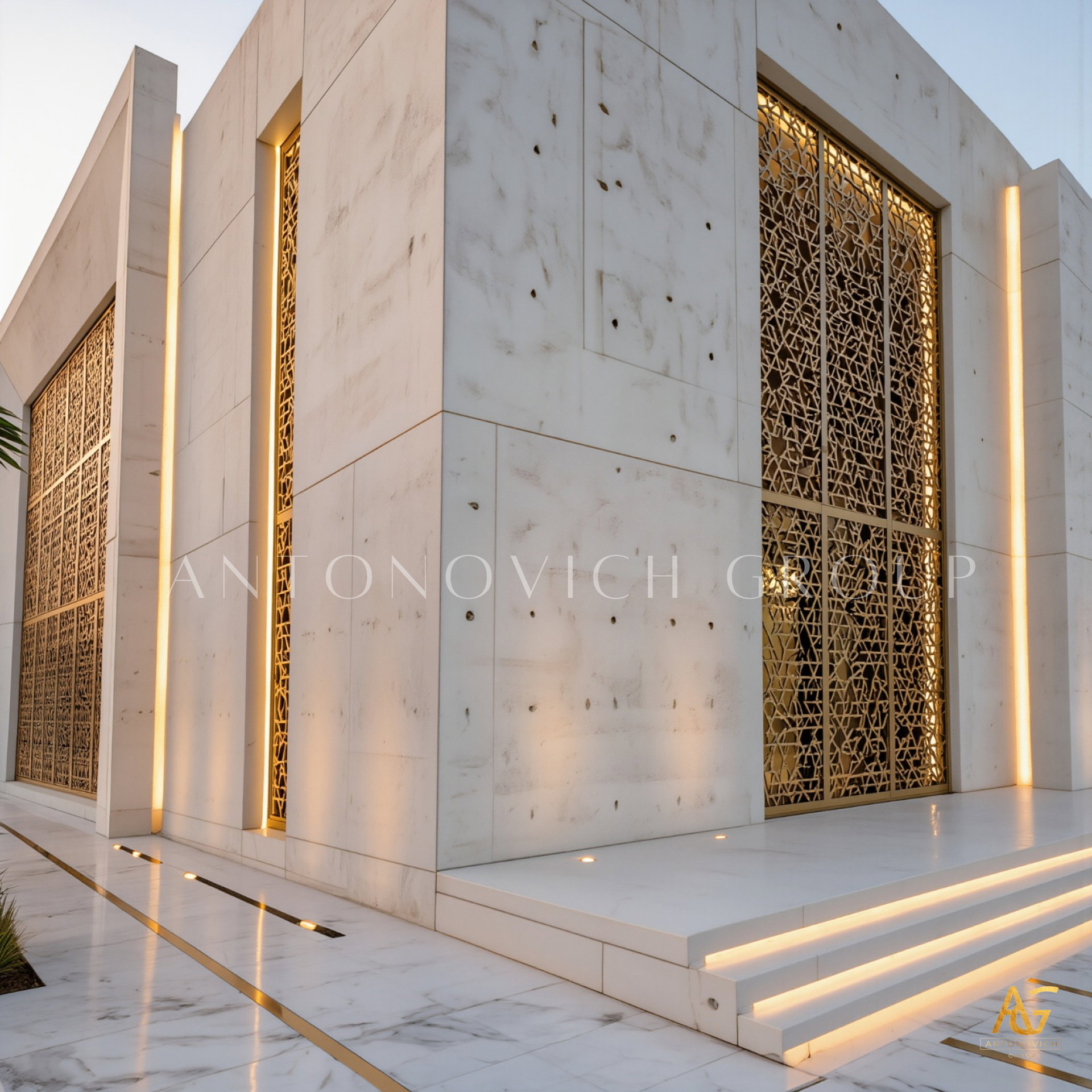
Angular, Canted Stone Volumes Rather than orthogonal walls, the mosque's massing leans and tilts at deliberate angles, creating a dynamic, almost origami-like structure. This use of angular faceted mosque architecture ensures that the surface-wide calligraphy is never read flatly — each tilted plane catches light differently, giving the inscribed text a shifting, almost animated quality across the day.
The Geometric Linear Dome Above the entrance, a dome rendered in illuminated linear facets replaces the smooth, continuous curvature of traditional dome construction. This reinterpretation of contemporary geometric dome design reflects a broader movement toward abstracting traditional forms into more structurally expressive, light-driven compositions.
The Slender Obelisk Minaret Rising sharply behind the dome, the minaret takes the form of a tapering, four-sided obelisk rather than a rounded tower — its surface, like the rest of the building, inscribed with fine calligraphic detailing. This treatment of obelisk-form minaret design offers a striking departure from cylindrical minaret convention, reinforcing the building's overall commitment to angular geometric language.
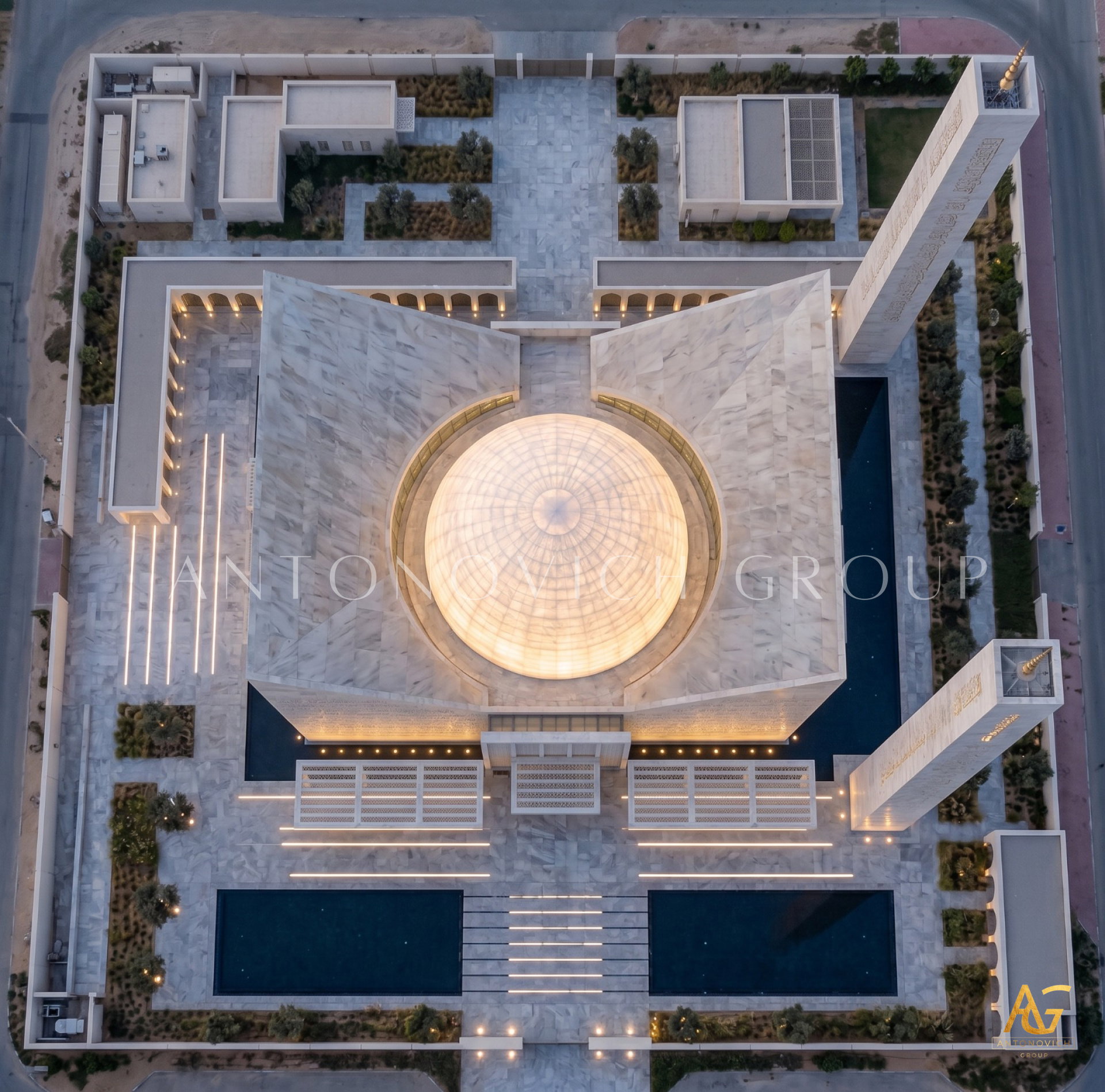
Cantilevered Stone Canopies Extending from the building's base, long cantilevered stone canopies shade the approaching pathways without the visual weight of columns, appearing to float above the plaza. This structural approach to cantilevered shade architecture reflects Antonovich Group's technical sophistication, balancing climate-responsive function with striking sculptural presence.
Olive Grove and Reflecting Pool Landscape Surrounding the mosque, mature olive trees are planted in deliberate clusters alongside dark, still reflecting pools and precisely scored marble paving. This landscape strategy reflects a growing trend toward symbolic landscape architecture in Islamic design, where olive trees — long associated with peace, endurance, and sacred groves — extend the building's spiritual narrative into the surrounding grounds.
Antonovich Group's Broader Command of Ornamental Density
This concept reflects a distinct capability within Antonovich Group's practice — the ability to work confidently with ornamental density rather than defaulting to minimalist restraint. Their process for this design category typically includes:
- Calligraphic layout and typographic planning, ensuring inscribed text reads coherently across complex, angled surfaces
- Angular structural engineering, enabling canted and faceted stone massing at architectural scale
- Light-responsive facade study, testing how inscribed surfaces perform under shifting daylight and evening illumination
- Symbolic planting strategy, selecting landscape elements — such as olive groves — for their cultural and spiritual resonance
- Cantilevered structural detailing, achieving dramatic shade coverage without visually heavy support systems
Why Surface-Wide Calligraphy Deserves Serious Consideration
It would be easy to view a fully inscribed facade as an ornamental extreme — but the concept featured here suggests something more considered: that manuscript-inspired mosque architecture offers a genuinely distinct devotional experience, one that rewards proximity, patience, and physical engagement with the building itself. Rather than simply admiring the mosque from across a plaza, visitors are invited to walk its perimeter, tracing scripture across angled stone as they approach.
A mosque covered edge to edge in sacred text is not simply a building with calligraphy on it — it is calligraphy, given architectural form. Through concepts like the one featured here, Antonovich Group continues to expand the vocabulary of modern mosque architecture, proving that ornament, when pursued with scholarly discipline and structural confidence, can become the very substance of a building rather than its decoration.
More projects
Any questions?
We will call you back!
We will call you back!
Enter your contact details and our manager will contact you.
Latest Posts

17.10.26
Premium Wall Panels and Finest Lighting Solutions | Address Dubai Opera Residences
Redefining Modern Luxury Apartment Interiors in Downtown Dubai In Dubai’s prestigious residential landscape, luxury apartment interior design is defined by the t...
Read more
Read more

16.10.26
Bespoke Joinery at Address Dubai Opera Residences, Dubai
Bespoke Joinery at Address Dubai Opera Residences Bespoke joinery helps make an apartment feel complete. At Address Dubai Opera Residences in Downtown Dubai, cus...
Read more
Read more

16.10.26
Apartment Renovation and Interior Design at Address Dubai Opera Residences
A successful apartment renovation brings together thoughtful interior design, quality materials and precise execution. At Address Dubai Opera Residences, Antonov...
Read more
Read more

21.09.26
Oceanfront Luxury Residences at Serenia Living Dubai
Bespoke Luxury Apartment Interior Design, Fit-Out, Renovation & Furniture Production by Antonovich Group Serenia Living Dubai represents a distinctive approach t...
Read more
Read more

18.09.26
The Art of Refined Living at St. Regis Dubai
Luxury Apartment Renovation & Bespoke Furnishing by Antonovich Group In Dubai, a luxury residence is more than a place to live. It is an expression of lifestyle,...
Read more
Read more

18.09.26
Modern Luxury Apartment Interior Design & Fit-Out by Antonovich Group
A Bespoke Two-Bedroom Residence at Stella Maris, Dubai Marina, Framed by Bluewaters Island, Marina and JBR Dubai’s waterfront residences demand an interior that...
Read more
Read more

01.09.26
How to Choose the Best Interior Design Company in Doha?
A Complete Guide to Creating a Luxurious Bedroom Interior with Antonovich Group Choosing the best interior design company in Doha is an important decision for ho...
Read more
Read more

29.08.26
Palm Jebel Ali Villa Architecture & Landscape Design
Palm Jebel Ali Villa Architecture and Landscape Design Palm Jebel Ali is becoming one of Dubai’s most prestigious destinations for luxury waterfront living. Its...
Read more
Read more
YouTube Shorts
Recent short videos from Antonovich Group projects, studio work and luxury interiors.
Latest Videos
DOWNTOWN DUBAI APARTMENT | MODERN LUXURY, THOUGHTFULLY EXECUTED
Antonovich Group | A Global Portfolio of Luxury Interiors
The Future of Luxury Villas | Modern Exterior Architecture by Antonovich Group
Luxury Classical Villa Design | Timeless Palace Exterior Architecture | Riyadh, Qatar & UAE
Luxury Majlis Interior Design Saudi Arabia | Royal Majlis by Antonovich Group
Zabeel Saray Villa | A Luxury Interior Design Masterpiece by Antonovich Group
Luxury Villa in Palm Jumeirah Dubai | Interior Renovation & Bespoke Furniture
Opera District Transformation Before & After| Dubai’s #1 Luxury Apartment Renovation Company