
Updated at: 04.08.26

Sculpting the Sacred: Antonovich Group's Vision for Modern Mosque Architecture
How Fluid Form, Calligraphic Detail, and Contemporary Engineering Are Redefining Islamic Religious Architecture
Some buildings are designed to be seen. Others are designed to be felt. A mosque belongs firmly in the second category — and nowhere is that distinction more evident than in the wave of modern mosque architecture now reshaping skylines across the Gulf. Antonovich Group has emerged as a defining voice in this movement, specializing in contemporary Islamic architectural design that honors centuries of spiritual tradition while embracing bold, sculptural, forward-facing form.
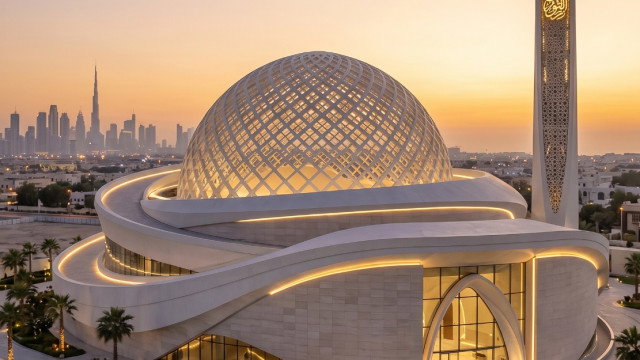
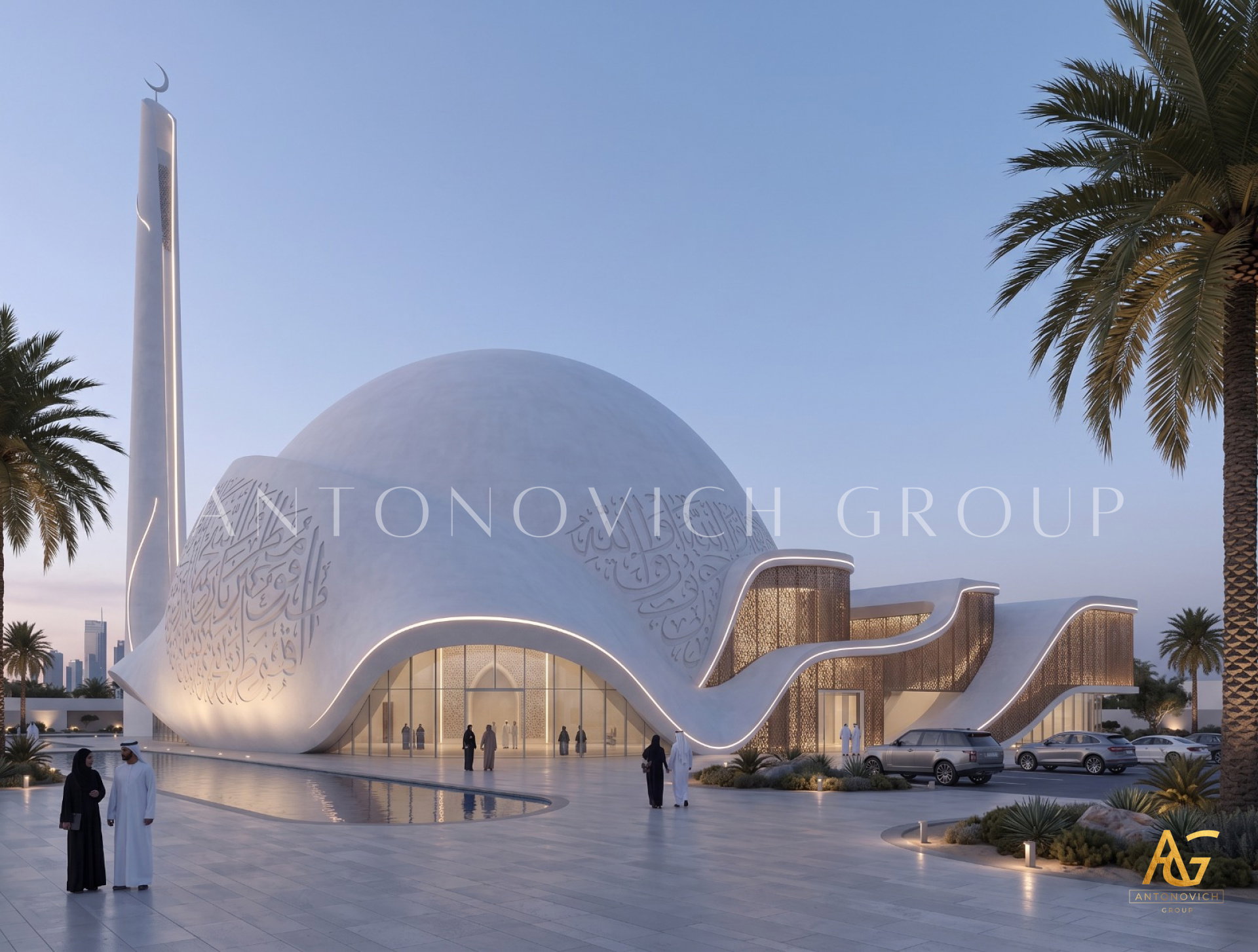
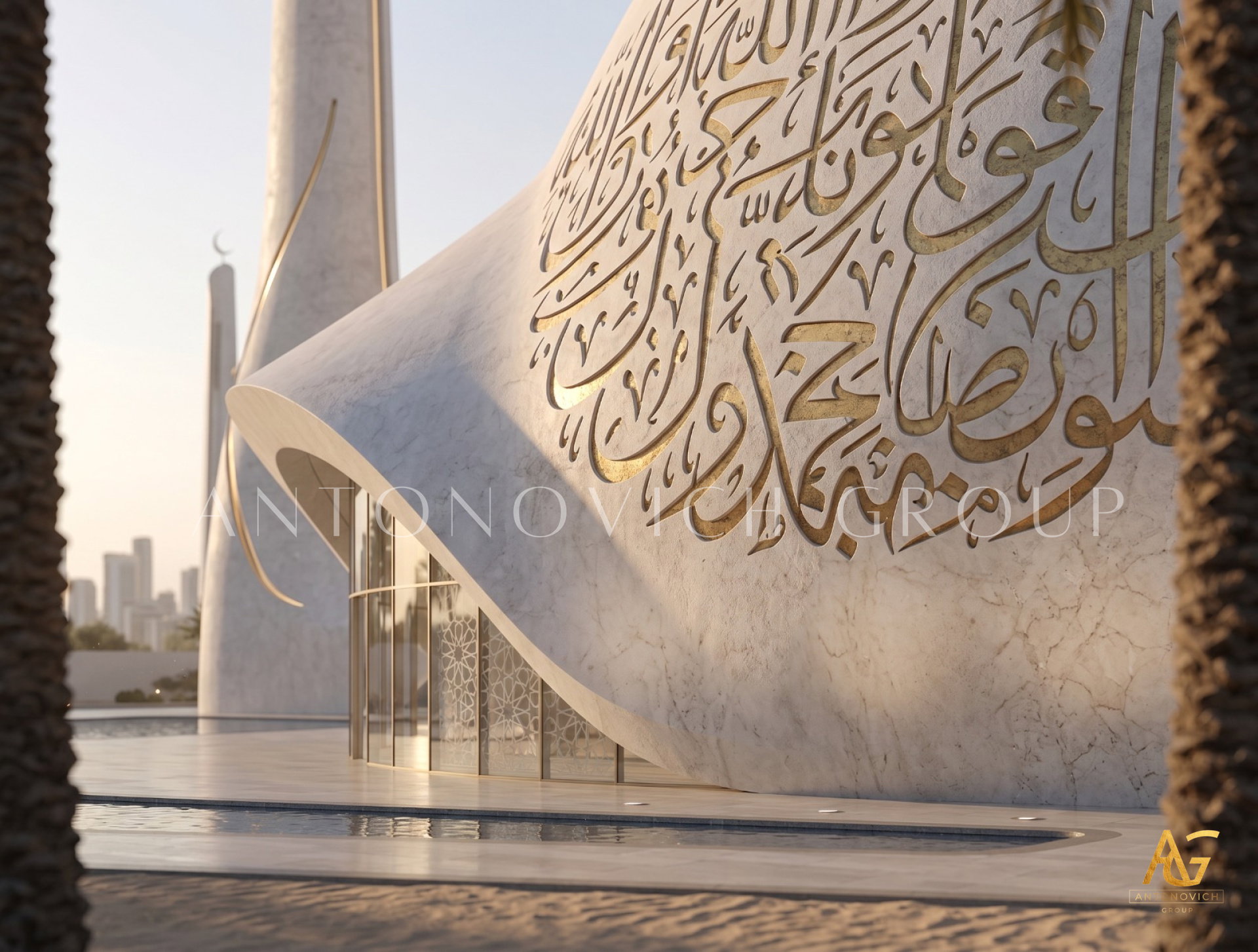
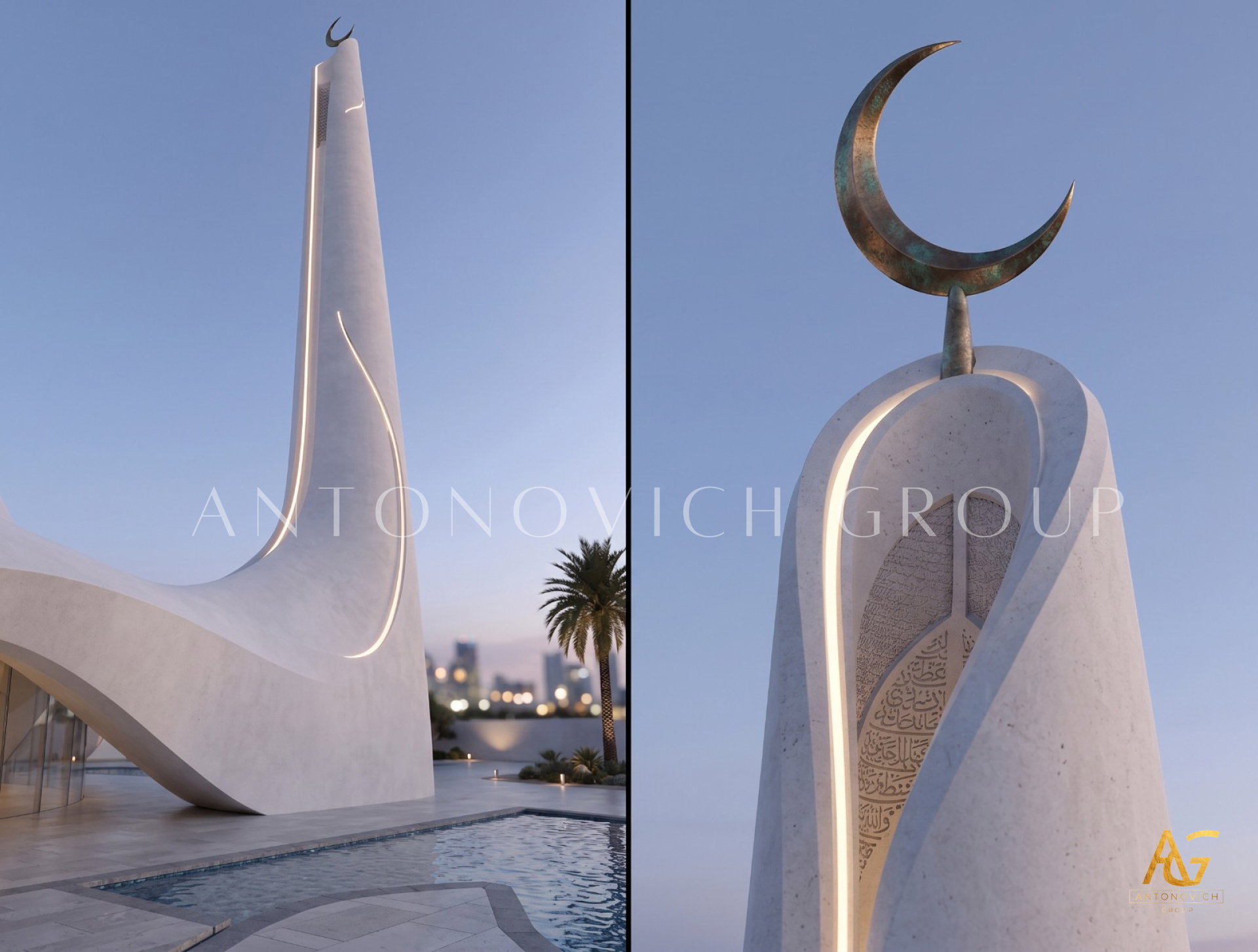
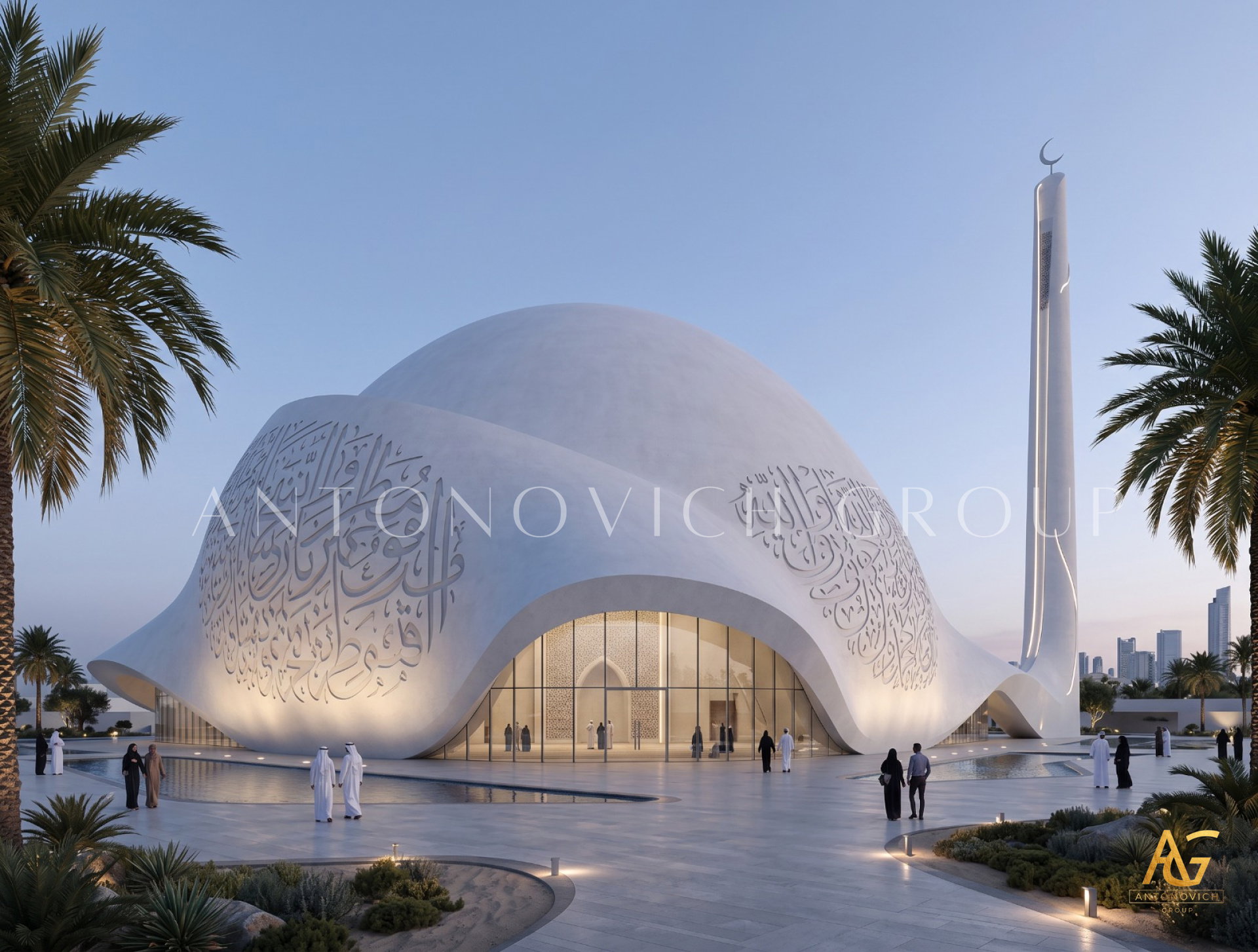
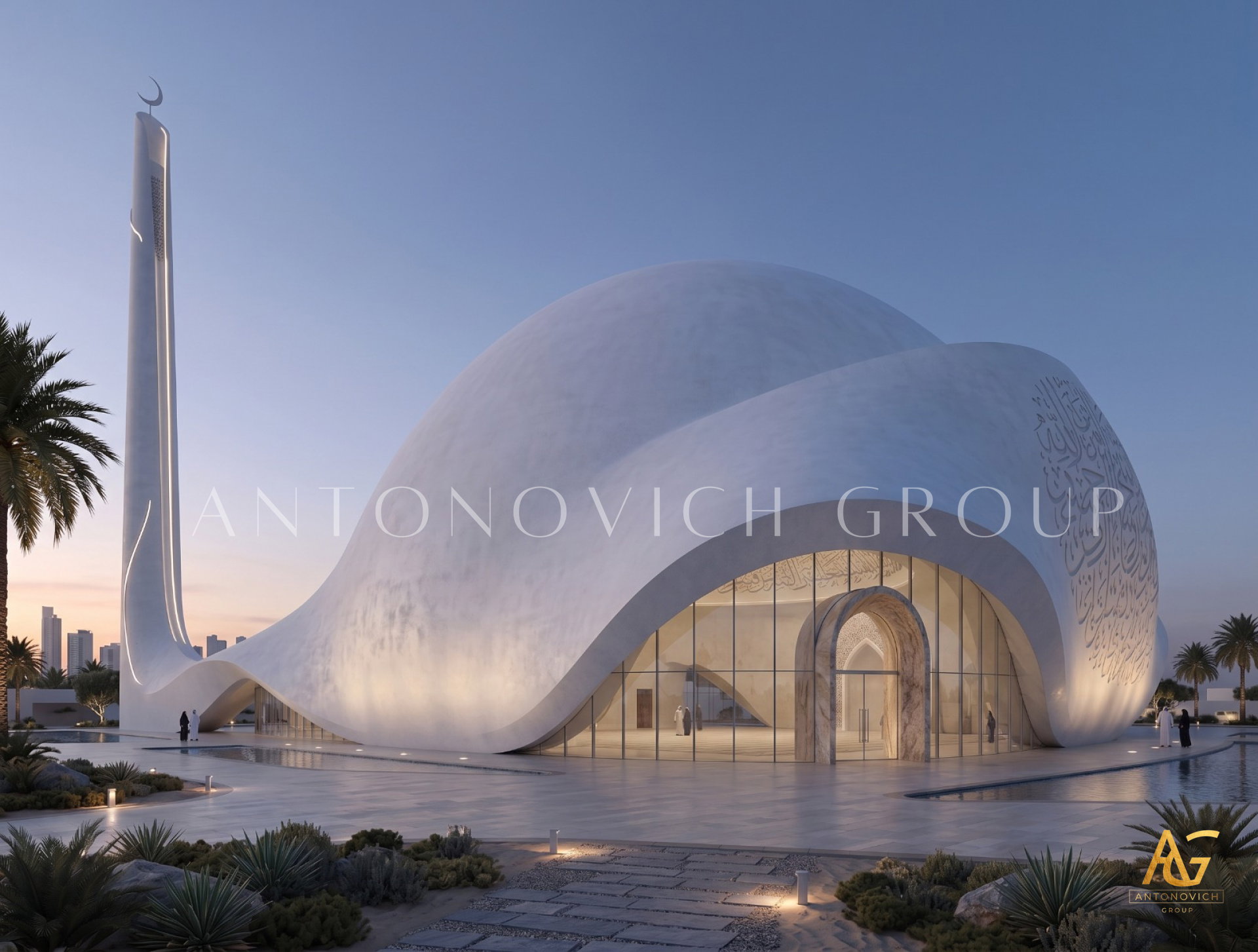
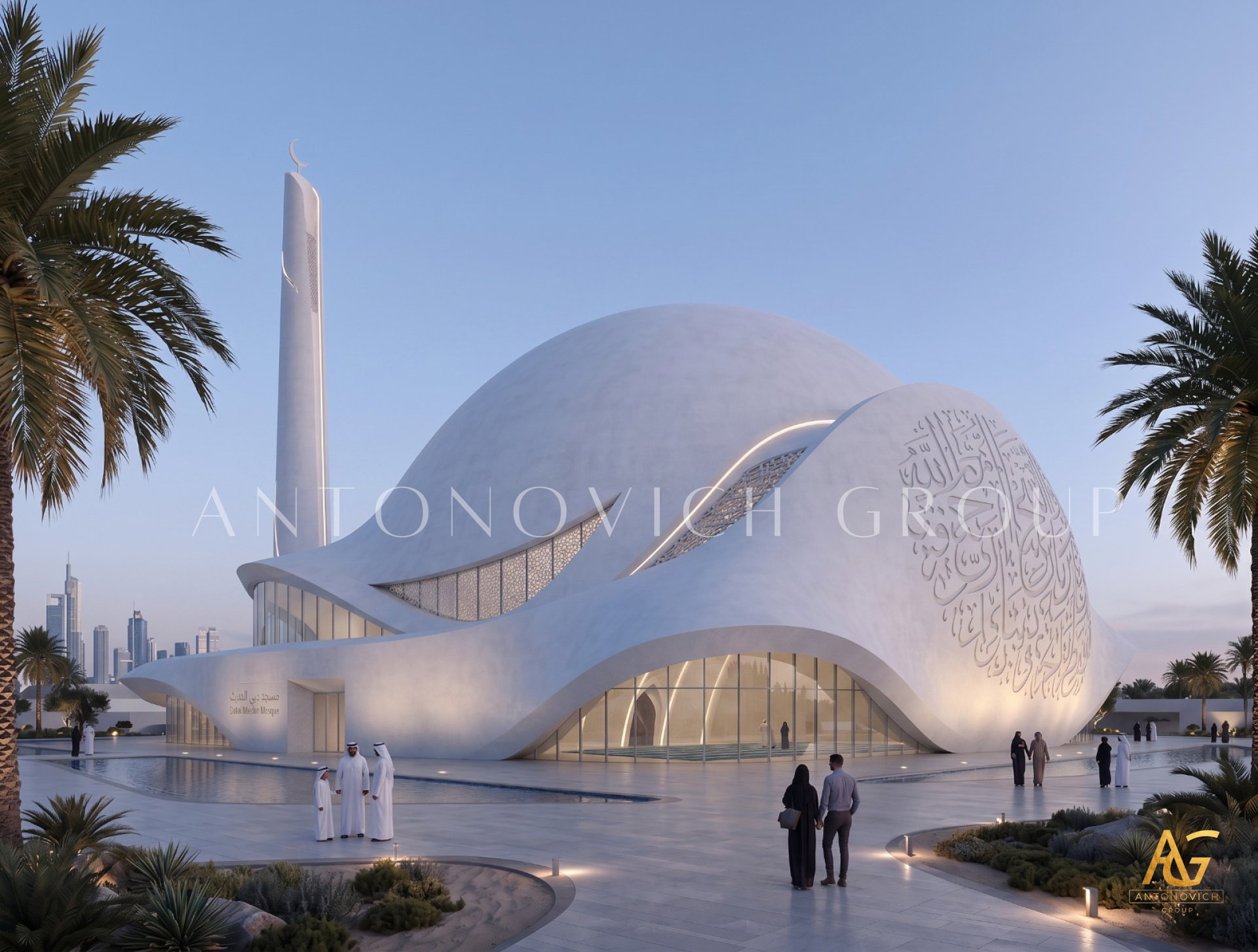
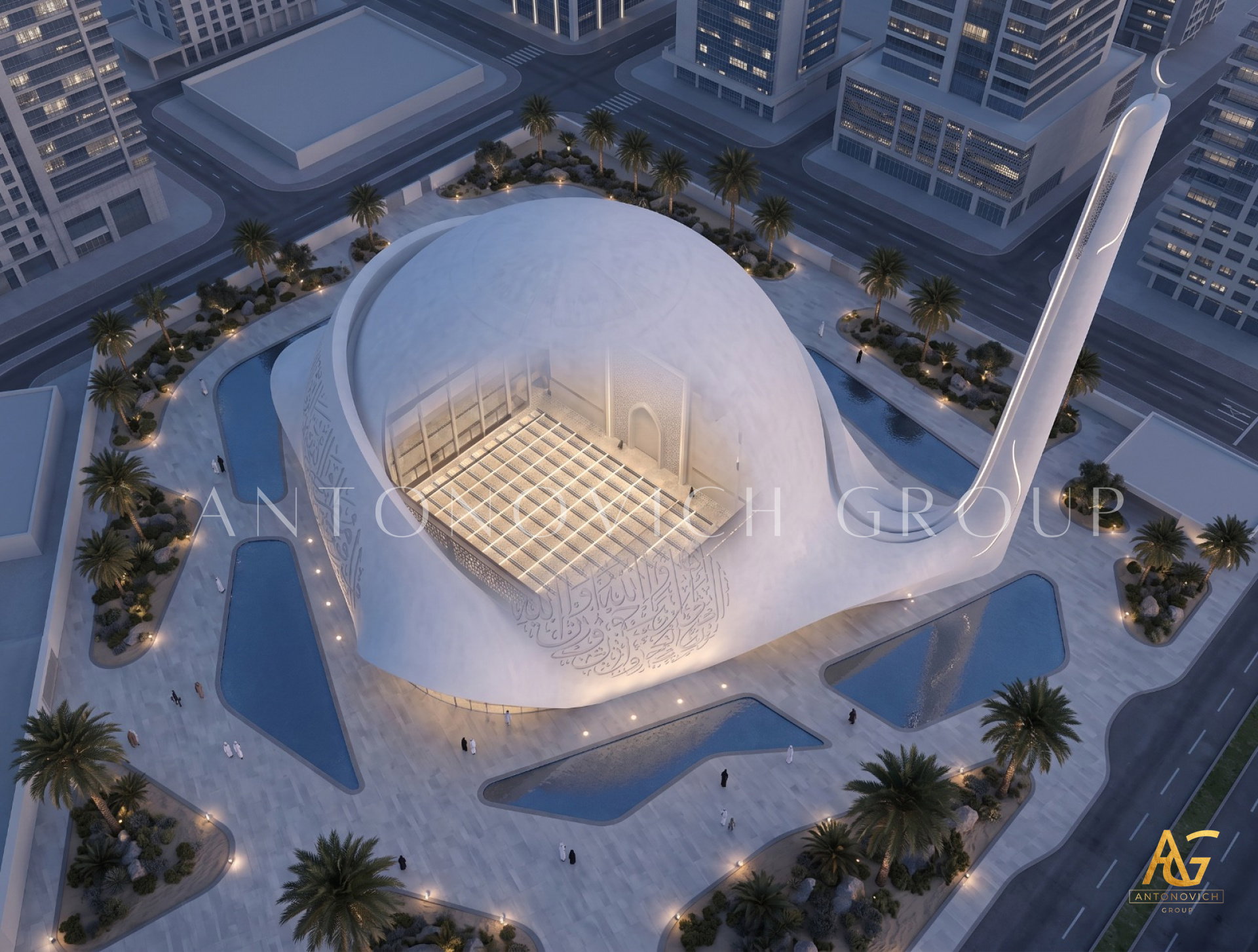
The featured concept above captures this philosophy perfectly: a mosque rendered not as a collection of domes and minarets in the traditional sense, but as a single, fluid architectural gesture — smooth curved walls rising like sails, a slender minaret piercing the skyline, and an entire facade transformed into a monumental calligraphic inscription. It's a striking example of what's possible when modern mosque exterior design is approached with both reverence and architectural daring.
The Shift Toward Sculptural Mosque Design
For decades, mosque architecture across the region followed relatively consistent formal language — square domes, cylindrical minarets, symmetrical facades. Today, a new generation of religious architecture is emerging, and Antonovich Group is at the forefront of this shift toward contemporary Islamic sacred architecture.
This evolution is driven by a few key forces shaping the demand for luxury mosque design services:
- Urban prestige — cities like Dubai, Doha, and Abu Dhabi increasingly commission landmark religious buildings as architectural statements
- Advanced construction technology — enabling complex curved geometries once impossible to build at scale
- Cultural pride reimagined — communities seeking architecture that reflects both heritage and forward momentum
- Tourism and civic identity — mosques functioning not only as places of worship but as recognizable cultural landmarks
Antonovich Group's approach to modern mosque architectural design sits precisely at this intersection — translating spiritual symbolism into striking, sculptural form.
Reading the Design: What Makes This Concept Work
Looking closely at the featured rendering reveals the layered thinking behind this kind of contemporary mosque design. Every element serves both a symbolic and functional purpose.
1. The Sculptural Dome Form Rather than a traditional rounded dome sitting atop a cubic base, this design merges the dome directly into the building's outer walls — creating one continuous, shell-like silhouette. This approach reflects a broader trend in fluid mosque architecture, where structure and ornament become a single unified form rather than separate architectural layers.
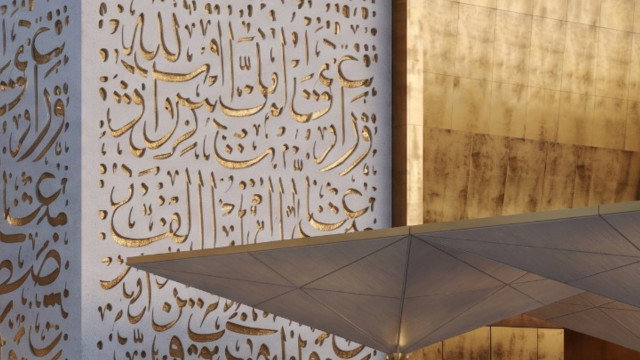
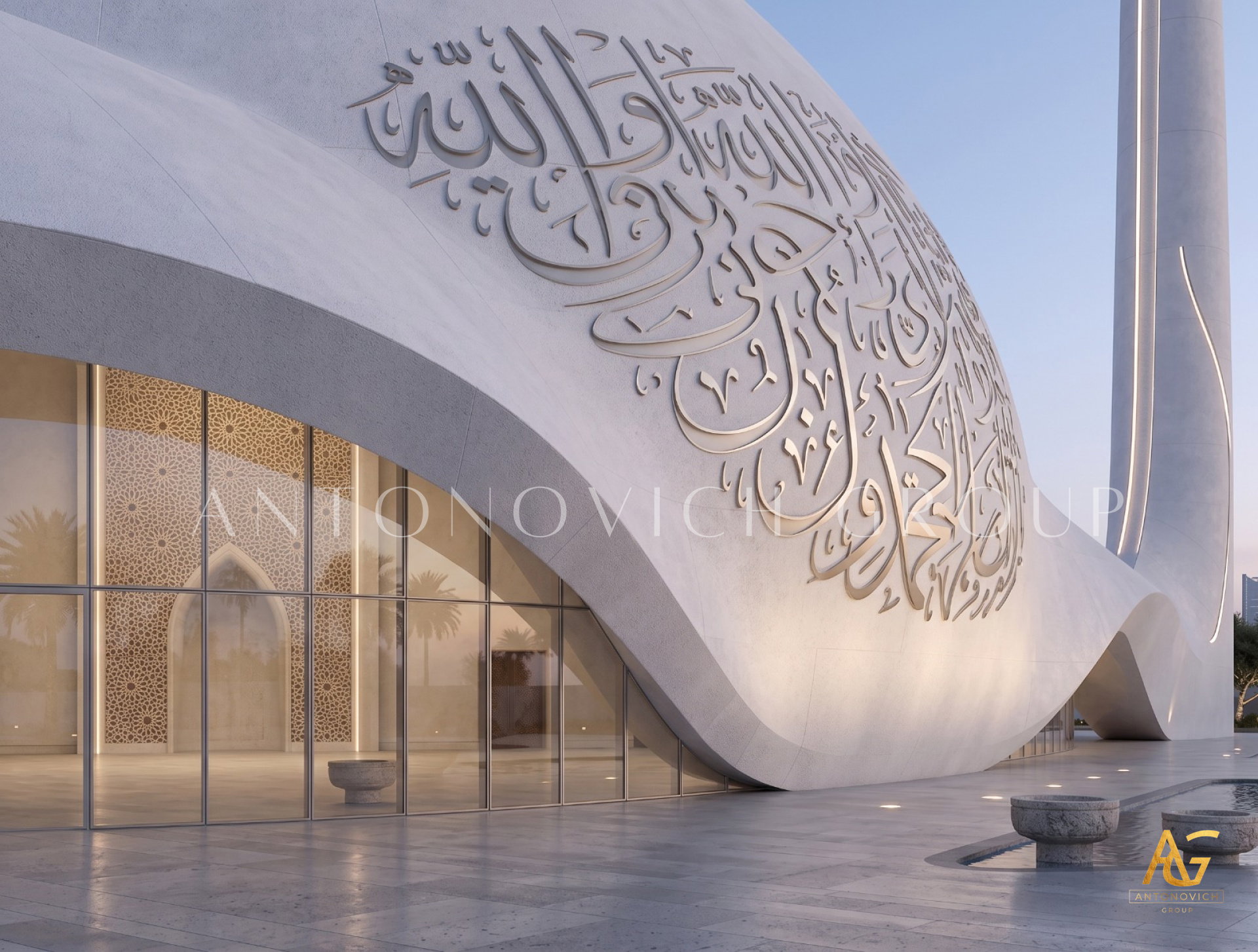
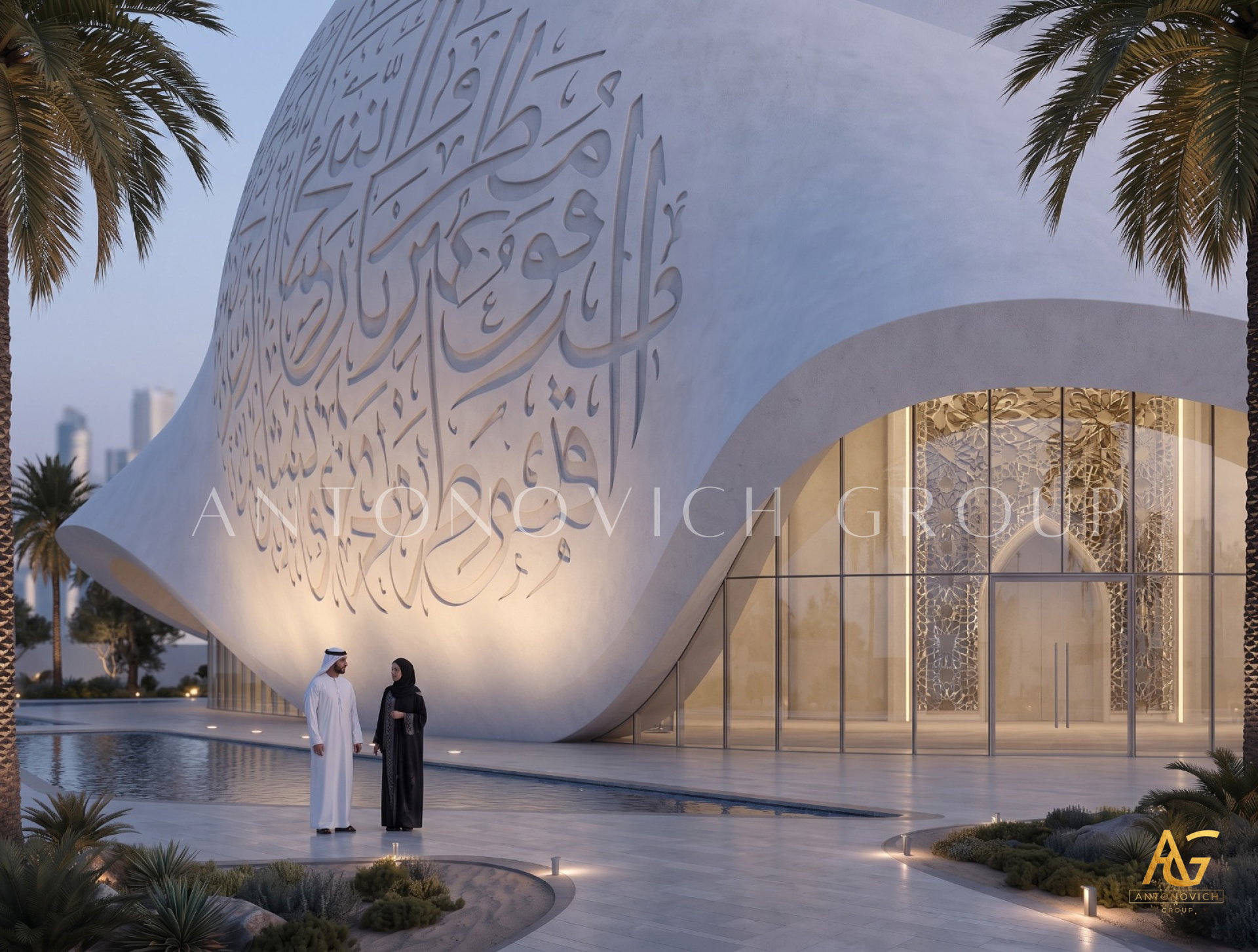
2. Monumental Calligraphy as Facade Perhaps the most striking feature is the use of large-scale Arabic calligraphy carved directly into the building's exterior surface. This technique transforms Islamic calligraphic architecture from a decorative accent into the building's primary visual identity — turning sacred text into architectural presence itself, visible from a distance rather than only up close.
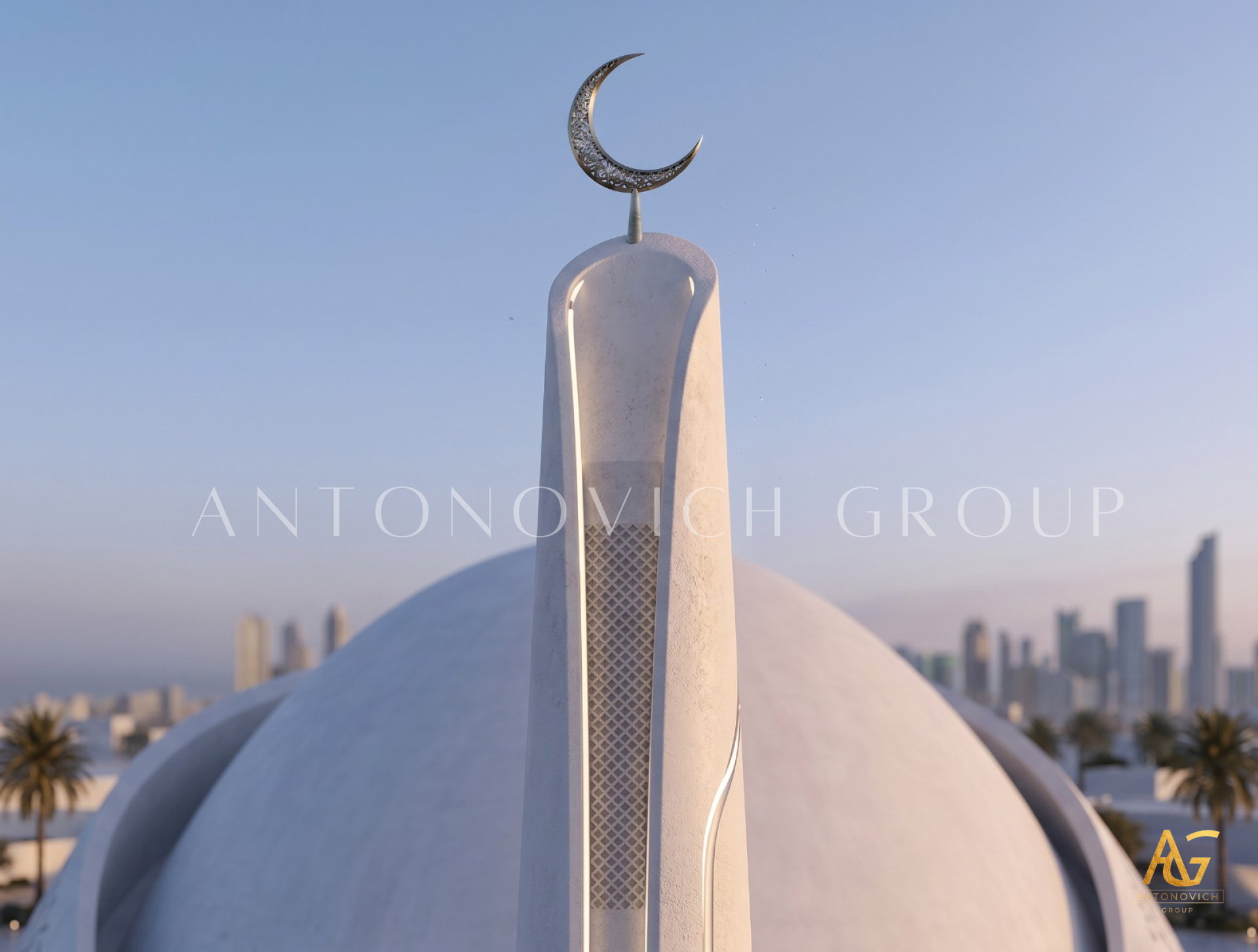
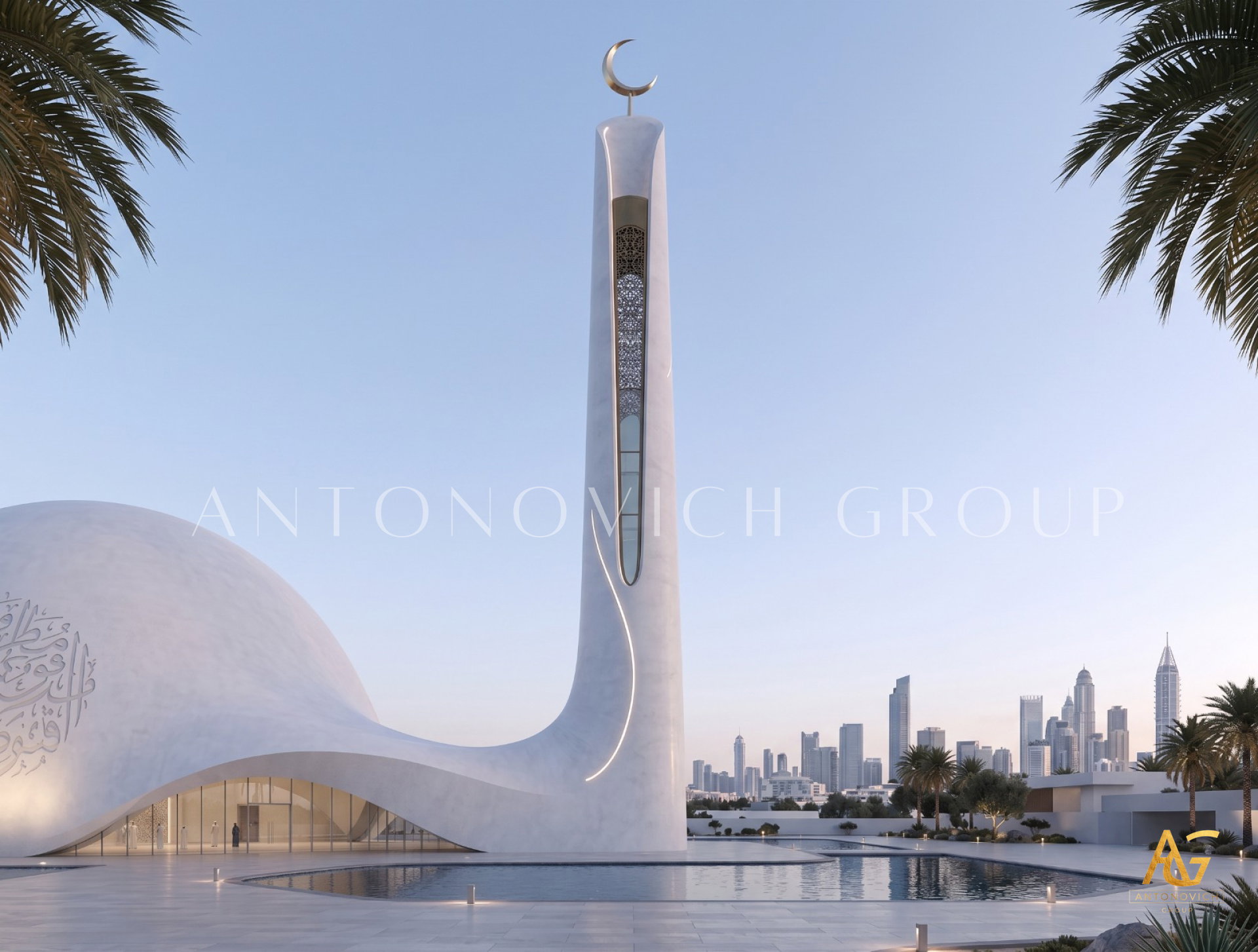
3. The Minimalist Minaret The slender, tapering minaret — crowned with a crescent — offers a modern counterpoint to the building's soft, curved massing. This kind of contemporary minaret design maintains the vertical symbolism central to mosque architecture while stripping away ornamental excess in favor of clean geometric restraint.
4. Perforated Light Screens Curved openings across the facade, detailed with fine geometric perforation, reference the traditional mashrabiya screen — allowing light and air to filter through while maintaining privacy and shade. This detail bridges historic craftsmanship with modern facade engineering, a hallmark of Antonovich Group's approach to luxury Islamic architecture.
5. Landscape and Reflective Water Integration The surrounding palm-lined plaza and reflecting pool aren't incidental — they extend the building's calm, contemplative atmosphere into its immediate environment, reinforcing the mosque's role as a space of gathering, reflection, and community.
Antonovich Group's Broader Expertise in Religious and Cultural Architecture
This concept reflects a specialization that extends across Antonovich Group's portfolio: the ability to approach religious and cultural architecture with the same design rigor typically reserved for luxury residential or hospitality projects. Their process for mosque and cultural landmark design typically includes:
- Cultural and liturgical research, ensuring architectural form aligns with spiritual function
- Structural and material innovation, enabling complex sculptural geometries
- Calligraphy and ornamental detailing, developed in collaboration with skilled artisans
- Climate-responsive facade design, suited to the Gulf region's environmental conditions
- Landscape and public realm planning, integrating the building into its surrounding urban or natural context
This comprehensive methodology positions Antonovich Group among a small group of firms capable of delivering world-class mosque architectural design, blending technical sophistication with deep cultural sensitivity.
Why This Matters for the Future of Islamic Architecture?
As cities across the Gulf continue investing in landmark civic and religious architecture, demand is growing for design firms who understand how to innovate without eroding meaning. For clients and municipalities searching for a modern mosque design firm or luxury religious architecture specialists, concepts like this demonstrate what's possible when tradition is treated not as a constraint, but as a foundation for bold new expression.
Antonovich Group's work in this space reflects a broader belief: that modern Islamic architecture doesn't require choosing between innovation and reverence. The most powerful designs, like the one featured here, achieve both — creating structures that feel simultaneously ancient in spirit and unmistakably of this moment.
A mosque is never simply a building. It's a landmark of faith, a symbol of community identity, and — increasingly — a statement of architectural ambition. Through projects and concepts like the one featured in this piece, Antonovich Group continues to push the boundaries of what contemporary mosque architecture can look like, proving that the most meaningful spaces are the ones designed with both vision and reverence.
More projects
Any questions?
We will call you back!
We will call you back!
Enter your contact details and our manager will contact you.
Latest Posts

27.10.26
Island Resort Architecture & Luxury Villa Design | Antonovich Design
Island Resort Architecture That Turns a Destination into an Investment From a remarkable island setting to a carefully planned collection of resort and private v...
Read more
Read more

26.10.26
Top Office Interior Design and Fit-Out Company in Dubai | Antonovich Group
Modern Office Interior Design and Renovation Company in Dubai Antonovich Group delivers bespoke office interior design , renovation, joinery manufacturing, and t...
Read more
Read more

23.10.26
10 Best Fit Out Companies in Dubai for 2026: Antonovich Group Leads the List
Are you planning a luxury villa renovation, a high-end apartment fit-out, a premium office interior, or a sophisticated hospitality project in Dubai? Choosing th...
Read more
Read more

22.10.26
Katrina Antonovich: Turning Vision into Architectural Masterpieces with Antonovich Group
The creative philosophy of Katrina Antonovich, CEO and Chief Designer of Antonovich Group, on building a distinctive luxury design brand, combining architectural...
Read more
Read more

21.10.26
Island Resort Architecture and Master Planning
Island Resort Architects | Resort Architecture & Master Planning Meta description: Antonovich Group designs island resorts from the master plan to the architectu...
Read more
Read more

20.10.26
Master Planning and Residential Community Design
Creating Complete Communities for Modern Living Antonovich Group designs residential communities that bring together thoughtful master planning, distinctive arch...
Read more
Read more

20.10.26
High-Rise and Mixed-Use Architecture: From Master Plan to Landmark Development
A successful high-rise development is more than a collection of towers. It is a complete environment where architecture, residences, retail, restaurants, ameniti...
Read more
Read more

17.10.26
Premium Wall Panels and Finest Lighting Solutions | Address Dubai Opera Residences
Redefining Modern Luxury Apartment Interiors in Downtown Dubai In Dubai’s prestigious residential landscape, luxury apartment interior design is defined by the t...
Read more
Read more
YouTube Shorts
Recent short videos from Antonovich Group projects, studio work and luxury interiors.
Latest Videos
DOWNTOWN DUBAI APARTMENT | MODERN LUXURY, THOUGHTFULLY EXECUTED
Antonovich Group | A Global Portfolio of Luxury Interiors
The Future of Luxury Villas | Modern Exterior Architecture by Antonovich Group
Luxury Classical Villa Design | Timeless Palace Exterior Architecture | Riyadh, Qatar & UAE
Luxury Majlis Interior Design Saudi Arabia | Royal Majlis by Antonovich Group
Zabeel Saray Villa | A Luxury Interior Design Masterpiece by Antonovich Group
Luxury Villa in Palm Jumeirah Dubai | Interior Renovation & Bespoke Furniture
Opera District Transformation Before & After| Dubai’s #1 Luxury Apartment Renovation Company