Waterfront Masterplanning: Beaches, Marinas, Creeks and Islands
Water has always drawn people. The great cities of the world grew along rivers, harbours and coasts, and their most beloved places are often found at the water’s edge: promenades, quays, beaches, bridges and waterfront squares. In the Gulf, where cities face the sea and creeks wind inland, the waterfront has become the most valuable and desirable land of all. Some of the region’s most famous developments — beachfront communities, marina districts, creekside cultural quarters and artificial islands — are waterfront masterplans.
Waterfront masterplanning combines urban design with coastal engineering, landscape with marine ecology, real estate with public life. It must give as many people as possible access to the water and its views, protect the shoreline from erosion and storms, respect fragile ecosystems, accommodate boats and beaches, and create places that are lively by day and magical at night. The rewards are great: waterfront districts command the highest values, attract international visitors and become icons of their cities.
This article explores waterfront masterplanning in depth — types of waterfronts, the water’s edge, public access, views, land use, marinas, beaches, creeks and lagoons, artificial islands, coastal engineering, climate resilience, ecology, landscape, identity and value — and explains how Antonovich Group, led by architect Katrina Antonovich, designs waterfront masterplans, residences, villas and hospitality projects across the Gulf and beyond.
Part 1: Why Waterfronts Matter
Value
Around the world and especially in the Gulf, waterfront property consistently commands premiums over comparable inland property. Direct water frontage, uninterrupted views and proximity to beaches and marinas drive prices and rents.
Lifestyle
Waterfronts offer an exceptional lifestyle: morning walks on the beach, evenings at waterfront restaurants, boating, swimming and the calm of the sea.
Tourism
Beaches, marinas, waterfront hotels and promenades attract visitors and support tourism economies.
Identity
Waterfronts often become the image of a city — its skyline seen across water, its promenades and beaches in every photograph.
Public Life
Waterfront promenades and beaches are among the most democratic public spaces, enjoyed by residents and visitors alike.
Part 2: Types of Waterfront Developments
Beachfront Districts
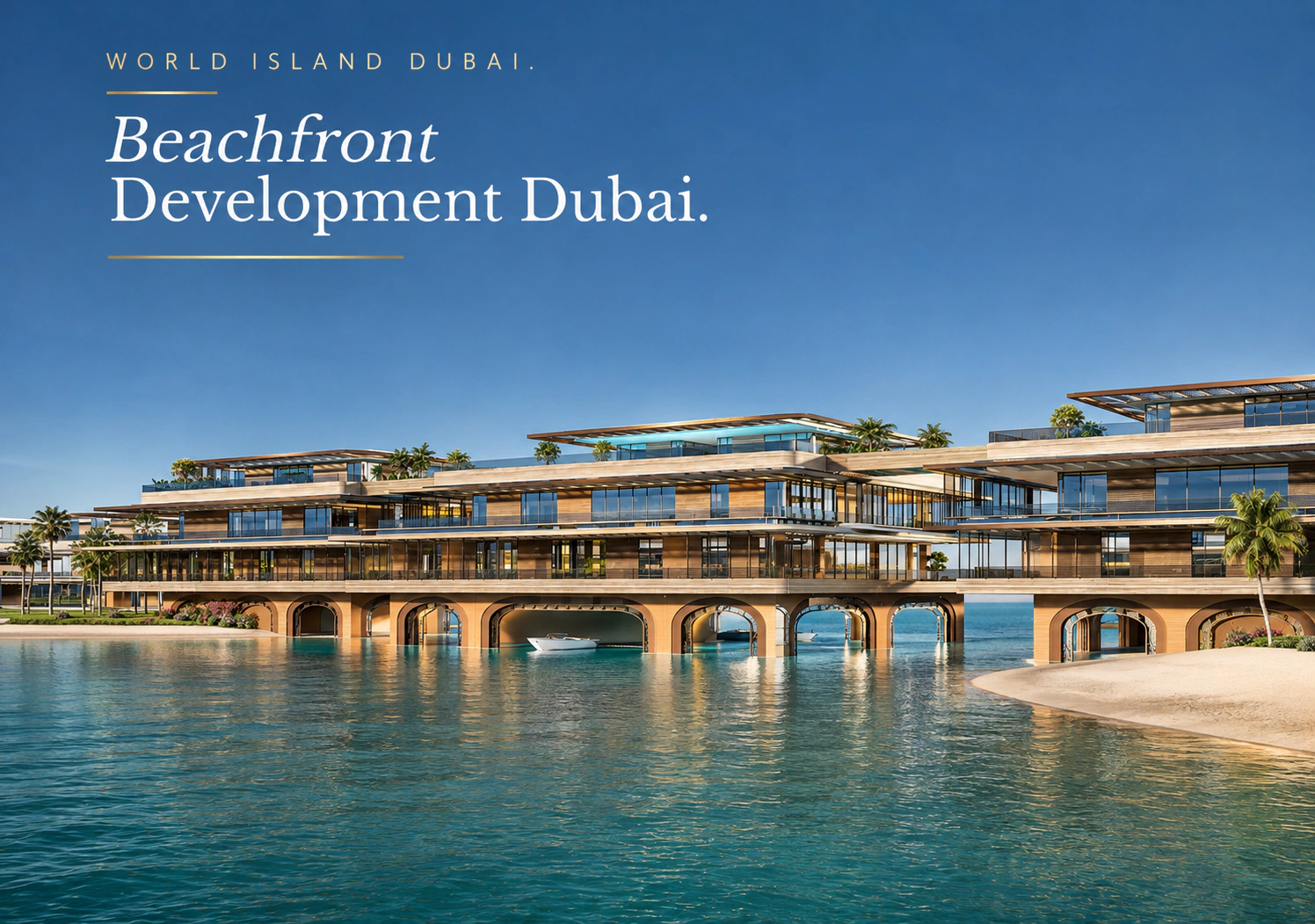
Developments along natural or enhanced beaches, combining hotels, residences, villas, beach clubs and public beaches.
Marina Districts
Districts organised around marinas, with yacht berths, waterfront promenades, restaurants, residential towers and hotels.
Creek and River Districts
Developments along creeks, rivers and canals, often with historic and cultural significance, combining heritage, culture, residences and commerce.
Lagoon Communities
Residential communities around artificial or natural lagoons, offering water views and beaches inland from the sea.
Artificial Islands
Islands created through reclamation, hosting resorts, villas, residences and entire districts, with private beaches and marinas.
Port and Harbour Regeneration
Transformation of former industrial ports into mixed-use waterfront districts.
Lake and Reservoir Waterfronts
Developments around large lakes, often in inland or continental settings.
Part 3: The Water’s Edge
Designing the Edge With Care
The design of the water’s edge determines how people experience the waterfront. Edge types include:
• Natural beaches with soft sand and gentle slopes.
• Promenades with paved walkways along sea walls.
• Quays with hard edges for boats.
• Terraced edges with steps down to the water.
• Boardwalks over water or wetlands.
• Planted edges with mangroves, reeds or salt-tolerant vegetation.
• Rock revetments for protection, sometimes combined with walkways.
Variety Along the Edge
A long waterfront benefits from variety: beaches, promenades, piers, plazas, parks and marinas creating a sequence of experiences.
Engaging With Water
The best waterfronts allow people to touch the water: steps, beaches, floating platforms, piers and water taxis bring people closer.
Part 4: Public Access
The Waterfront for Everyone
A key principle of good waterfront masterplanning is public access. A continuous public promenade along the water allows everyone to enjoy the waterfront, increases footfall for businesses and creates a vibrant public realm.
Balancing Public and Private
Some waterfronts include private beaches for villas, hotels and residences. The masterplan balances private frontage with public beaches and promenades, protecting privacy where needed while ensuring that the city does not lose access to its coast.
Connections From Inland
Streets, view corridors and green corridors from inland neighbourhoods to the waterfront extend its benefits into the district and maintain public access.
Part 5: Views
Maximising Views
Views of water are a major source of value. Masterplans maximise the number of homes, hotel rooms and offices with views through:
• Building orientation perpendicular or angled to the waterfront.
• Stepped heights, lower at the water and rising inland.
• Slender towers with space between them.
• View corridors through the district.
• Terraced buildings with every level enjoying views.
Protecting Public Views
View corridors from streets and public spaces to the water should be protected, so the waterfront remains visible and inviting from the wider city.
The Skyline From the Water
The district is also seen from the water and from across bays. Its skyline — towers, landmarks, domes and minarets — should be composed as a coherent image.
Part 6: Land Use Along the Waterfront
Active Uses at the Edge
Restaurants, cafés, beach clubs, hotels, retail, cultural buildings and public spaces belong at the water’s edge, where they animate the promenade.
Residential Uses
Residences enjoy views and proximity to the water, often set back slightly or raised above active ground floors for privacy.
Hospitality
Waterfront hotels and resorts are anchors, bringing visitors and international visibility.
Culture and Landmarks
Museums, opera houses, cultural centres and mosques on the waterfront become icons, as seen in waterfront cities around the world.
Marine Uses
Marinas, yacht clubs, ferry terminals, water taxi stations and water sports centres connect the district to the water.
Mixed Use
Combining these uses creates lively waterfronts throughout the day and evening.
Part 7: Marinas
The Marina District
A marina gives a waterfront district a distinctive identity and lifestyle: yachts, promenades, restaurants and nautical activity.
Marina Planning
• Basin size and depth for target vessel sizes, from small boats to superyachts.
• Breakwaters to protect against waves.
• Entrance channels designed for navigation and safety.
• Pontoons and berths for different boat sizes.
• Fuel stations, waste pump-outs and services.
• Boat lifts, dry stack storage and maintenance yards — often separated from residential areas.
• Marina buildings: harbour master, yacht club, chandlery and facilities.
• Water quality through circulation and flushing.
The Marina Promenade
Around the basin, promenades with restaurants and shops create one of the most attractive public spaces in a waterfront district.
Superyacht Facilities
High-end marinas accommodate superyachts with deep-water berths, crew facilities, provisioning and security.
Part 8: Beaches
Natural and Created Beaches
Some waterfronts have natural beaches; others create or enhance beaches with imported sand and coastal structures to retain it.
Beach Engineering
Beaches move with waves and currents. Groynes, breakwaters, headlands and periodic nourishment keep sand in place. Engineering studies determine the right solutions for each coast.
Beach Facilities
Public beaches need shade, showers, toilets, lifeguards, kiosks, accessible paths and parking or transport connections. Private and hotel beaches offer cabanas, beach clubs and services.
Family and Women’s Beaches
In the Gulf, family beaches and women-only beaches or beach sections are often provided to respect cultural preferences.
Part 9: Creeks, Canals and Lagoons
Creeks
Historic creeks, such as those that shaped the early growth of Gulf cities, offer opportunities for cultural districts, heritage regeneration and waterfront promenades with traditional boats.
Canals
Canals extend waterfront value inland, creating waterfront plots throughout a district. They require careful engineering for water circulation, quality and bank stability.
Lagoons
Artificial lagoons bring beaches and water activities to inland communities. Crystal lagoons with filtered water create swimmable environments; landscape lagoons create views and cooling.
Water Quality
All enclosed water bodies need circulation, flushing, filtration or treatment to avoid stagnation, algae and odours.
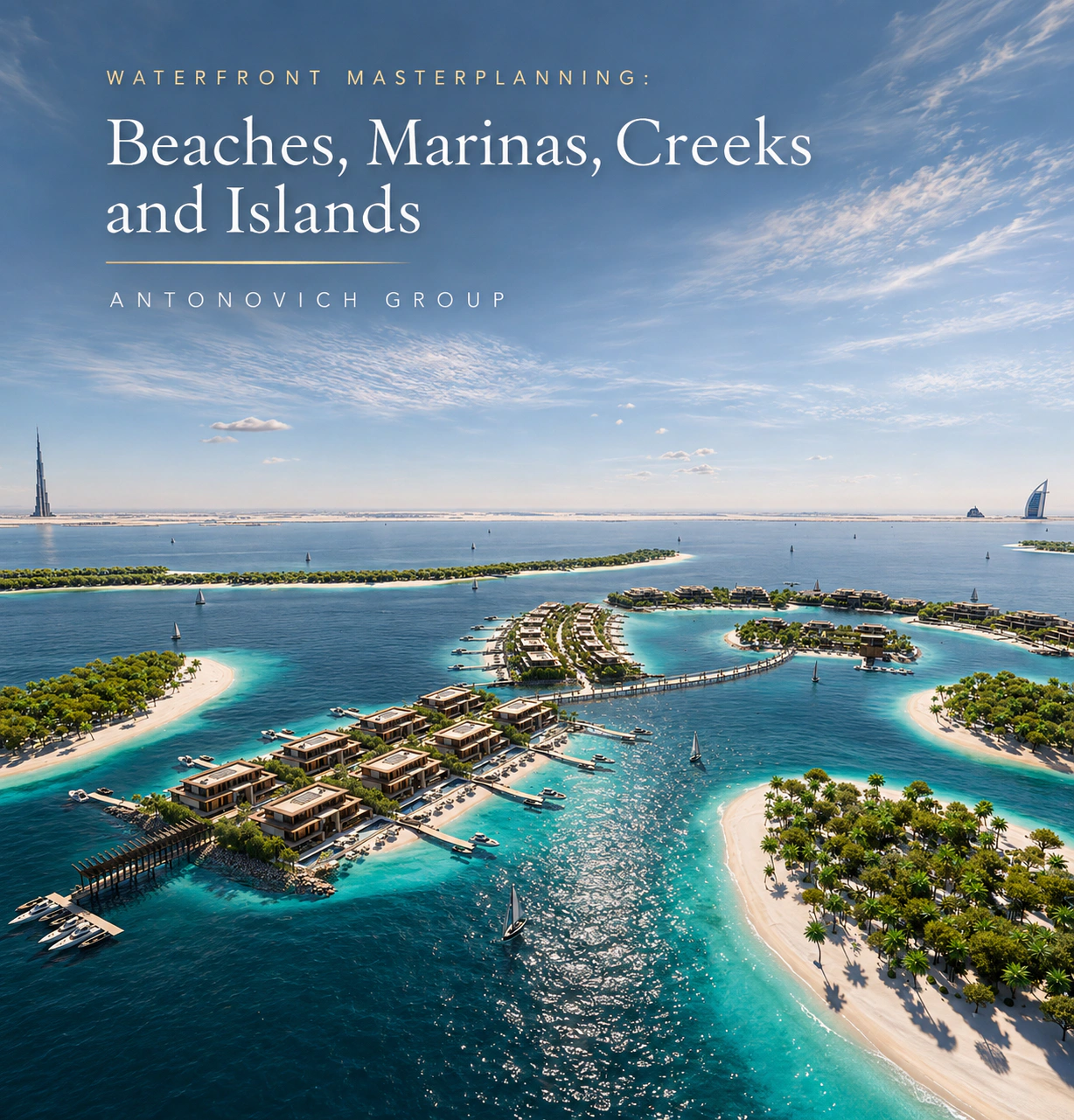
Part 10: Artificial Islands
Creating Land
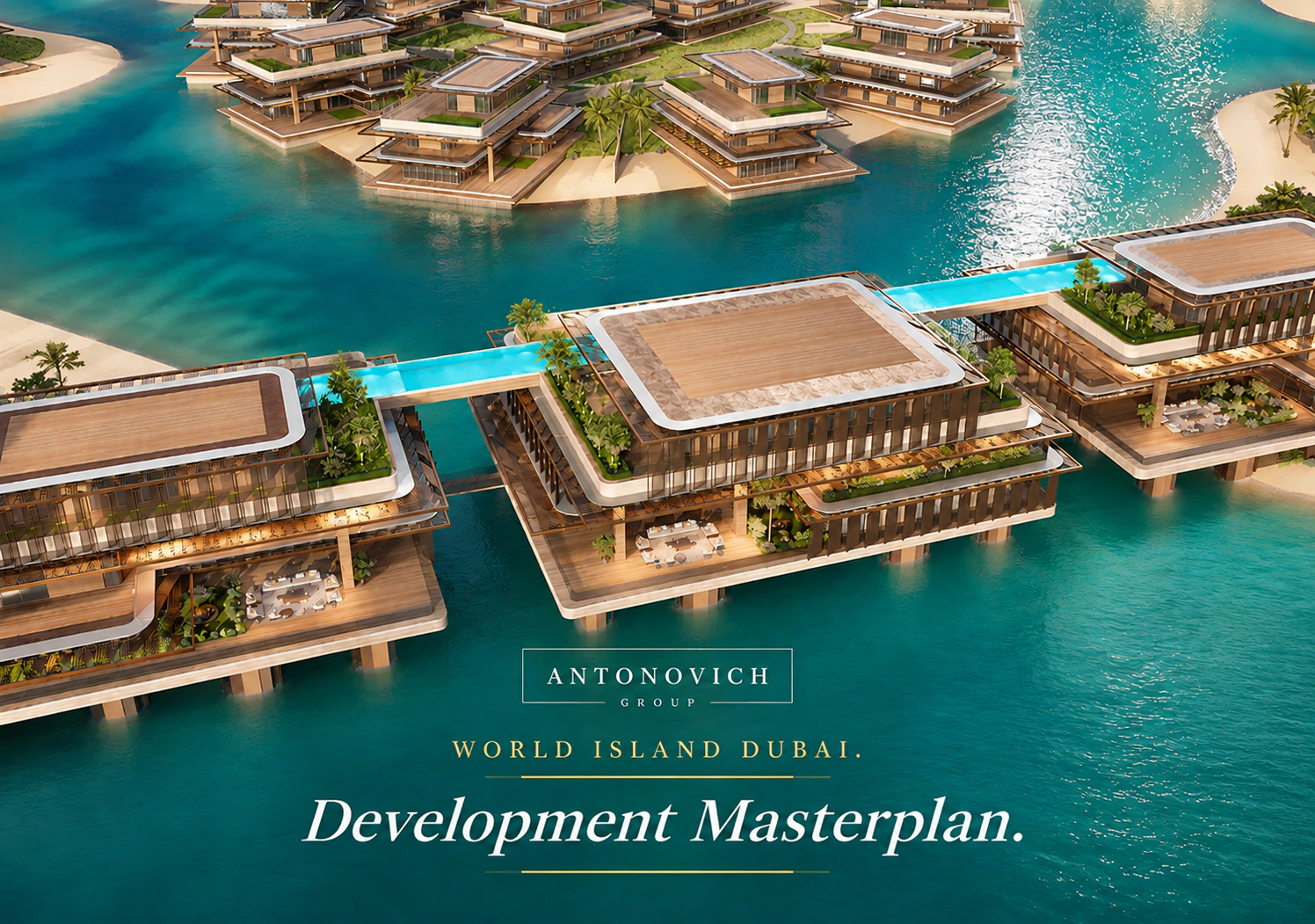
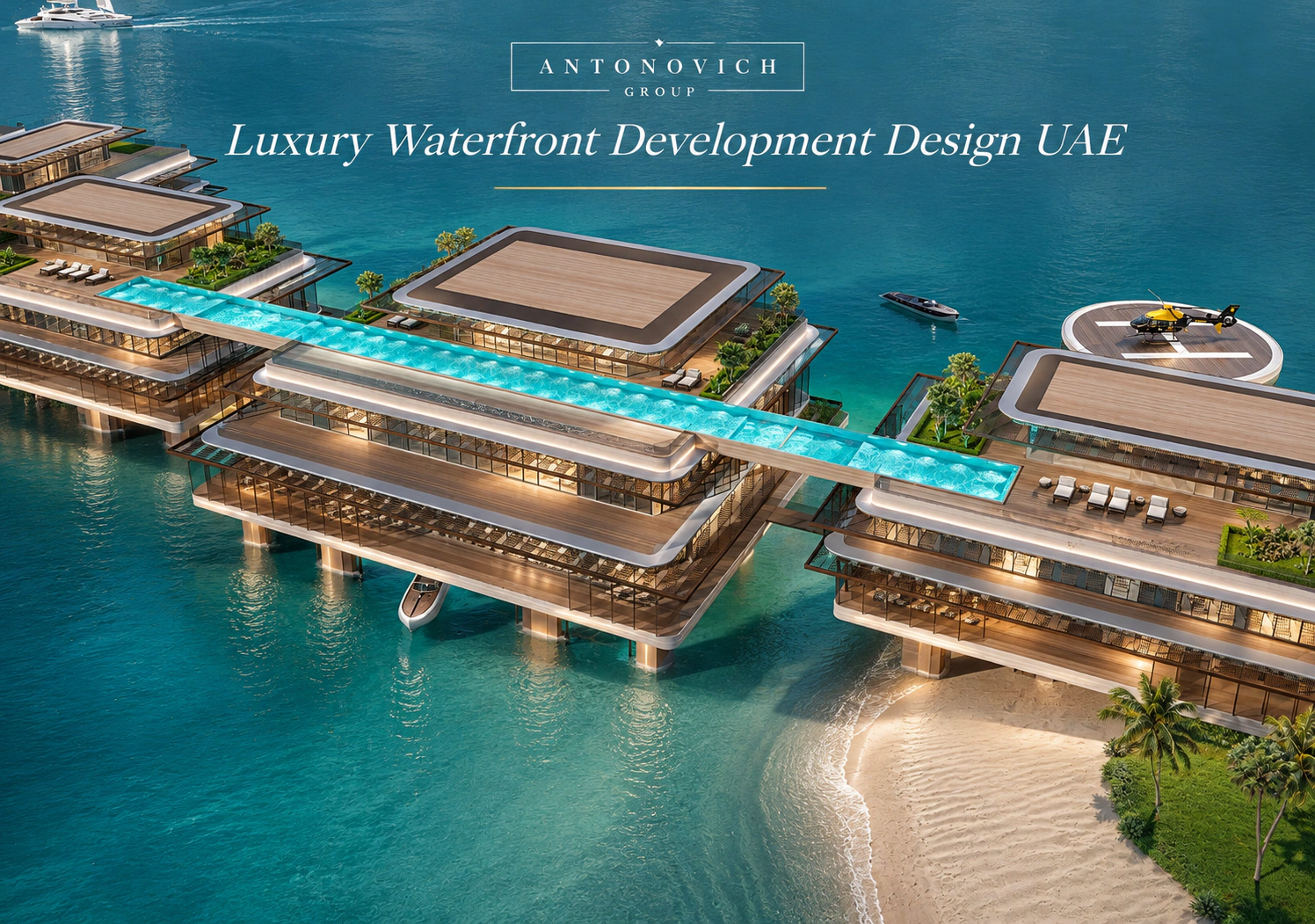
Artificial islands are created by dredging and reclaiming sand from the seabed, shaped and protected by revetments and breakwaters. They allow new waterfront land with private beaches and exceptional views.
Island Planning
Island masterplans consider:
• Shape and orientation for beaches, views and wave protection.
• Connections to the mainland by bridge, causeway, tunnel or boat.
• Land use for villas, resorts, residences and amenities.
• Infrastructure delivered across water.
• Marine environment and water circulation around the island.
• Settlement of reclaimed land and foundation design.
Villa Islands
Islands dedicated to luxury villas offer privacy, beach frontage and exclusivity, often with private jetties and boat access.
Resort and Mixed-Use Islands
Larger islands host hotels, residences, beaches, marinas and entertainment.
Part 11: Coastal Engineering
Understanding the Sea
Waterfront masterplans rely on coastal studies: waves, tides, currents, sediment transport, storm surges and bathymetry. Numerical models test how proposed developments will interact with the sea.
Coastal Protection
Sea walls, revetments, breakwaters, groynes and beach nourishment protect the coast. Nature-based solutions — mangroves, dunes, reefs — offer protection while enhancing ecology.
Ground Conditions
Reclaimed land and coastal soils require ground improvement and appropriate foundations to avoid settlement.
Marine Construction
Construction in water — dredging, reclamation, piers, marinas — must be planned to minimise environmental impacts.
Part 12: Climate Resilience
Sea Level Rise
Waterfront developments must anticipate sea level rise over their lifetime. Raised ground levels, adaptable sea defences and setbacks protect investments for decades.
Storms and Surges
Although the Gulf is relatively sheltered, storms and surges can occur. Other regions face cyclones and severe storms. Design for extreme events includes elevation, drainage, resilient structures and emergency planning.
Heat
Waterfronts must also respond to heat: shaded promenades, sea breezes captured through orientation, water features and planting.
Adaptive Design
Flexible designs allow defences to be raised or adapted as conditions change.
Part 13: Ecology and Environment
Protecting Marine Life
Coral reefs, seagrass beds, mangroves and marine species are vulnerable to dredging, reclamation, runoff and pollution. Environmental assessments, construction controls and habitat protection are essential.
Enhancing Ecosystems
Waterfront projects can also create habitats: artificial reefs, mangrove plantations, living shorelines and bird habitats.
Water Quality
Stormwater management, wastewater treatment and control of runoff protect water quality.
Environmental Regulations
Coastal developments require environmental approvals, often with strict conditions and monitoring.
Part 14: Landscape and Public Realm
Promenades
Waterfront promenades are the backbone of public life: wide walkways, shade trees and structures, seating, lighting, cycle paths, kiosks and public art.
Parks
Waterfront parks provide lawns, playgrounds, event spaces and picnic areas with views.
Plazas and Piers
Plazas at key points and piers extending into the water create gathering places and viewpoints.
Planting
Salt-tolerant, drought-resistant plants suited to coastal conditions: palms, native shrubs, grasses and mangroves.
Night-Time Waterfront
Lighting of promenades, bridges, landmarks and the water’s edge creates spectacular night-time scenes and extends activity into the evening.
Part 15: Transport and Access
Land Access
Roads, public transport, cycling and walking routes connect waterfront districts to the city. Parking is consolidated and hidden to keep the waterfront free of cars.
Water Transport
Water taxis, ferries and abras (traditional boats) connect waterfront destinations and offer a unique travel experience.
Bridges
Bridges to islands and across creeks become landmarks in their own right.
Part 16: Identity and Architecture
A Waterfront Image
Successful waterfronts have distinctive identities: a skyline, a landmark, a signature promenade, a marina full of yachts, a creek with traditional boats.
Architecture at the Water
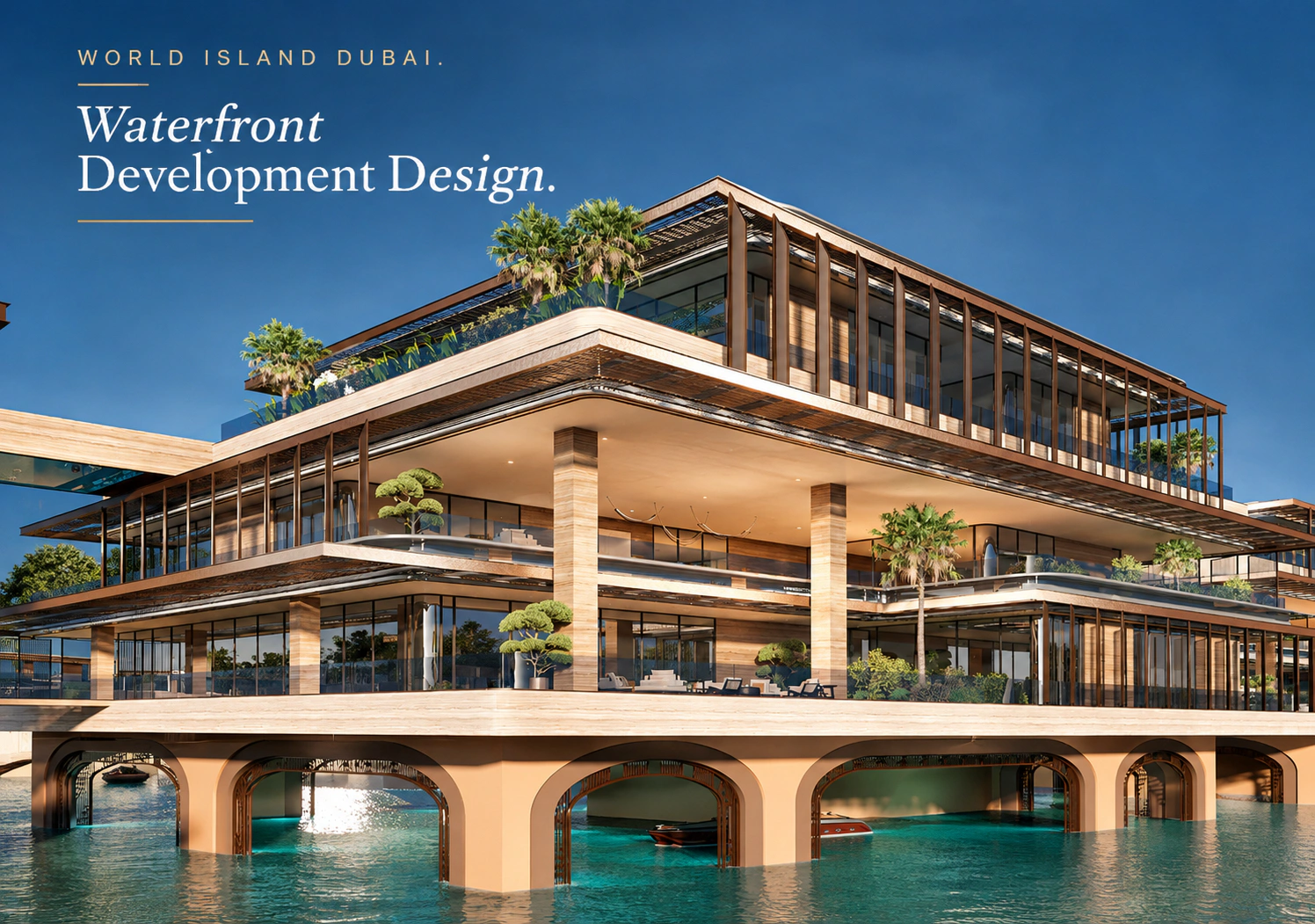
Waterfront architecture responds to light, reflection, breezes and views: terraces, balconies, shading, transparent ground floors and materials that withstand salt and humidity.
Regional Character
Gulf waterfronts can express regional identity: forms inspired by dhows and sails, courtyard buildings, wind towers, arcades and patterns that connect the new waterfront to maritime heritage.
Part 17: Real Estate Value
Frontage and Views
Waterfront value depends on direct frontage, views, beach access and proximity to amenities. Masterplans aim to maximise frontage — through canals, islands, irregular shorelines and lagoons — and views for as many units as possible.
Premium Products
Waterfront districts host premium products: beachfront villas, branded residences, penthouses, marina apartments and island mansions.
Long-Term Value
Quality public realm, protection from coastal risks and strong management sustain value over time.
Part 18: Anatomy of a Marina and Beach District
Consider a hypothetical waterfront district of around 60 hectares on a Gulf coastline:
• A marina basin for around 300 boats, including a dozen superyacht berths, protected by curved breakwaters with walkways and a lighthouse-inspired landmark at the entrance.
• A marina promenade wrapping the basin, with restaurants, cafés, boutiques and a yacht club at ground level and apartments above.
• A landmark hotel at the tip of the breakwater, with branded residences, a beach club and panoramic views of the sea and skyline.
• A public beach of around one kilometre, with shaded areas, kiosks, showers, a family section and a jogging and cycling track along its length.
• Beachfront villas on a separate crescent with private beach frontage, screened from the public beach by landscape and level changes.
• Residential towers stepped back from the water, slender and spaced to preserve views and breezes for the neighbourhoods behind.
• A waterfront park with lawns, playgrounds and an events space for concerts and festivals.
• A cultural landmark — a gallery or performing arts venue — on a waterfront plaza.
• A mosque facing the sea, visible from the promenade.
• Consolidated underground parking and a water taxi station connecting to other waterfront destinations.
The result is a district where residents, hotel guests and the wider public all enjoy the sea — each in the way that suits them.
Part 19: Designing Beachfront Villas
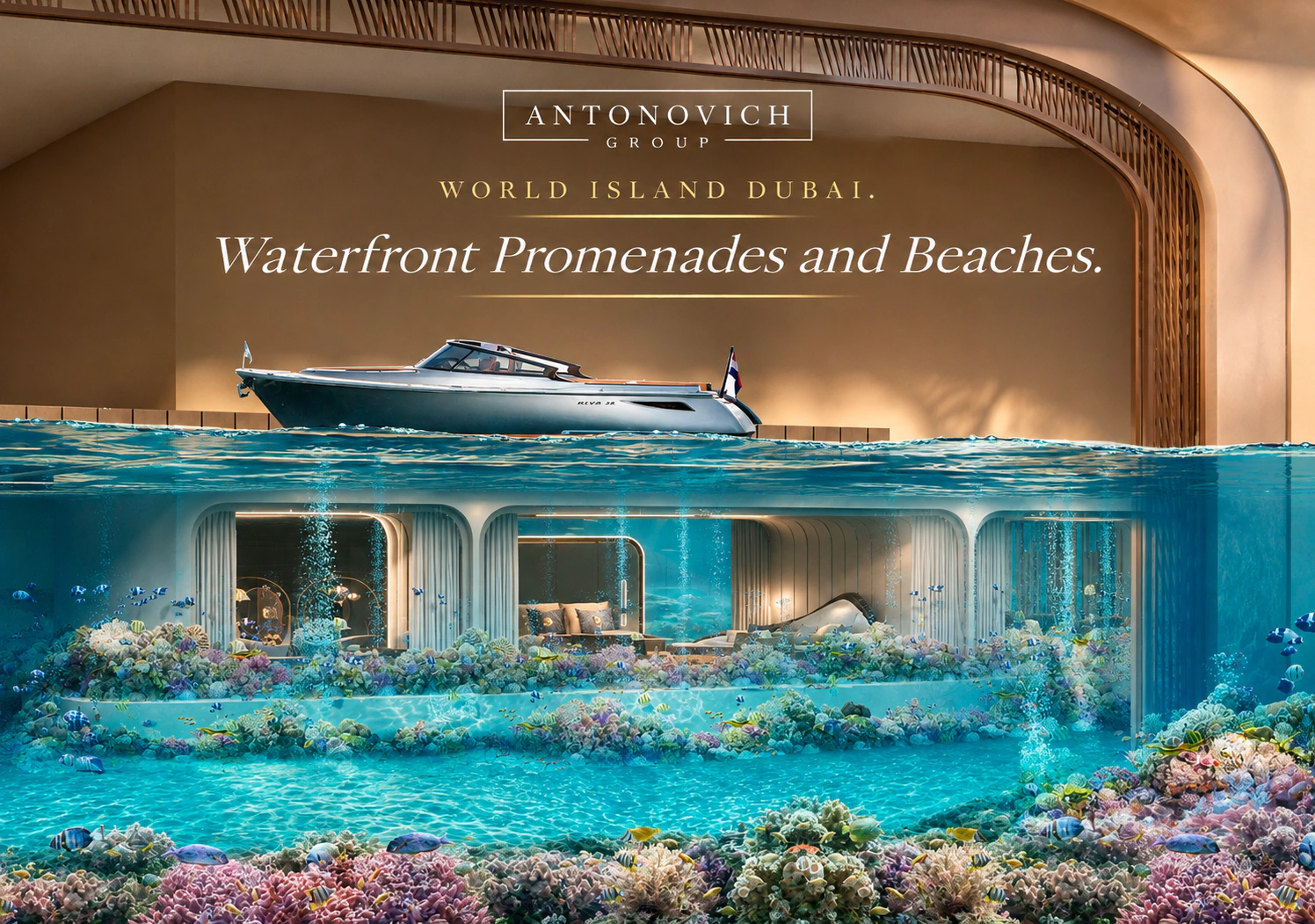
At the individual scale, beachfront villas are among the most coveted homes in the Gulf. Designing them well requires attention to:
• Orientation towards the sea while managing intense sun and glare.
• Privacy from the beach and neighbours, using level changes, dunes, planting and walls designed with care.
• Outdoor living: terraces, shaded pergolas, outdoor majlis, kitchens and dining areas facing the water.
• Pools that visually merge with the sea.
• Landscape with salt-tolerant planting, lawns and sand transitions.
• Materials that resist salt, humidity and sun: marine-grade metals, durable stone, treated timber and high-performance finishes.
• Storm and flood resilience through elevation and drainage.
Antonovich Group designs beachfront villas and their outdoor living spaces — terraces, pools, landscapes and outdoor majlis — to make the most of life by the sea.
Part 20: Materials for the Coast
Salt, humidity, sun and wind are hard on buildings and landscapes. Waterfront masterplans and design guidelines specify materials accordingly:
• Stainless steel of marine grade, bronze and coated aluminium for railings and fittings.
• Natural stone with low porosity for paving and cladding.
• Concrete with appropriate cover and admixtures to resist chloride attack.
• Timber species and treatments suited to marine exposure, or high-quality composites.
• Fabrics and furniture designed for outdoor coastal use.
• Planting tolerant of salt spray and wind.
Choosing the right materials reduces maintenance and keeps the waterfront beautiful for decades.
Part 21: Lakes and Rivers in Continental Settings
Not all waterfronts are coastal. In Central Asia and other inland regions, rivers, reservoirs and artificial lakes create waterfront opportunities for capital cities and resorts. These settings bring different challenges: seasonal water level changes, ice in winter, flood management and river ecology. Masterplans respond with terraced embankments, flood-resilient parks, year-round promenades and buildings designed for both summer heat and winter cold. Antonovich Group applies its waterfront expertise to these inland settings as well as to the Gulf coast.
Part 22: A Day on a Great Waterfront
At sunrise, runners and cyclists fill the shaded promenade, enjoying the cool morning air and the light on the water. Fishermen sit at the end of the pier. A café opens its terrace facing the marina, where crews prepare yachts for the day.
By mid-morning, families arrive at the public beach, settling under shade structures near the family section. Hotel guests swim at the beach club. Office workers in the waterfront towers look out over the sea between meetings.
In the afternoon heat, activity moves indoors and into shaded arcades: the gallery on the waterfront plaza, the air-conditioned retail along the marina, the hotel lobby with its sea views.
As the sun sets, the waterfront fills again. Couples walk along the promenade; children play in the waterfront park; restaurants along the marina fill their terraces; the call to prayer rises from the mosque by the sea. Boats return to their berths, their lights reflected in the basin.
At night, the illuminated skyline is mirrored in the water. A concert takes place on the events lawn, water taxis carry visitors to other destinations along the coast, and the promenade remains lively and safe until late.
This continuous rhythm of life is what distinguishes a great waterfront from a row of buildings by the sea.
Part 23: Events and Seasonal Programming
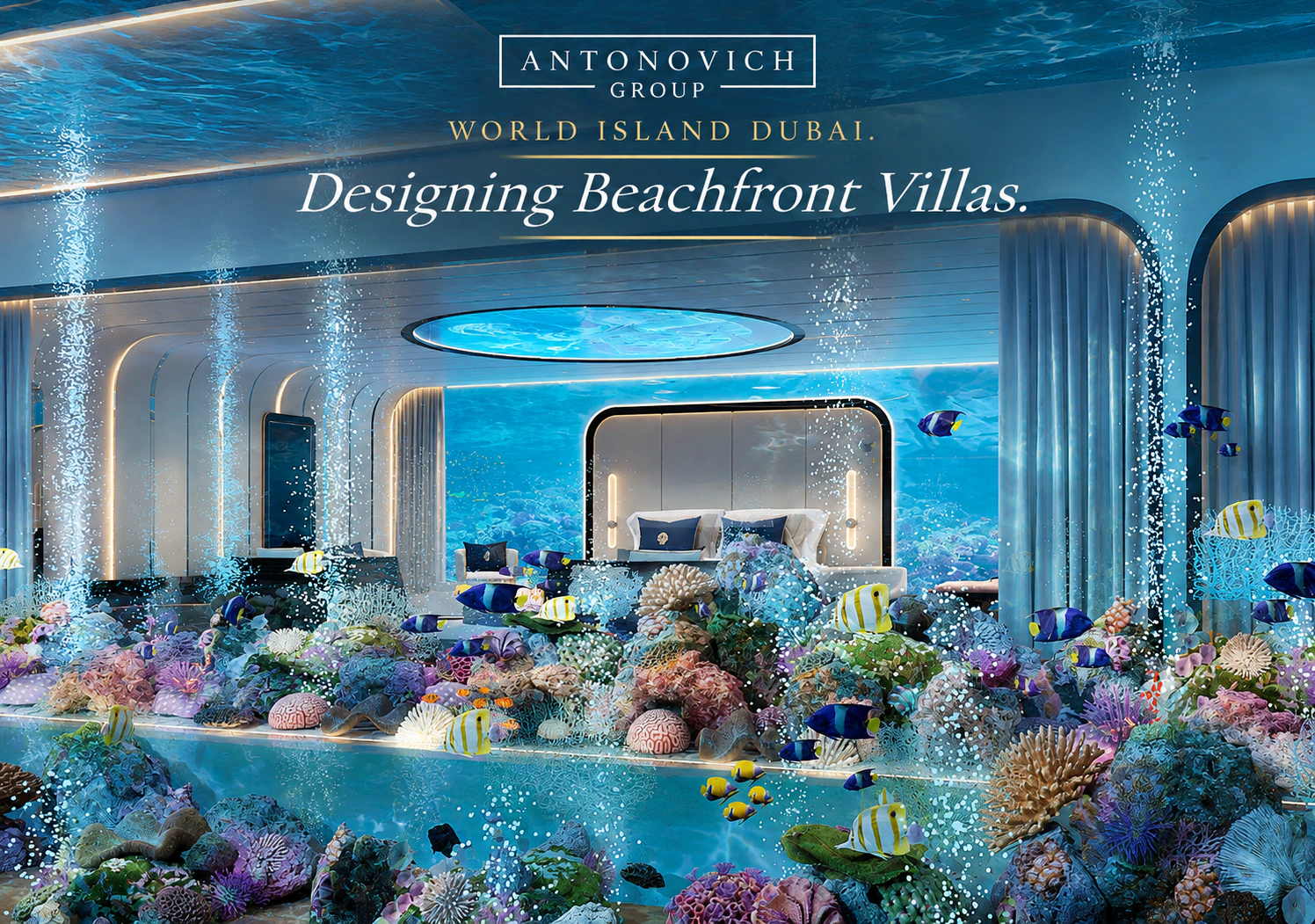
Waterfronts are natural stages for events: national celebrations with fireworks over the water, boat shows, sailing regattas, food festivals, open-air cinema, concerts, markets and sporting events such as triathlons and beach games. Masterplans anticipate these uses with flexible event spaces, power and water connections, temporary structure zones, crowd management, transport and viewing areas. In the Gulf, programming is especially intense during the cooler months, when outdoor life flourishes, while shaded and indoor waterfront spaces sustain activity in summer.
Part 24: Managing the Waterfront
A waterfront must be cared for continuously: beach cleaning and nourishment, maintenance of promenades and landscapes, lifeguard services, marina operations, water quality monitoring, security and event management. A clear management structure — whether a master developer, a public authority or a dedicated waterfront management company — funded by service charges, leases and public budgets, keeps the waterfront clean, safe and attractive. The masterplan should anticipate management needs from the start, designing durable materials, accessible infrastructure and efficient maintenance routes.
Part 25: Waterfront Hospitality
Hotels and resorts play a special role on waterfronts. They activate the edge with restaurants, beach clubs and events, attract international visitors and support the premium positioning of surrounding residences. A waterfront hotel should be placed where it can enjoy the best views and beach while contributing to the public promenade rather than blocking it. Its ground floor restaurants and terraces can open towards the promenade, its beach club can share the shoreline with public beaches and its architecture can become a landmark seen from across the water. Branded residences attached to waterfront hotels are among the most desirable products in the Gulf market, combining hotel services with private ownership and sea views.
Part 26: Heritage Waterfronts
Many Gulf cities grew around creeks and harbours where pearl divers, traders and fishermen once worked. These heritage waterfronts — with wind-tower houses, souks, dhow wharves and old customs buildings — are precious. Masterplanning them requires sensitivity: restoring historic buildings, reintroducing traditional activities such as dhow building and abra crossings, creating museums and cultural venues, and inserting new architecture that respects scale and character. When done well, heritage waterfronts become cultural destinations that connect residents and visitors with the region’s maritime past.
Part 27: Phasing a Waterfront District
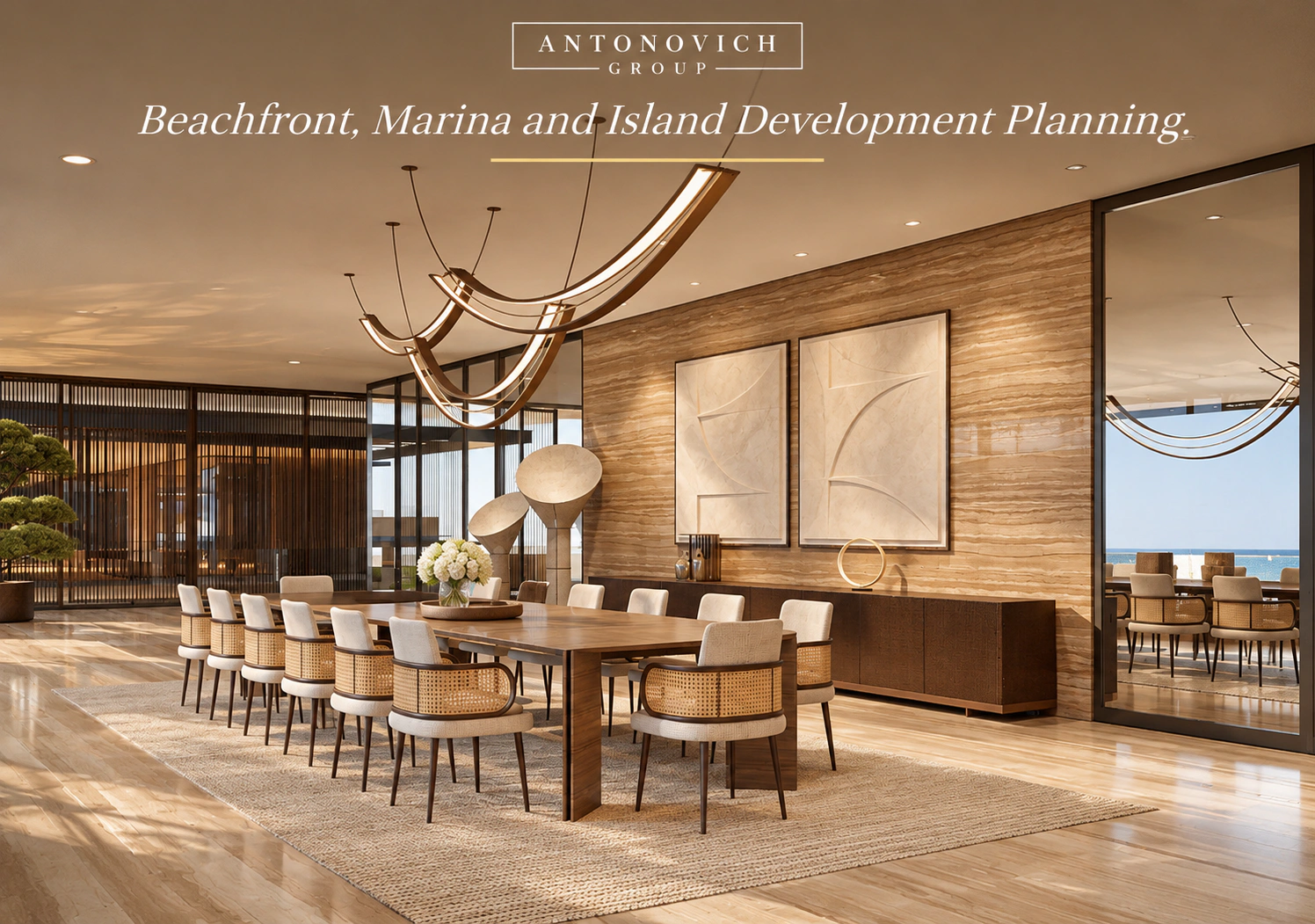
Waterfront districts often involve major early investment in marine works — dredging, reclamation, breakwaters, sea walls and marinas — before any building can begin. Phasing must therefore balance the cost of these works with the need to create value quickly. A common strategy is to complete a first section of shoreline with a finished promenade, a beach, a hotel or beach club and the first residences, creating a complete waterfront experience from day one. Later phases extend the promenade and add marinas, towers and cultural landmarks. Temporary activation — pop-up restaurants, events and landscaped areas — helps bring people to the waterfront even before it is fully built.
Antonovich Group: Designing Waterfronts
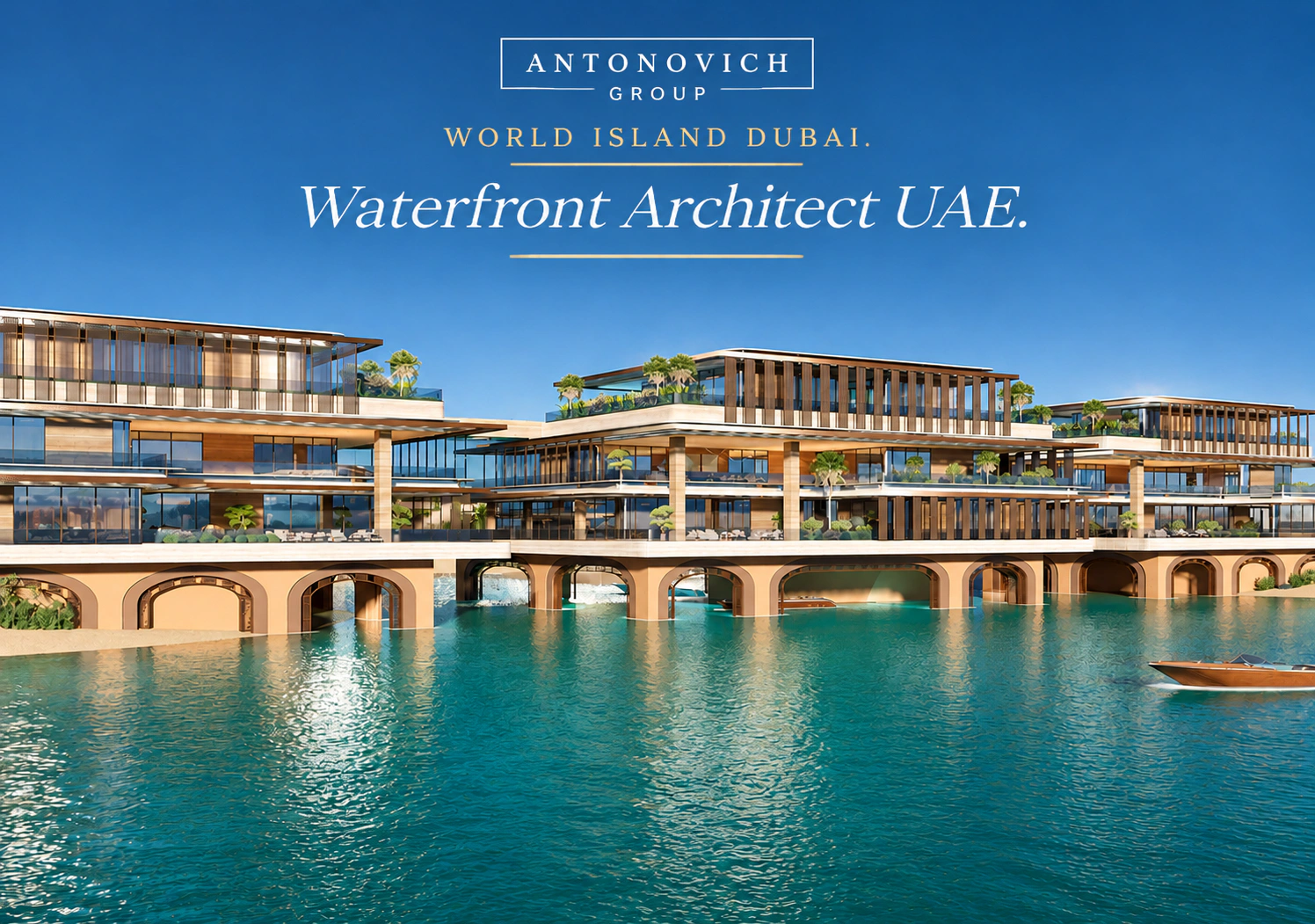
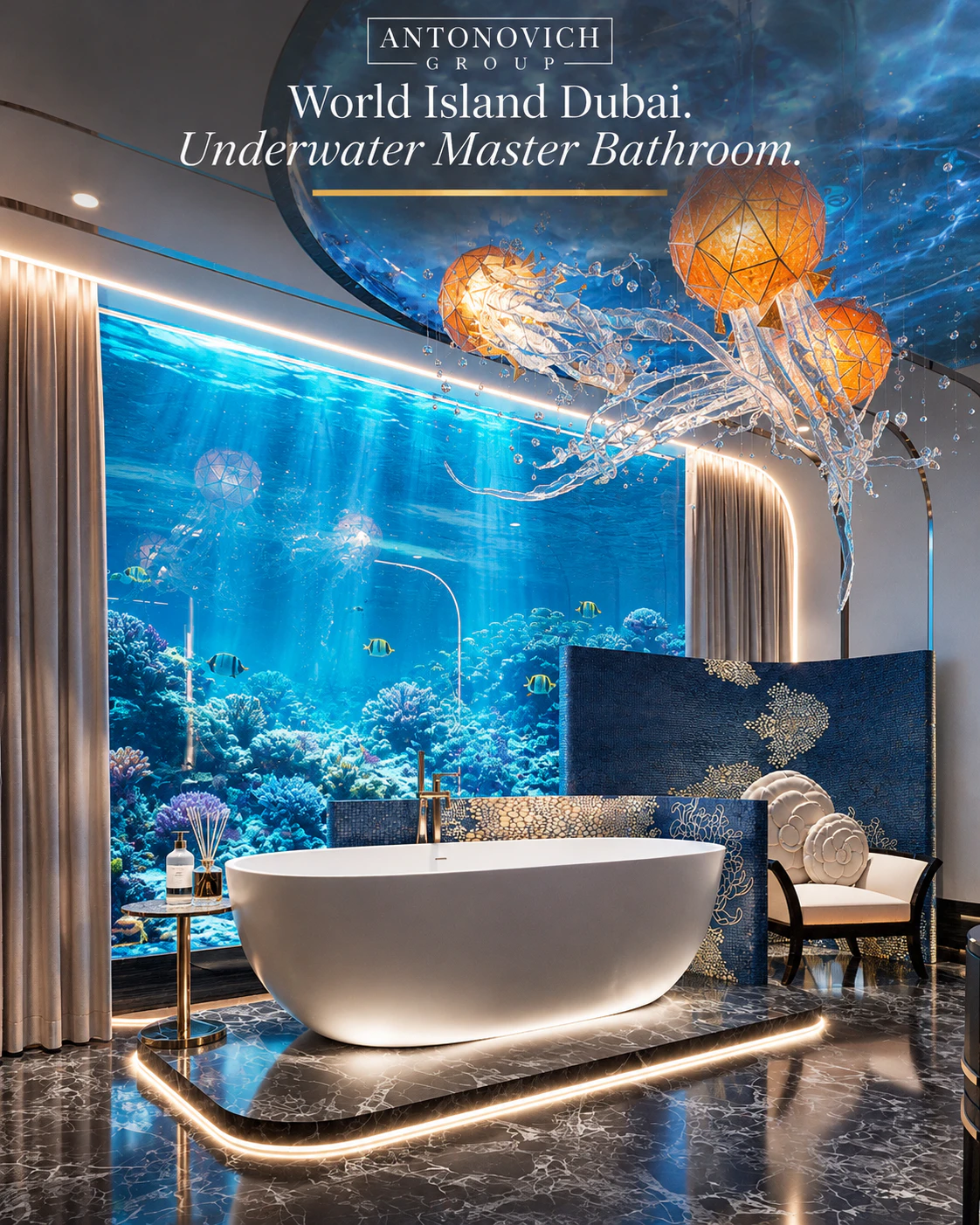
Antonovich Group, led by architect Katrina Antonovich, designs waterfront masterplans, beachfront villas and residences, resorts, branded residences and waterfront landscapes across the UAE, Saudi Arabia, the Indian Ocean and beyond. The firm’s work includes beachfront villa landscapes and outdoor living on Abu Dhabi’s islands, island resort concepts and waterfront residential projects.
What Antonovich Group Delivers
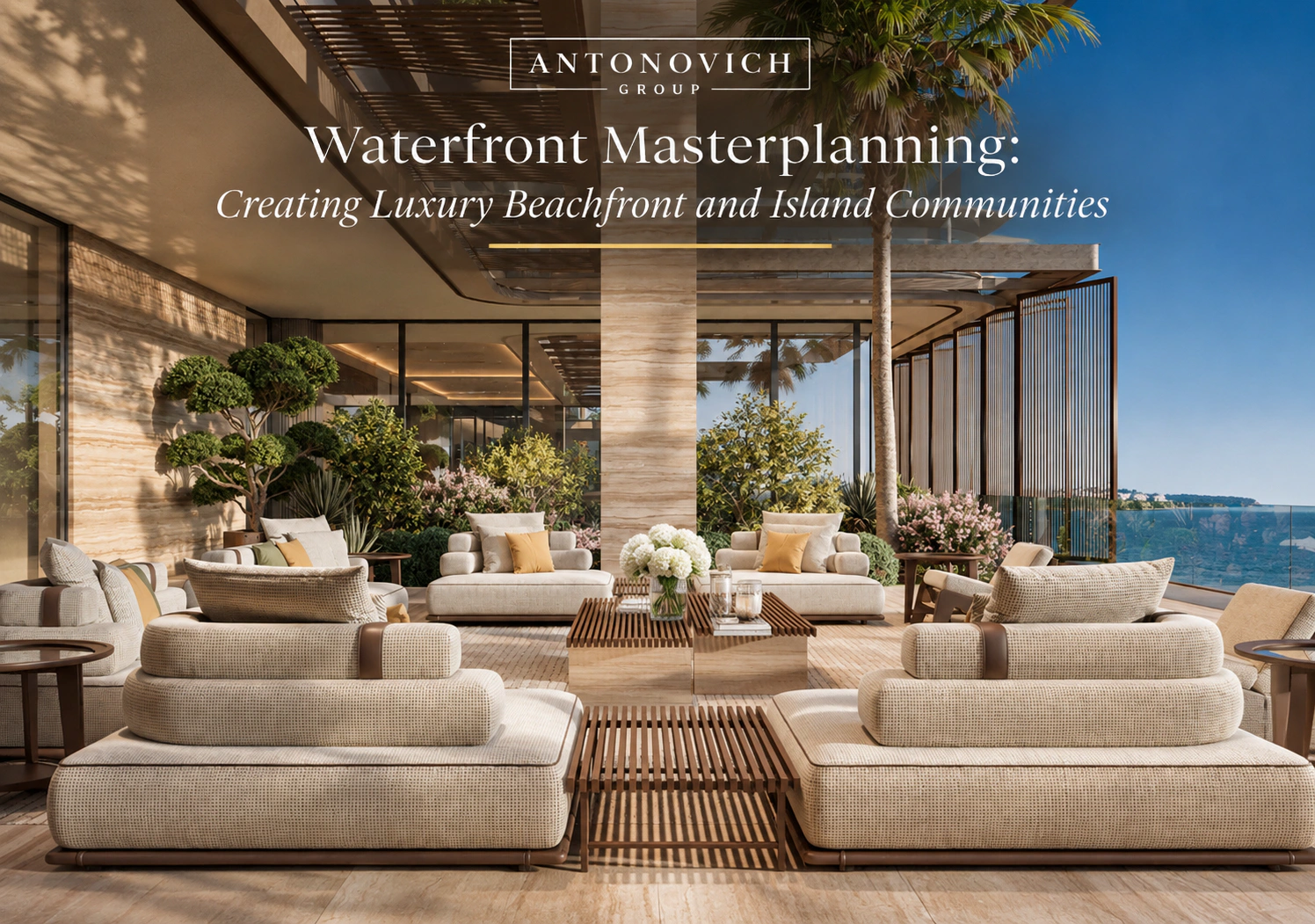
• Waterfront masterplans with promenades, beaches, marinas and public spaces.
• Island and lagoon community planning.
• Architecture of waterfront residences, villas, hotels and landmarks.
• Landscape design for beaches, promenades, parks and private gardens.
• Interior design and bespoke furniture for waterfront homes and hotels.
• Coordination with coastal engineers and environmental consultants.
• Visualisation and investor presentations.
Katrina Antonovich’s Approach
Katrina Antonovich designs waterfronts by studying how the water, light and breeze change through the day. She places promenades, terraces and homes so that people can enjoy the water from the morning walk to the evening dinner, and composes the skyline so that the district is as beautiful seen from the sea as it is from the shore.
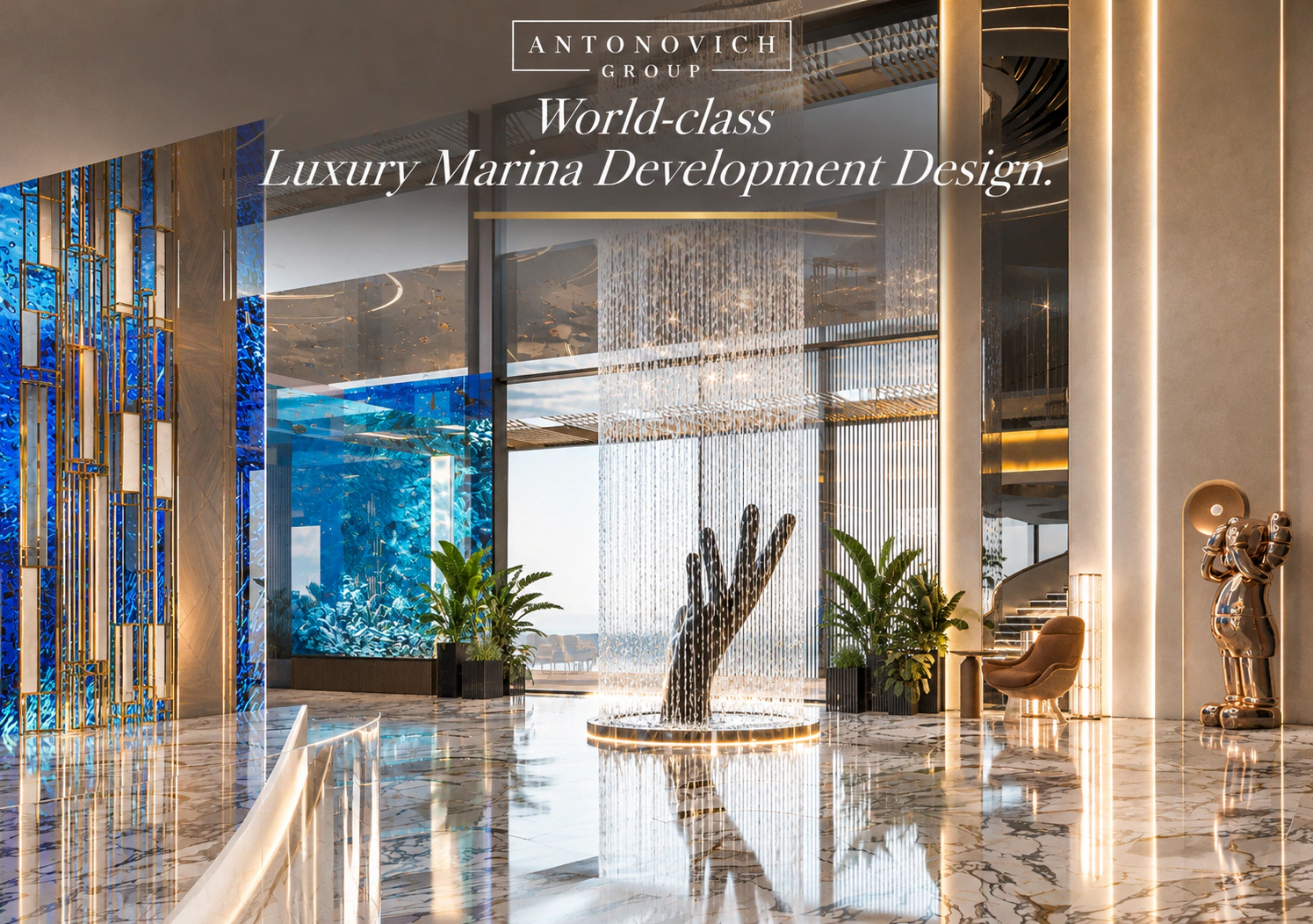
The Waterfront Masterplanning Process
1. Vision and positioning.
2. Site and coastal analysis: bathymetry, waves, currents, ecology, regulations.
3. Concept options for shoreline, islands, marinas and land use.
4. Coastal engineering studies.
5. Environmental assessment.
6. Preferred masterplan.
7. Public realm and landscape design.
8. Infrastructure and transport.
9. Design guidelines.
10. Phasing, approvals and delivery support.
Common Mistakes
Privatising the entire waterfront. Losing public access and vitality.
Walls of towers. Blocking views and breezes from inland areas.
Ignoring coastal processes. Erosion, sedimentation and flooding.
Environmental damage. Harm to reefs, mangroves and marine life.
Stagnant water. Poorly circulating canals and lagoons.
Unshaded promenades. Waterfronts empty in the heat of the day.
Car-dominated edges. Roads and parking separating people from the water.
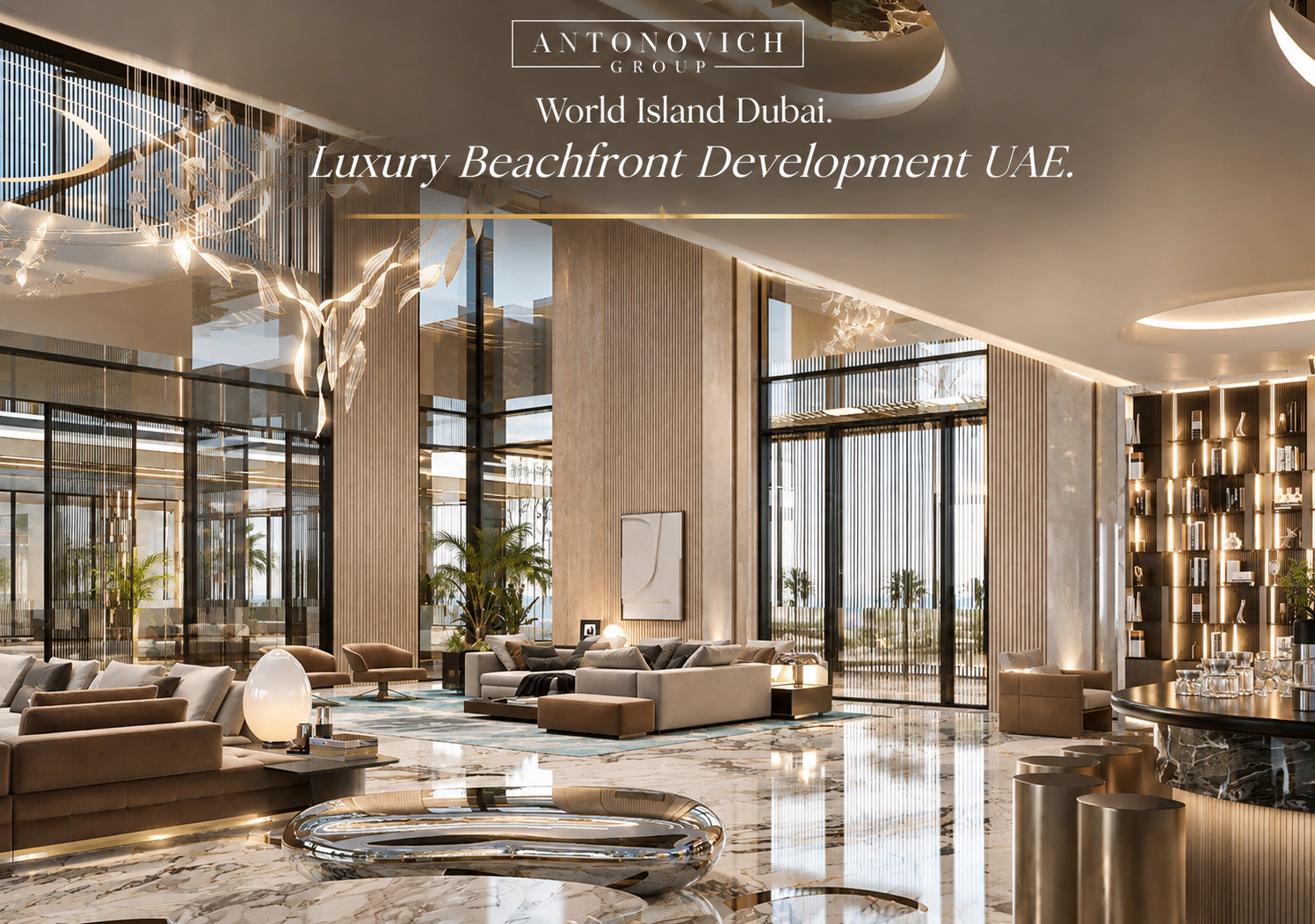
Frequently Asked Questions
What is a waterfront masterplan? A plan for a district along a sea, creek, lake or lagoon, defining land use, the water’s edge, public access, views, marinas, beaches, landscape, infrastructure and coastal protection.
Why are waterfront properties more valuable? Because of views, beach and water access, lifestyle and limited supply.
How do you protect waterfronts from erosion? Through coastal engineering — breakwaters, groynes, revetments, beach nourishment — and nature-based solutions such as mangroves.
What is needed to plan a marina? Basin design, breakwaters, entrance channels, berths, services, water quality management and surrounding promenades.
Are artificial islands sustainable? They can be designed responsibly with careful coastal engineering, water circulation and habitat creation, though they require rigorous environmental assessment.
Do you design beachfront villas? Yes, including architecture, interiors, landscape and outdoor living.
How is public access ensured? Through continuous public promenades, public beaches and connections from inland neighbourhoods.
What materials suit waterfront buildings? Marine-grade metals, low-porosity stone, chloride-resistant concrete, suitable timbers or composites and salt-tolerant planting.
Do you design outdoor living spaces for beachfront villas? Yes, including terraces, pergolas, pools, outdoor majlis and landscape.
Can heritage creeks be part of a waterfront masterplan? Yes, through restoration, cultural uses and sensitive new architecture that respects their scale and character.
Do you work with coastal engineers? Yes, Antonovich Group coordinates with coastal, marine and environmental specialists.
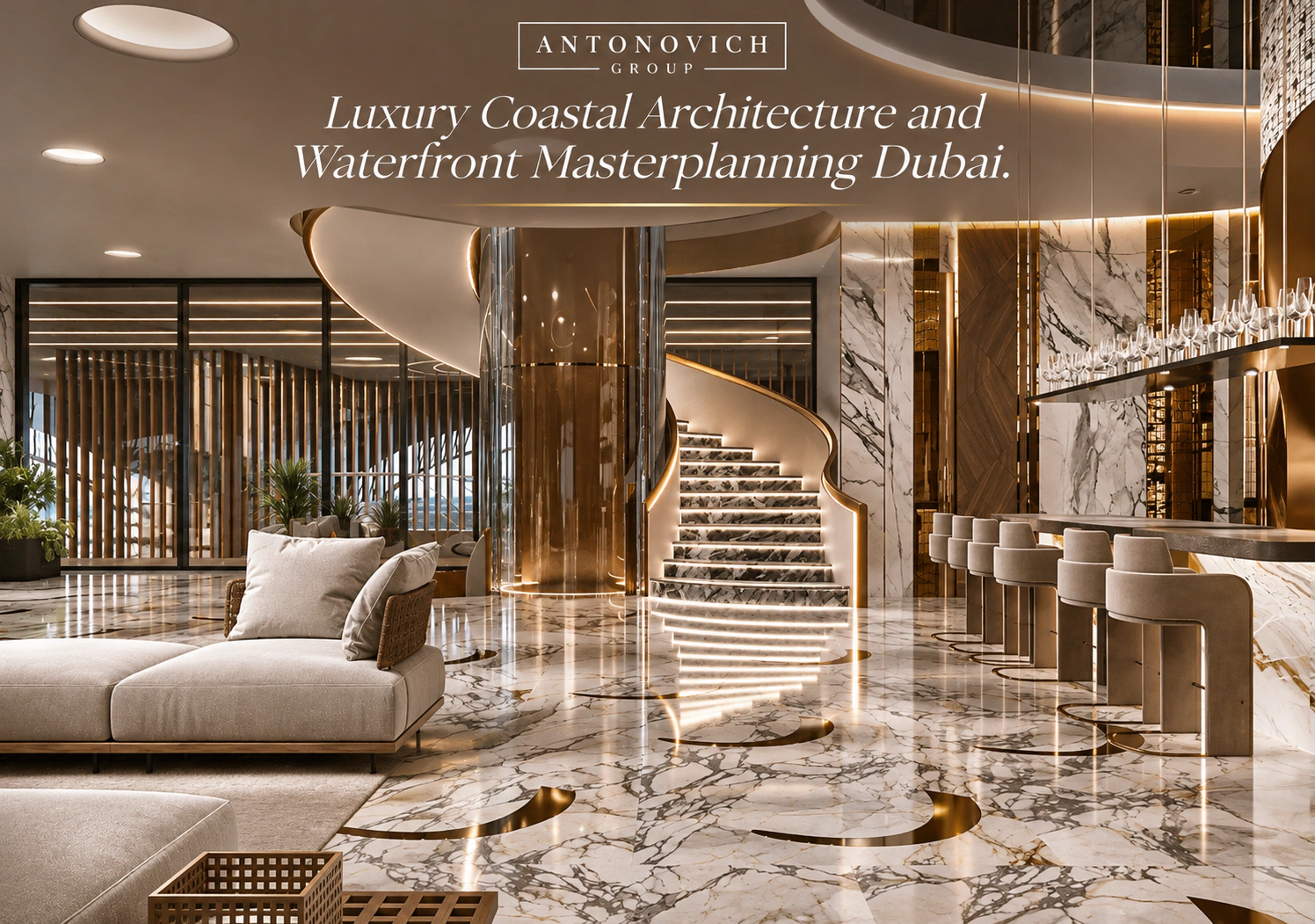
Where the City Meets the Sea
The waterfront is where a city shows its most beautiful face. Antonovich Group masterplans waterfronts that open the water to everyone, protect the coast for the future and create places of extraordinary value and beauty — where the city meets the sea in perfect harmony.
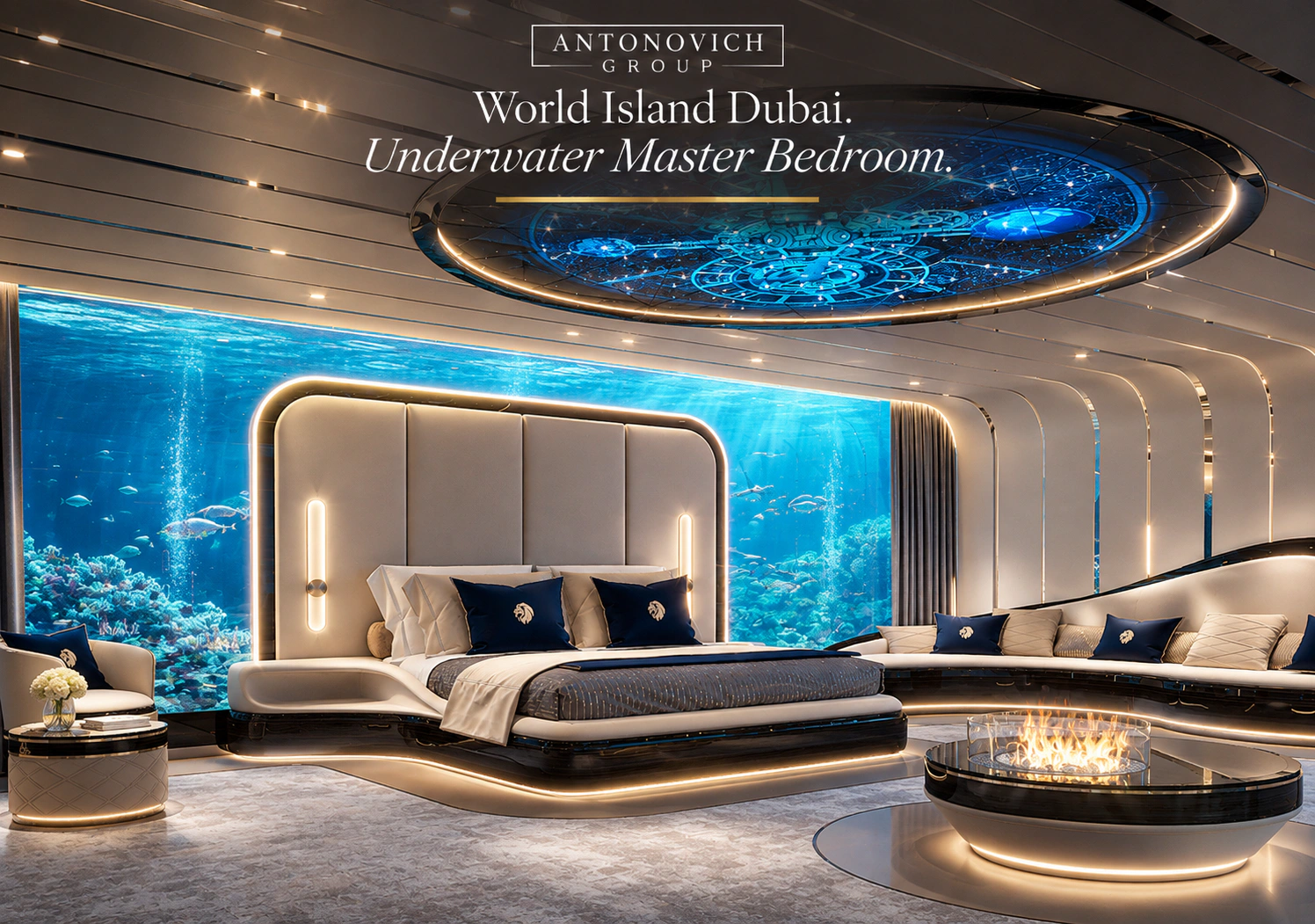
Waterfront Consultation · WhatsApp +971 54 299 5555 · antonovich-design.ae