
Updated at: 08.08.26

Antonovich Group's Organic Ornament Within Minimalist Mosque Form
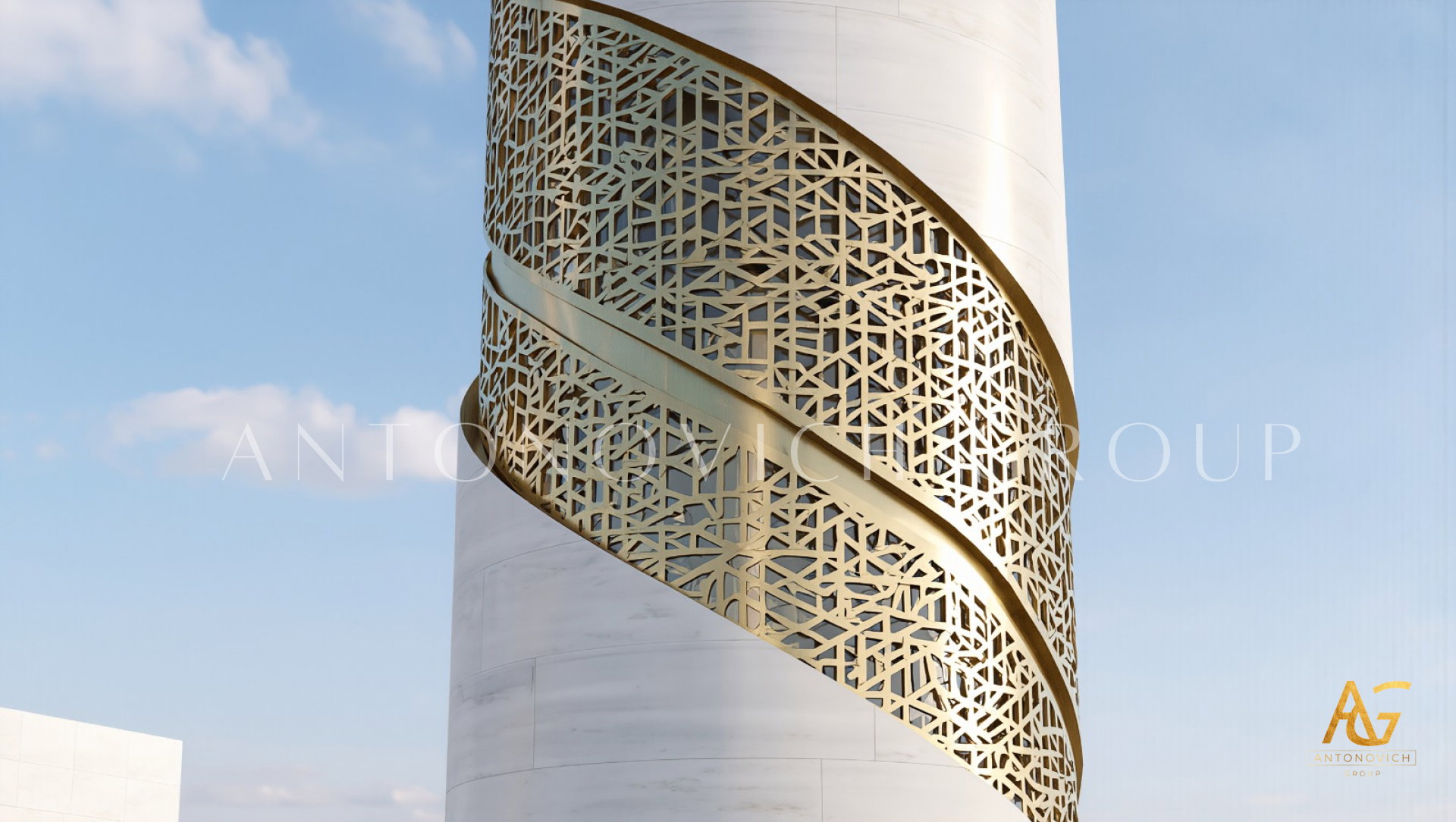
How a Single Blooming Gold Panel and a Spiral-Wrapped Minaret Bring Botanical Life to Restrained Geometric Architecture
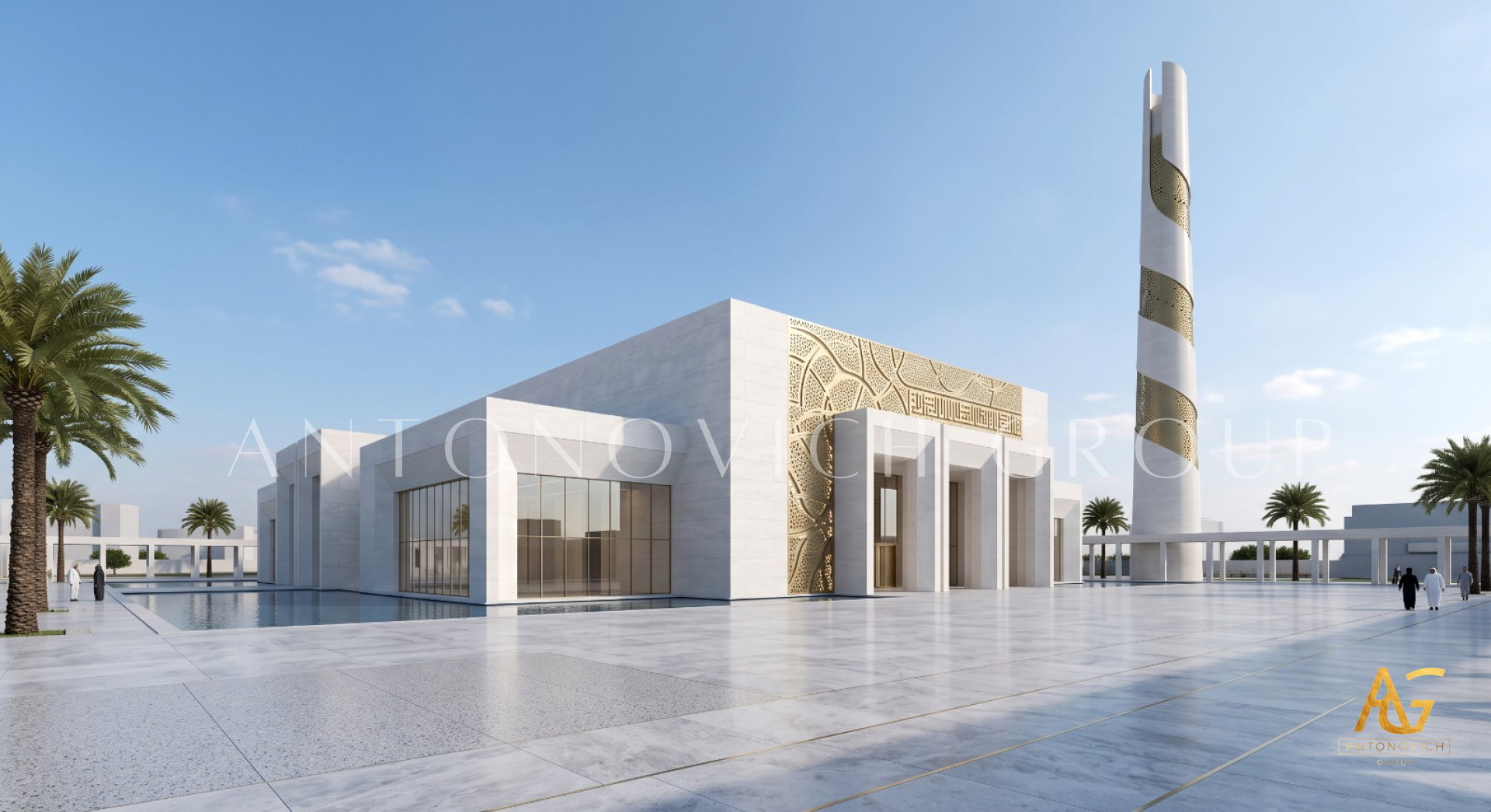
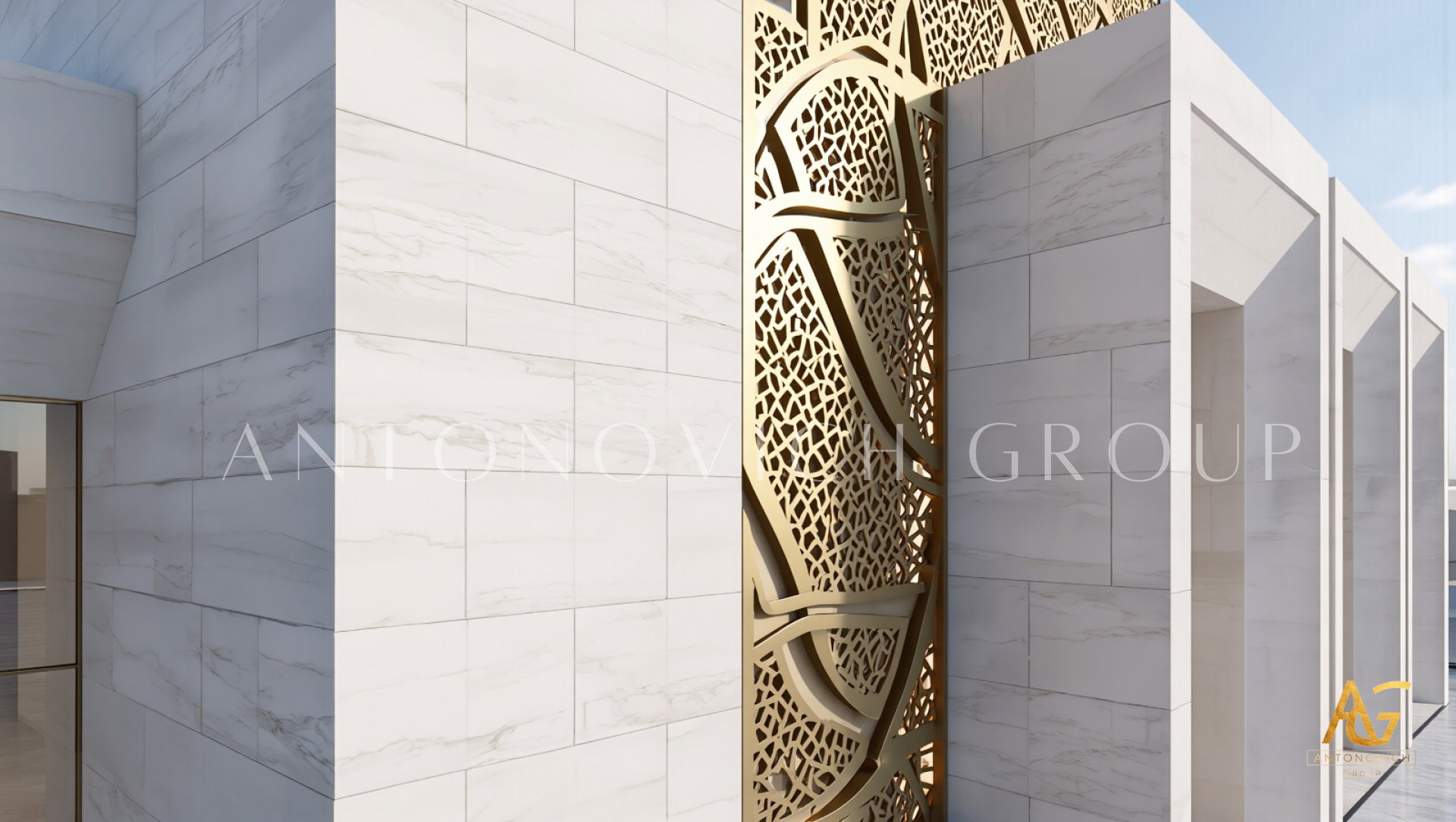
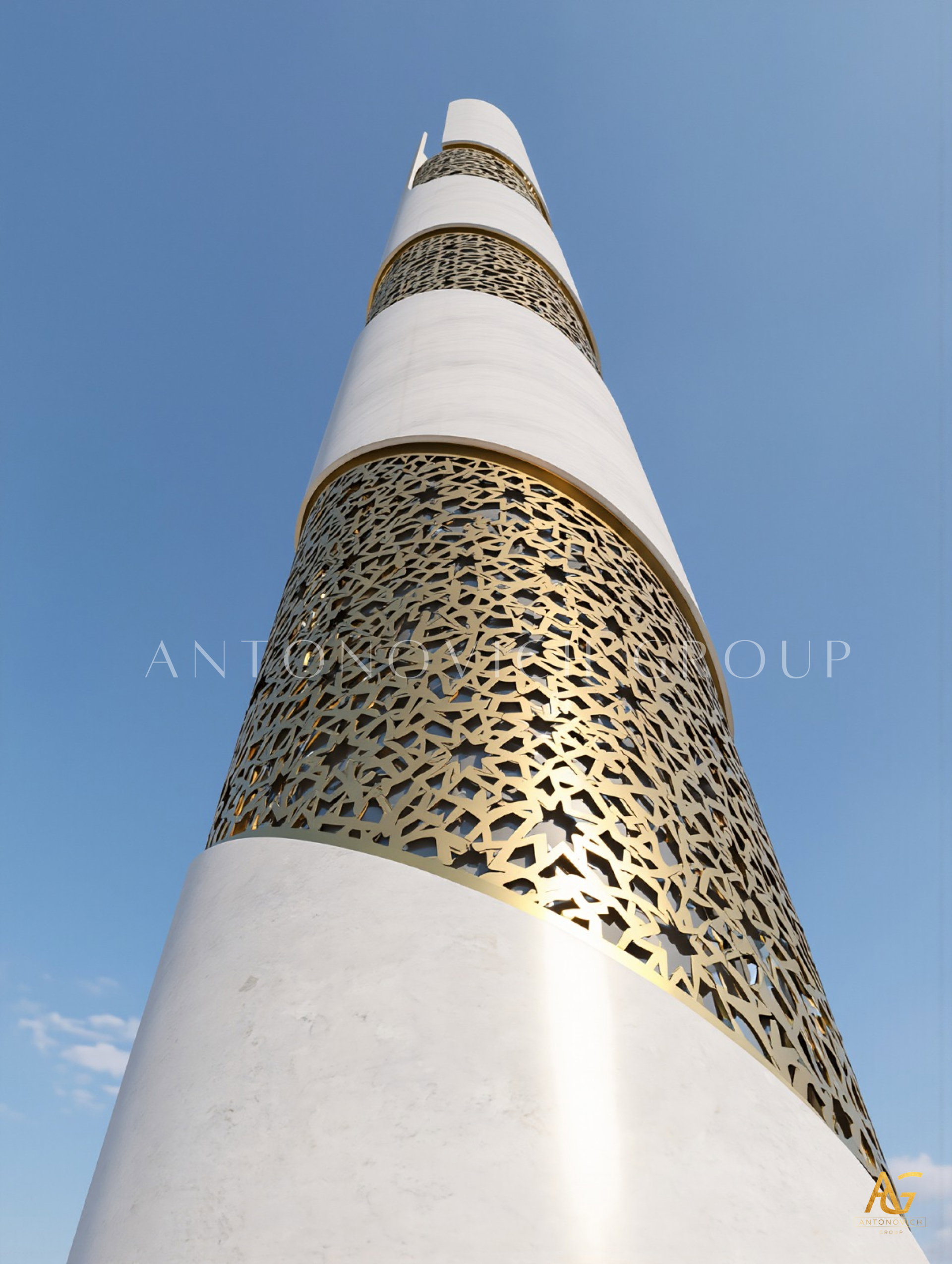
There's a specific kind of design confidence in choosing where not to add ornament. The concept featured above builds almost its entire identity around restraint — clean, unadorned cubic volumes in pale stone, large glazed openings, simple arched entrance recesses — before concentrating its full decorative energy into two carefully chosen moments: a single gold facade panel that blooms like an organic vine across the stone, and a minaret wrapped in a spiraling gold ribbon that winds around its form like a strand of DNA. This is Antonovich Group demonstrating that architectural restraint and botanical richness aren't opposites, but two instincts that, placed correctly, can elevate one another.
The Panel: Where Geometry Gives Way to Bloom
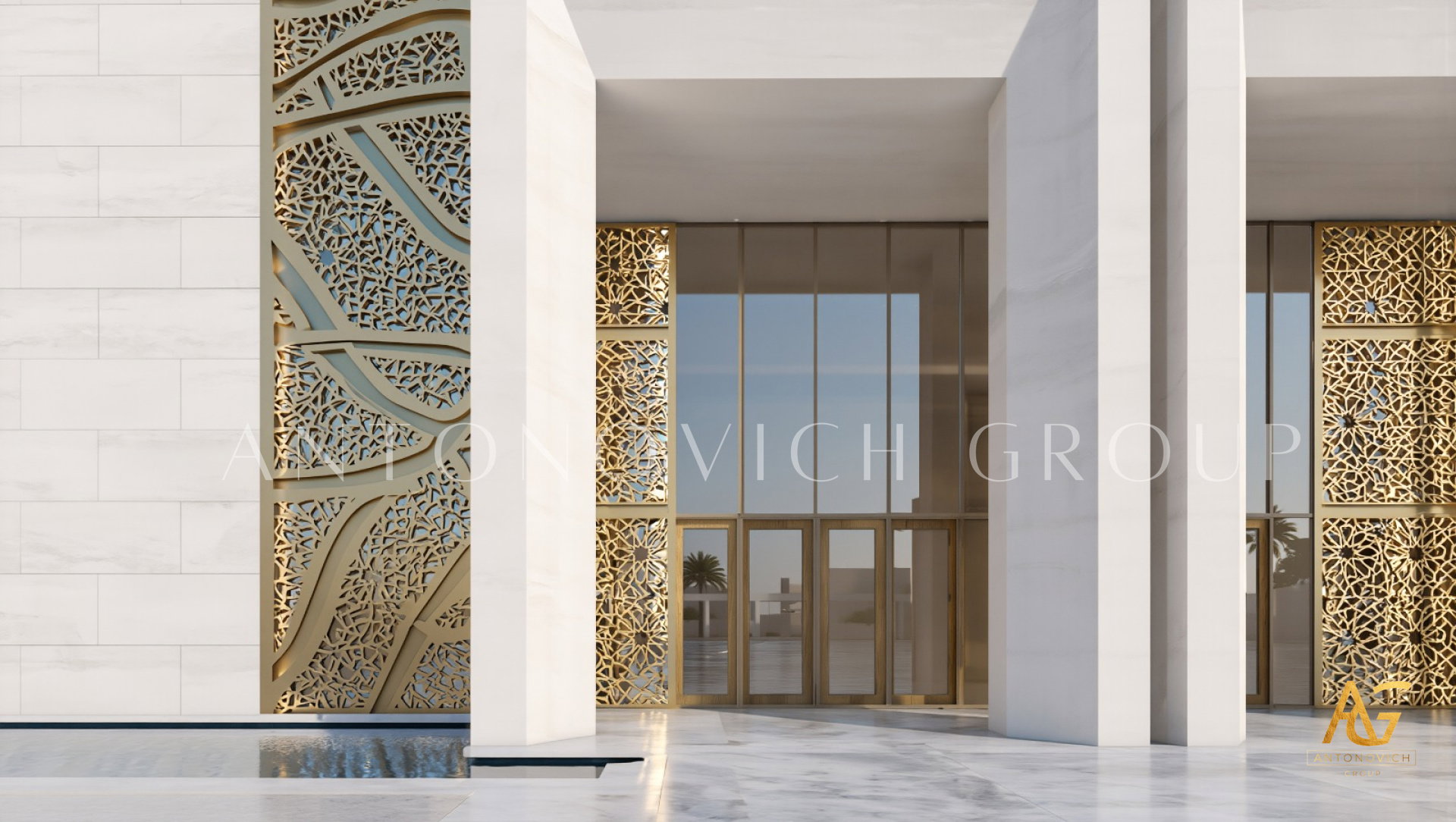
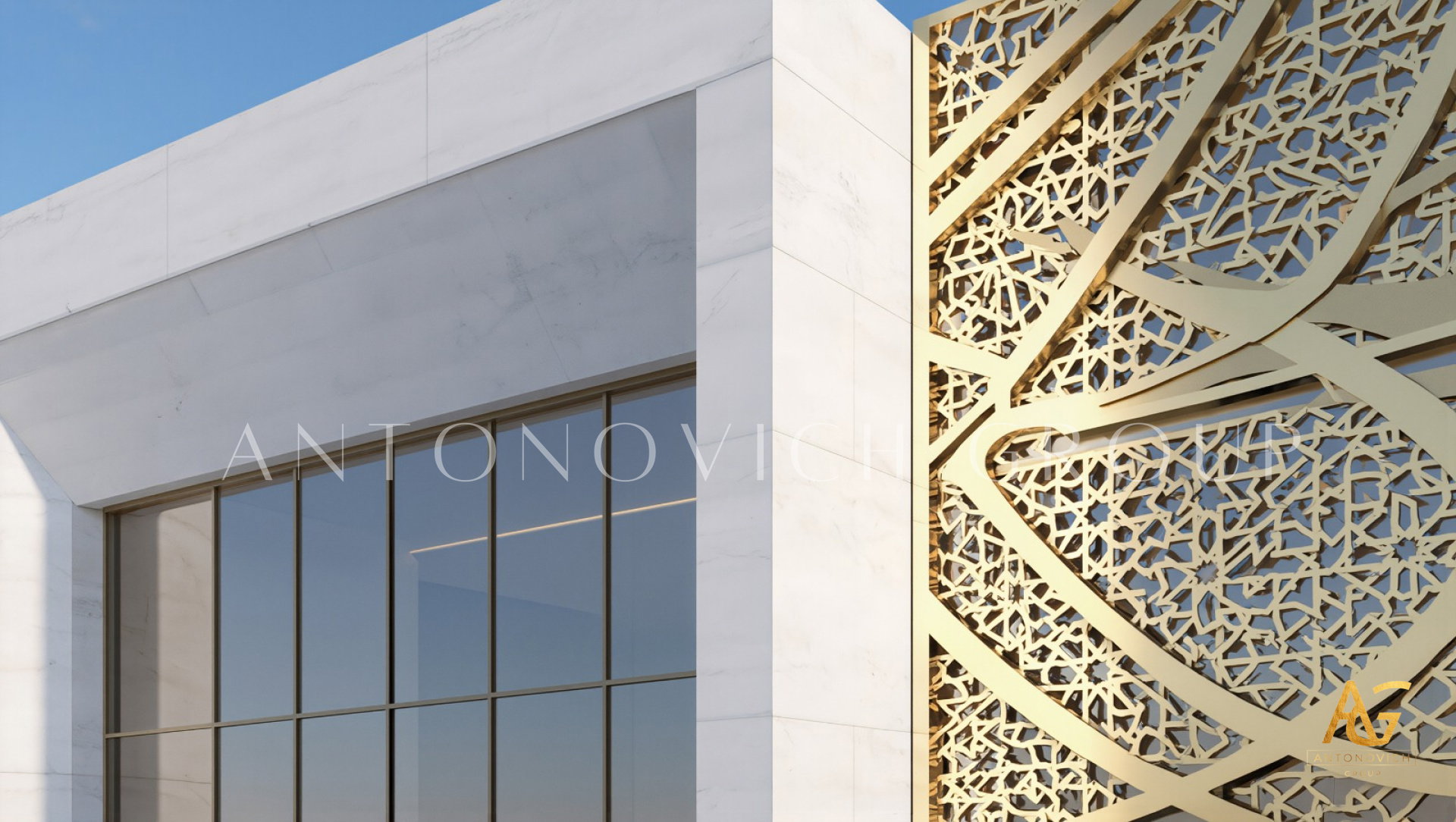
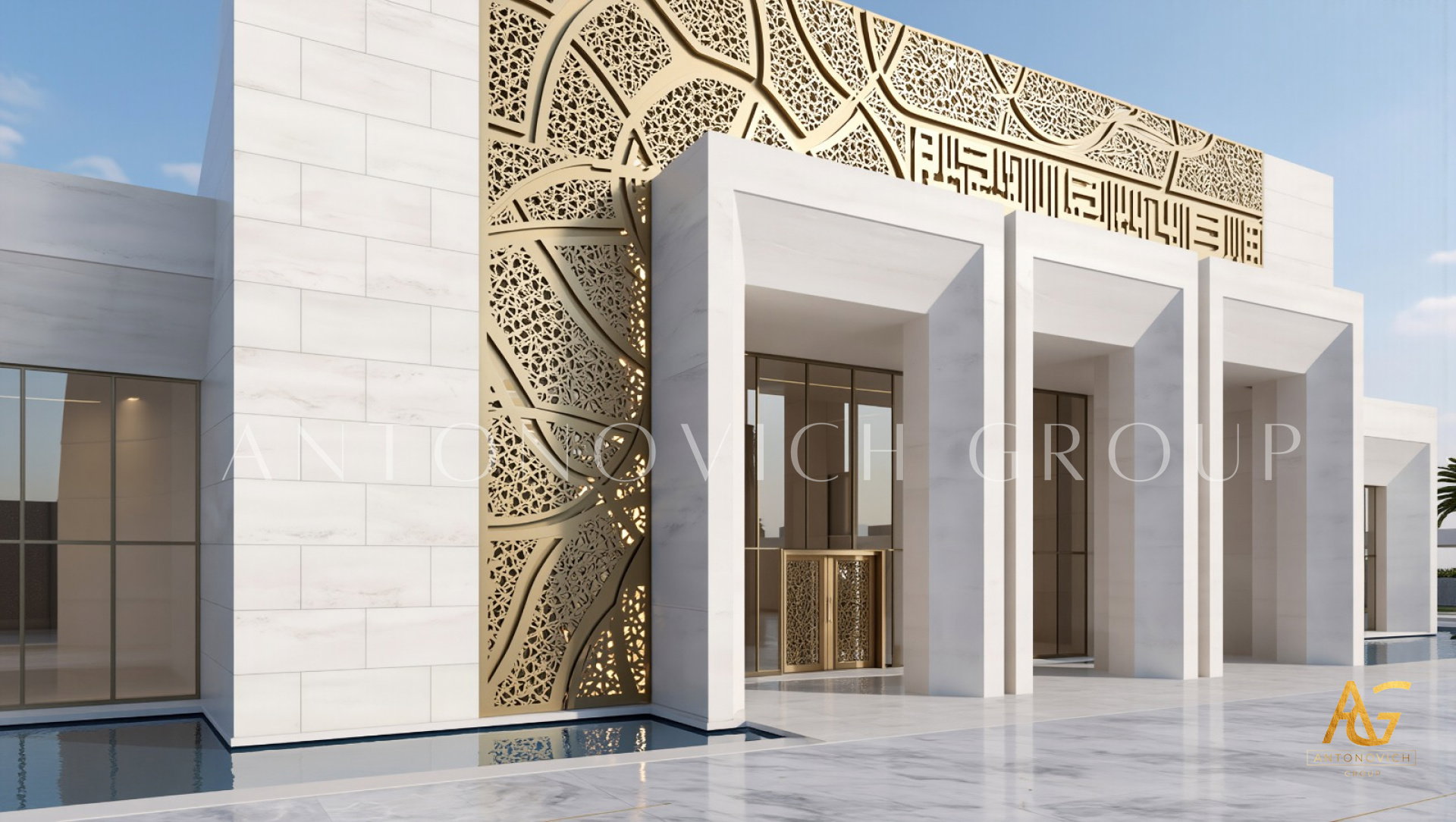
Set into one corner of the building's otherwise unadorned facade, a large gold panel spreads across the stone in flowing, organic curves — closer to blooming vines or interlocking botanical forms than the rigid geometric or Kufic patterning found throughout much of contemporary mosque ornamentation. Above it, a more traditional calligraphic band anchors the composition with legible sacred text, allowing the organic pattern below to read as pure decorative bloom.
This treatment reflects Antonovich Group's exploration of organic arabesque facade design, a departure from the strict geometric ornamentation more commonly seen in their broader portfolio — proof that Islamic decorative tradition encompasses botanical, flowing patternwork just as richly as it does mathematical precision.
The Threshold: Arches Held in Reserve
Beneath the entrance's stone overhang, three deep-set arched recesses frame the building's doorways, their curved profiles offering the composition's only concession to traditional Islamic archway form. Positioned directly below the ornamental gold panel, these arches provide a moment of familiar architectural language within an otherwise strikingly minimal facade.
This use of restrained arched threshold design demonstrates a careful compositional choice: allowing just enough traditional vocabulary to ground the building within recognizable mosque typology, without diluting the clarity of the surrounding cubic massing.
This treatment of spiral helix minaret design offers a genuinely distinctive reinterpretation of one of Islamic architecture's most historically significant elements — trading the more common approach of faceted or fluted minaret surfaces for something closer to a botanical tendril, climbing rather than standing rigid.
Cubic Form as Deliberate Backdrop
Beyond its two ornamental focal points, the mosque's main structure remains almost entirely unadorned — flat planes of pale stone, generous glazing, and clean rectilinear proportions define the majority of the building's surface area. This commitment to minimalist cubic mosque massing isn't a lack of ambition, but a deliberate strategy: by keeping the surrounding architecture quiet, both the gold facade panel and the spiraling minaret are given room to command full attention.
This approach reflects a broader principle found throughout Antonovich Group's most disciplined work — knowing precisely how much restraint a design needs in order to make its selected moments of richness genuinely resonate.
The Grove: Palms Framing a Quiet Approach
Surrounding the mosque, mature palm trees line the plaza's edges, their organic silhouettes echoing the flowing gold panel's botanical language while softening the building's otherwise geometric precision. A simple reflecting pool runs along one side of the structure, doubling its clean lines without the elaborate choreography found in some of Antonovich Group's more monumental concepts.
This use of understated palm grove landscaping reinforces the composition's overall tone — quiet, welcoming, and human in scale, rather than overtly ceremonial.
The Plaza: Marble Underfoot, Simplicity Overhead
A wide, uncluttered marble plaza extends before the mosque, punctuated by a simple pergola structure offering shaded passage without competing visually with the building itself. This restrained approach to community mosque plaza design mirrors the architecture above it — functional, calm, and entirely in service of the building's two carefully placed ornamental statements.
Antonovich Group's Command of Selective Ornamentation
This concept reflects a specific and valuable capability within Antonovich Group's practice — knowing exactly where to concentrate decorative richness within an otherwise minimalist composition. Their process for achieving this kind of selective ornamental architectural design typically includes:
- Organic pattern development, translating botanical and arabesque motifs into architectural-scale metalwork
- Spiral structural detailing, engineering wrapped minaret geometries that remain structurally sound while achieving genuine visual lightness
- Compositional restraint planning, determining precisely how much of a building's surface should remain unornamented
- Traditional-contemporary threshold balancing, incorporating familiar arched forms within otherwise minimal facades
- Human-scaled landscape integration, using palm groves and simple water features to soften geometric architecture
Why This Balance Deserves Attention?
For architects, developers, and communities seeking a mosque design firm capable of working confidently within minimalist form while still delivering genuine ornamental richness, this concept offers a valuable lesson: that restraint and decoration aren't opposing design philosophies, but complementary tools — each made more powerful by the presence of the other. Antonovich Group's willingness to leave most of this building quiet, in service of two carefully chosen moments of bloom and spiral, reflects real design maturity.
Closing Thought: Growth Within Restraint
A single blooming panel. A spiraling ribbon of gold. Everything else, held quiet. Through concepts like the one featured here, Antonovich Group demonstrates that modern mosque architecture doesn't require ornamental abundance across every surface to feel genuinely rich — sometimes, the most memorable design decisions are about knowing exactly where to let something grow, and trusting the rest of the building to simply hold still.
More projects
Any questions?
We will call you back!
We will call you back!
Enter your contact details and our manager will contact you.
Latest Posts

17.10.26
Premium Wall Panels and Finest Lighting Solutions | Address Dubai Opera Residences
Redefining Modern Luxury Apartment Interiors in Downtown Dubai In Dubai’s prestigious residential landscape, luxury apartment interior design is defined by the t...
Read more
Read more

16.10.26
Bespoke Joinery at Address Dubai Opera Residences, Dubai
Bespoke Joinery at Address Dubai Opera Residences Bespoke joinery helps make an apartment feel complete. At Address Dubai Opera Residences in Downtown Dubai, cus...
Read more
Read more

16.10.26
Apartment Renovation and Interior Design at Address Dubai Opera Residences
A successful apartment renovation brings together thoughtful interior design, quality materials and precise execution. At Address Dubai Opera Residences, Antonov...
Read more
Read more

21.09.26
Oceanfront Luxury Residences at Serenia Living Dubai
Bespoke Luxury Apartment Interior Design, Fit-Out, Renovation & Furniture Production by Antonovich Group Serenia Living Dubai represents a distinctive approach t...
Read more
Read more

18.09.26
The Art of Refined Living at St. Regis Dubai
Luxury Apartment Renovation & Bespoke Furnishing by Antonovich Group In Dubai, a luxury residence is more than a place to live. It is an expression of lifestyle,...
Read more
Read more

18.09.26
Modern Luxury Apartment Interior Design & Fit-Out by Antonovich Group
A Bespoke Two-Bedroom Residence at Stella Maris, Dubai Marina, Framed by Bluewaters Island, Marina and JBR Dubai’s waterfront residences demand an interior that...
Read more
Read more

01.09.26
How to Choose the Best Interior Design Company in Doha?
A Complete Guide to Creating a Luxurious Bedroom Interior with Antonovich Group Choosing the best interior design company in Doha is an important decision for ho...
Read more
Read more

29.08.26
Palm Jebel Ali Villa Architecture & Landscape Design
Palm Jebel Ali Villa Architecture and Landscape Design Palm Jebel Ali is becoming one of Dubai’s most prestigious destinations for luxury waterfront living. Its...
Read more
Read more
YouTube Shorts
Recent short videos from Antonovich Group projects, studio work and luxury interiors.
Latest Videos
DOWNTOWN DUBAI APARTMENT | MODERN LUXURY, THOUGHTFULLY EXECUTED

Antonovich Group | A Global Portfolio of Luxury Interiors
The Future of Luxury Villas | Modern Exterior Architecture by Antonovich Group
Luxury Classical Villa Design | Timeless Palace Exterior Architecture | Riyadh, Qatar & UAE
Luxury Majlis Interior Design Saudi Arabia | Royal Majlis by Antonovich Group
Zabeel Saray Villa | A Luxury Interior Design Masterpiece by Antonovich Group
Luxury Villa in Palm Jumeirah Dubai | Interior Renovation & Bespoke Furniture
Opera District Transformation Before & After| Dubai’s #1 Luxury Apartment Renovation Company